All posts by hsmoffice
As at 16 January 2023, 34,067 foreign nationals are recorded by the Department of WORC as having a work permit (or Government contract) in the Cayman Islands. HSM’s Immigration team have reviewed these statistics and the team notes that this number is not only the highest we have seen (for those watching, up from 32,913 on 17 October 2022) but has some striking implications – beyond the fact that we have been adding (on average) an additional dozen foreign workers a day, every day, for the last 3 months.
There are now 135 different nationalities recorded amongst us. That is a number we can and should be proud of. Jamaicans continue to be the most numerous, followed by Filipinos, Brits and Indians.
If these figures are relied on by the authorities in their consideration of PR applications, the increase in the Indian population means that persons of that demographic may now face a loss of 5 points on the basis that their number appears to today constitute more than 5% of the population on work permits.
The detail of the top 12 nationalities on “work permits” is:
| Jamaica | 14,586 | 42.8% |
| Philippines | 5,284 | 15.5% |
| UK | 1,983 | 5.8% |
| India | 1,899 | 5.5% |
| Honduras | 1,234 | 3.6% |
| Canada | 1,218 | 3.6% |
| USA | 930 | 2.7% |
| Nicaragua | 706 | 2.1% |
| Nepal | 627 | 1.8% |
| South Africa | 626 | 1.8% |
| Ireland | 402 | 1.2% |
| Guyana | 310 | 0.9% |
The maths (or math for those with a North American lilt) is not as easy as it may seem. Policies relating to treatment and interpretation long requested of the authorities (on this and a great multitude of other issues), have never been provided. There are many consequences of this and the resulting uncertainties and potential arbitrariness.
The Permanent Residence Points System is supposed to reward “rare” nationalities by awarding more points – and inherently penalize those that appear “overrepresented” in our community. The noble (and lawful) intention is that no foreign culture be permitted to overwhelm (or otherwise dominate) the Caymanian people and these Islands, and that an “appropriate demographic balance” be maintained (both in society and in each private sector workplace – although the Civil Service appears exempt from such considerations (up to the point of an individual Civil Servant applying for PR) given the fact that the Department of WORC plays no role in Civil Service hiring decisions).
The Points System makes it clear that 10 points are awarded to those applicants for Permanent Residence who are representative of a demographic of origin which is less than 5% of work permits in the Cayman Islands, whereas 5 points are available to those who are represented by more than 5% but less than 10% of the population on work permits, and no points are available (in the category of demographics) to those who are of a demographic of origin which is represented by more than 10% of the population on work permits.
Of the many details we have sought for most of a decade is the question of whether it is the population on date of application, the date of the 8th anniversary of applicant’s arrival as a resident, or date of consideration of their application, that is the basis of the treatment of applicants under the demographics section of the Points System. We have never received clear guidance. Nor is there any indication of what happens when an application is delayed in its consideration by so long, through no fault of an applicant, that the statistics materially change in a manner adverse to an applicant. Denying an Indian national PR because of a delay in the processing of their application (now averaging 17 months) is not a good look. It also would appear unlawful, and unlikely to survive legal challenge.
There is another issue to contemplate. What do the authorities contend is a work permit for the purposes of their calculations? Those on Government Contracts (1,130) or with Permission to Continue Working (668), or Working by Operation of Law (33), are very arguably not work permit holders – yet they are reported in the statistics as if they are. Persons with Employment Rights Certificates (there are thousands) are not work permit holders and are NOT recorded in the referenced statistics at all. Adjusting the percentages to account for them is difficult, and ever changing.
An analysis that counts only those persons with work permits (as that term is defined by reference to the Immigration (Transition) Act) changes the percentages further. In fact, despite the above figures, the number of Indians on work permits exceeds the number of Brits on work permits given (for example) that 170 Brits are reported to be here on Government Contracts compared to only 48 Indian nationals.
The margins around the numbers of Brits given the rate at which their number (as a percentage of those on work permits) is diminishing, and risks becoming too vague to and uncertain for the authorities to be able to consistently paint within the lines. The system ought to be capable of working well, but delays, a historic failure and even refusal to provide needed clarity, deprive it of so much potential. Statistics are no longer reported quarterly. We do not know which ones the authorities use. It does however appear that Brits are on a trajectory to gain an extra 5 points on their PR applications.
There is no uncertainty in relation to the demographic points available to Jamaicans and Filipinos. Their number so greatly exceeds the 10% threshold that we have no expectation of persons from those countries achieving anything more than their current 0 points for demographics.
Any imminent uncertainty is not the fault of the government of today. The hand they now hold was dealt to them some time ago.
The committee appointed by the Hon. Deputy Premier to look into the Points System will doubtless have this issue in its sights.
Whatever happens next, the figures appear to help reveal many other things.
One, is Caymanians are in a minority. As at census day, 2021, there were reported to be 6,378 holders of Permanent Residence in the Islands. The overwhelming majority of them are still here, and with status applications now languishing for up to 12 months, many of those who have qualified to apply to become Caymanian, will still be Permanent Residence holders. Adding them to the work permit numbers makes the number of expatriates living in Cayman 40,445. Allowing for expatriate spouses, children, and other dependents, there are today somewhere around 50,000 foreign nationals living here.
With a tourism room capacity of 20,527 – at 75% occupancy there would be another 15,000 sleeping here. Add 10,000 cruise ship passengers and crew (there were more than 13,000 on one day in January 2023), snowbirds in their condos, and family and friends visiting from overseas, and a few hundred Cuban refugees, there are quite probably 75,000 non-Caymanians here on a high season busy cruise ship day.
According to the census there were 38,047 Caymanians. We are aware that a number of them are “ghosts” – persons perceived to be Caymanians but who in fact (and in law) are not. The number of Caymanians will now be around 40,000, but it is unlikely to be much more than that.
It seems there are now likely around 90,000 persons “living” here in the Cayman Islands.
We contend that we have a population of 80,000 (78,554 was the revised official estimate last summer). We appear erroneous in that conclusion. Whatever the number, right now, our infrastructure needs to cope with 110,000+ people who are actually here.
The rapid growth is at least creating a Demographic Dividend providing much government revenue and private sector economic activity. Let’s hope we invest these potential windfalls wisely. We need to find a mechanism to generate income that is not as reliant on unbridled population growth. It is unsustainable. We cannot grow, at this rate, forever. Nor will we.
Update: The Trade Marks Act 2023 and Trade Marks and Service Marks Regulations Amendment and Validation Act 2023 received royal assent on 17 October 2023.
As Intellectual Property (IP) specialists in the Caribbean, HSM IP is thrilled to hear that the Bermuda Government is making efforts to update its intellectual property laws.
Vance Campbell (Minister for Bermuda Tourism and the Cabinet Office) recently shared in December 2022 that this huge undertaking would involve collaboration among the Ministry for Tourism and the Cabinet Office, the Ministry of Home Affairs with the Department of Registry General and the Ministry of Economy and Labour through the Economic Development Department. A special IP Taskforce has already been assigned.
Their objective is to make legislation governing trade marks, patents, registered designs and copyrights more fully aligned with UK and global standards and best practices allowing Bermuda to better compete for business.
Reports indicate that they are tackling trade marks first. Bermuda’s trade mark laws were originally enacted nearly 50 years ago.
One of the areas this new legislation plans to address is for Bermuda’s trade mark registration and renewal periods to be amended to cover 10-year terms. Since current registration periods are only seven years, this will be a welcome change.
As matters stand today in Bermuda, it typically takes 12 to 18 months for the Registry to process a local application for registration.
The Bermuda Government intends to submit to the UK formal requests for extension of several treaties governing the protection of IP rights. Their project team is coordinating with the UK Intellectual Property Office and will be submitting copies of the draft legislation to the UK IPO for review and comment.
With regard to Bermuda’s patent legislation, work has already begun to modernise the law and it will follow a similar course to that of the trade marks legislation.
Bermuda’s copyright laws are the most recently enacted, with the Copyrights and Designs Act 2004, but updates are still needed to enhance the regime, including the ability to voluntarily register copyright ownership.
HSM IP is monitoring this news and looks forward to updating our materials when they happen.
Click here to read HSM IP’s Bermuda trade mark guide.
The HSM Group is proud to once again offer a legal internship for the 2022/23 academic year in partnership with the Cayman Islands Further Education Centre (CIFEC).
The team at HSM has welcomed 15 interns: Tarek Figueroa, Briana Rodriquez, Jamari Samuda, Jelissa Bush, Elijah Lawrence, Jamila Andrade, Nathaniel Scott, Joel Watler, Antjuan Lawrence, Janely Reeves, Mahalia Archer, Phyliss Brown, Kayleigh Bush, Jenae Whittaker and Courtney Reid.
HSM is a full-service law firm and corporate services provider, which offers students the ability to gain experiences across a wide-range of practices including immigration, debt collection, intellectual property, corporate services and even areas outside of law, such as finance and marketing.
These students were interviewed at the CIFEC Careers Fair on 23 September 2022. HSM participated at this fair with a booth, which gave students an opportunity to learn about HSM as well as make a formal application.
Each of these students have been carefully paired with a lawyer or expert at HSM. These personnel will monitor the student’s work and provide mentoring.
While some students are still figuring out what they want to do with their career, CIFEC student Jamila Andrade asipires to become a lawyer and shares, “I am grateful for this experience and was over the moon when I found out I got a placement. I am learning a lot so far.”
As part of the CIFEC curriculum, the internship runs from October 2022 until April 2023 and each student attends work twice a week during school hours. When the programme ends, there may be opportunities for some students to attain a summer work placement at HSM.
HSM Managing Partner, Huw Moses OBE shares: “We look forward to this programme each year and are impressed by this year’s group of students. They are eager to learn and contribute. We are proud to be a part of their career foundation.”
HSM has supported the CIFEC Internship Programme since 2012 and also offers sponsorship opportunities for further education. HSM employs several CIFEC graduates fulltime.

Huw Moses (HSM Managing Partner) sits with CIFEC interns standing around him.
Photo (L-R) Front Row: Jelissa Bush, Jenae Whittaker, Jamila Andrade, Joel Watler, Janely Reeves and Briana Rodriquez. Photo (L-R) Back Row: Tarek Figueroa, Elijah Lawrence, Antjuan Lawrence, Mahalia Archer, Kayleigh Bush, Courtney Reid, Phyliss Brown, Jamari Samuda and Nathaniel Scott
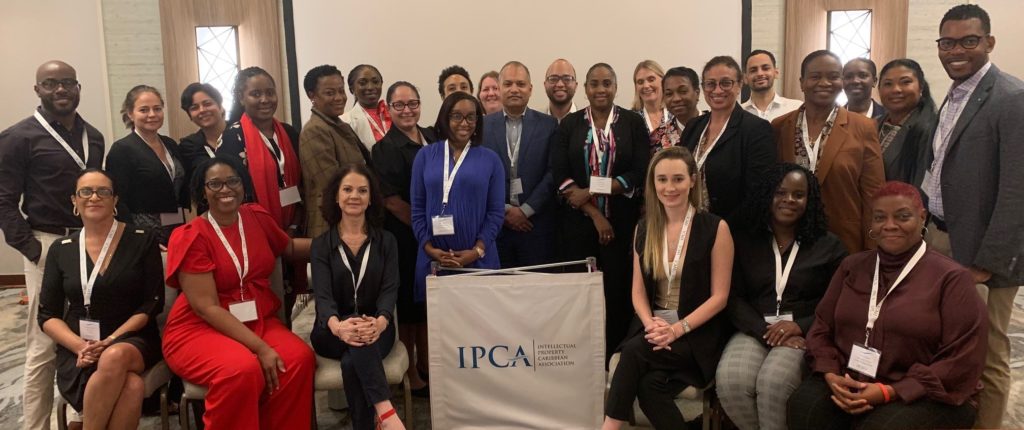
Kate Cleary (HSM IP Paralegal) attended the International Property Caribbean Association (IPCA) 2022 Annual General Meeting on 19 November in Miami, Florida. It was great connect with other IP practitioners across the Caribbean. IPCA exists to promote IP rights in the Caribbean and establish a forum for better communication amongst IP practitioners.
Quite often in family matters, when a relationship or marriage breaks down irretrievably, there is a question to be decided as to where the children will reside primarily and with which parent. Our family attorney, Shelly Perryman-Pollard, explores this dilemma. On most occasions, the parents can come to an agreement, in the best interests of the children, however, on the few occasions that this is not possible, the court may be called upon to make that determination. Sometimes, there may be an issue of one parent desiring to move the children to reside outside of the Cayman Islands. This situation may arise in circumstances where one parent has remarried and their spouse resides abroad, where one parent has acquired employment abroad or where one parent simply wants to return to their native country with the belief that it offers a better life for them and their children.
In any of those circumstances above, neither parent can simply remove the child from the jurisdiction, without the written consent of the other parent or by court order, especially in circumstances where the child is subject to the jurisdiction of the court of the Cayman Islands.
This does not apply to taking a child abroad for vacation for a period of 30 days or less, but even in those circumstances it is important to get the consent of the other parent.
The 1980 Hague Convention
The 1980 Hague Convention on the Civil Aspects of International Child Abduction is a treaty which was created in order to protect against the negative effects on a child of his/her wrongful removal from one jurisdiction to another, by one of his/her parents. It is the right of a child to have contact with both parents and when one parent unilaterally takes the decision to remove a child such that he/she will now be prevented from having contact with the other parent, this can have extremely deleterious effects on his/her wellbeing.
The Cayman Islands became a treaty partner on 1 August 1998. Other treaty partners include the United Kingdom, the United States, Germany, Australia, France, Italy and many more. This convention has established procedures to ensure the immediate return of a child to his/her country of habitual residence for the issues of residence and contact to be decided there. Each government has established a Central Authority tasked with the responsibility of managing wrongful removals. If a child is unlawfully removed by one parent to a treaty partner country, the other parent can seek the assistance of the Central Authority in that jurisdiction to have the child returned. The Central Authority will first write to the offending parent giving them the opportunity to willingly return the child to his/her place of habitual residence, however if that is not successful, the Authority, through its attorneys, will institute legal proceedings to have the child returned. It is only in exceptional cases that the court will not order the child returned immediately.
Defences to such removal can include:
- The parent who has remained originally consented to the removal and subsequently did not take any timely action after becoming aware of the removal.
- The parent who has remained was not exercising parental responsibility or contact prior to the move.
- There is a grave risk to the child of harm, if the child is returned.
- The child objects to the return and is of an age where the court could take his/her views into consideration.
In order to apply under the Hague Convention both countries must be treaty partners and the following requirements must be met:
- The child must have been habitually resident in a treaty partner country prior to the removal.
- The removal must have been wrongful (i.e. without consent or a court order).
- The application must be determined in the country where the child was brought.
It is important to note that the only issue being determined, by the country to which the child was wrongfully removed, is that of the return to his/her country of habitual residence. That court will not involve itself in issues of residence and contact as it is accepted that the most appropriate jurisdiction to hear such issues would be the child’s country of habitual residence.
Applications to remove the child with the sanction of the court
A parent who wishes to lawfully remove a child to reside in another jurisdiction must file an action in the Grand Court if the other parent does not consent. The court will try to hear this application in a timely manner given the effect of such an order on the wellbeing of the child. Each application is decided on its own facts and neither parent’s claim is considered superior to the other, especially in circumstances where both parents share parental responsibility.
Factors which the court will consider
Every parent wishing to remove a child permanently from the jurisdiction of the Cayman Islands needs to convince the court overall that such a move is conducive to the child’s welfare. This is the overarching principle in all such applications. The child’s welfare is paramount.
The leading case in the jurisdiction of the Cayman Islands is B v B delivered in April 2013. In that case, the court laid out the factors which would be relevant to any such application.
The court must consider:
- If the parent applying has a genuine application, not motivated by a selfish desire to exclude the other parent from the child’s life.
- If the opposition of the other parent is genuine and not motivated by some other ulterior motive.
- What detriment the move would have on the relationship between the child and the parent being left behind.
- Whether this detriment could be mitigated by the relationship between the child and other family members in the desired jurisdiction.
- If the application to move is realistic and founded on practical proposals.
- What the impact of the refusal would be on the applying parent.
HSM has the knowledge and expertise necessary to guide any parent through the intricacies of filing such applications in the court of the Cayman Islands. We can also effectively guide parents through mediation to sort these arrangements for their children without recourse to the courts as this is what works best for the welfare of the children involved.
As Russia’s invasion of the Ukraine continues, the United Kingdom has pushed its hunt for Russian Oligarch’s assets into high gear and has fast tracked the Economic Crime (Transparency and Enforcement) Act 2022 (the “Law”) into force. The Law was given Royal Assent on 15 March 2022 and the register for overseas entities opened at Companies House in the UK on 1 August 2022. HSM’s Head of Corporate and Commercial, Peter de Vere, covers everything you need to know in this article.
This new legislation is intended to increase transparency and aid active enforcement of sanctions.
Of primary importance to clients will be the requirement in the Law for any ‘overseas entity’ owning UK property to register with Companies House in the UK and provide details of their beneficial owners.
What is an ‘overseas entity’?
An overseas entity is a legal entity that is governed by the law of a country or territory outside of the UK (note, this captures entities formed in the Cayman Islands).
For these purposes a ‘legal entity’ includes any entity which is a legal person under the law by which it is governed.
The above definition would appear to exclude Cayman Islands Trusts as these do not have a separate legal personality (but those Trusts which hold UK property indirectly through an overseas entity will still be caught by the Law).
What to do if your Cayman entity owns property in the UK or intends to do so?
Overseas entities that acquired property in the UK after 1 January 1999 or that acquire UK property in the future must apply for registration on the Register of Overseas Entities.

The overseas entity will need to provide basic details about itself (name, country of incorporation/formation, registered/principal office, service address, legal form and applicable governing law, details of any overseas public register which it is entered on and any registration number).
The entity will also need to deliver one of the following three statements about its registrable beneficial owners and the required information for that statement:

What is the ‘Required Information’ mentioned in the above table?

*designated persons’ means—
(a) persons designated under any power contained in the UK anti-money laundering regulations that authorizes an appropriate Minister to designate persons for the purposes of the regulations or of any provisions of the regulations, or
(b) persons named by or under United Nations Security Council Resolutions.
What is a registrable beneficial owner?
A ‘beneficial owner’ can be an individual, a legal entity or a Government or public authority. The Law provides that a person (X) is a “beneficial owner” of an overseas entity or other legal entity (Y) if one or more of the following conditions are met:
Condition one is that X holds, directly or indirectly, more than 25% of the shares in Y.
Condition two is that X holds, directly or indirectly, more than 25% of the voting rights in Y.
Condition three is that X holds the right, directly or indirectly, to appoint or remove a majority of the board of directors of Y.
Condition four is that X has the right to exercise, or actually exercises, significant influence or control over Y.
Condition five is that (a) the trustees of a trust, or the members of a partnership, unincorporated association or other entity, that is not a legal person under the law by which it is governed meet any of the conditions specified above (in their capacity as such) in relation to Y, and (b) X has the right to exercise, or actually exercises, significant influence or control over the activities of that trust or entity.
Penalties for non-compliance?
Failure to register (or submitting false information) would be a criminal offence under the Law and would prevent the entity from being able to buy or sell UK property in the future.
A transfer of land in breach of the registration requirement would also amount to a criminal offence on both the entity and its responsible officers (such as a director), including fines of up to GBP£2,500/US$3,090 per day (for example for failing to register) or unlimited fines (for example for making false statements) or a prison sentence of up to 5 years.
Timing
Overseas entities who already own land in the UK will be given 6 months to register their beneficial owners or managing officers. This 6 month period is currently running and will be due to end on 31 January 2023.
Any new purchasers will need to register with Companies House from 5 September 2022.
HSM Corporate Services Ltd. encourages those who may be affected to start making arrangements now and our team is ready to assist.
HSM IP is proud to be ranked in the 2022 edition of IP Stars by Managing Intellectual Property (IP). This marks the third year in a row that the firm has received this recognition.
Managing IP is a leading specialist guide to intellectual property law firms and practitioners worldwide. They have been researching and ranking firms since 1996. Firms and individuals are chosen based on merit through a rigorous research process and cannot buy entry into this award body.
These rankings cover more than 80 jurisdictions and HSM IP is listed as a recommend firm in the Caribbean.
HSM IP specialises in the Caribbean, Central and Latin America and offshore jurisdictions. Our broad perspective, practical approach and wealth of international experience allow us to offer unique insight into intellectual property issues globally.
As we draw closer to the end of 2022, many clients will be considering their Cayman Islands structures and querying whether any entities are surplus to requirements. HSM’s Head of Corporate and Commercial, Peter de Vere, covers the key points you need to know at this time of the year.
The desire to wind up any Cayman entities before the end of the year is fueled primarily by the need to avoid any annual fees for the maintenance of the Company being incurred next year (2023).
To avoid those fees the voluntary liquidation of a Cayman Company would typically need to commence in late November early December (at the latest) with the final meeting being held before the end of January.
This timetable results in an effective dissolution date into the next calendar year, while still avoiding the government fees for that year.
If a dissolution is not completed (i.e. if the final return is not filed) by 31 January then the full annual return fees for the new-year are due and payable to the Cayman Islands Government.
If the liquidation is more complicated then more time would be required and an even earlier start date would be necessary. It is important to note that the Companies Act (as Revised) stipulates that a company is dissolved upon the expiration of 3 months from the registration of the final return and this timing must be considered if a 31 December (or earlier) dissolution date is required. If you do not need a 31 December (or earlier) dissolution date then please note it is possible to complete the liquidation process before year end (without the need for the publication of expensive extraordinary gazettes etc.) if the liquidation process is started no later than 25 November 2022.
The above timing considerations also come into play if there may be increased operational efficiencies in completing the dissolution within the current calendar year if additional regulatory filings and other costs for stub years can be avoided.
For example, investment funds that are registered with the Cayman Islands Monetary Authority (“CIMA”) may need to consider an earlier commencement date to ensure that the final audited financials are completed and filed with CIMA prior to the final meeting of the Fund. CIMA requires that a Fund undertakes a final audit for the period either up to the date of the appointment of the third party liquidator or to the date of the full payment of the final redemptions.
Strike Offs
The option to strike off a company remains an attractive (and cheaper) option for many clients whose companies do not have an active history of trading or were set up only to hold a single asset.
Whilst a strike off does not entail the process of appointing a liquidator and carrying out a formal liquidation it should be remembered that a) the Registrar only strikes off companies in batches at the end of each financial quarter and as such if a year-end dissolution is required then a strike off application should be filed ideally no later than November and b) a strike off remains reversible within a 10 year time frame and should not be viewed as having the same finality of a formal liquidation.
Conclusion
HSM Chambers has a wealth of expertise in advising on both voluntary liquidations, official liquidations and strike offs.
We can accept liquidator appointments for companies HSM Corporate Services Ltd. has provided registered office for from incorporation and we would be happy to provide a fee quote for any of your dissolution needs.
Key Contact

Peter de Vere
Head of Corporate and Commercial
Tel: 1 345 815 7360
pdevere@hsmoffice.com
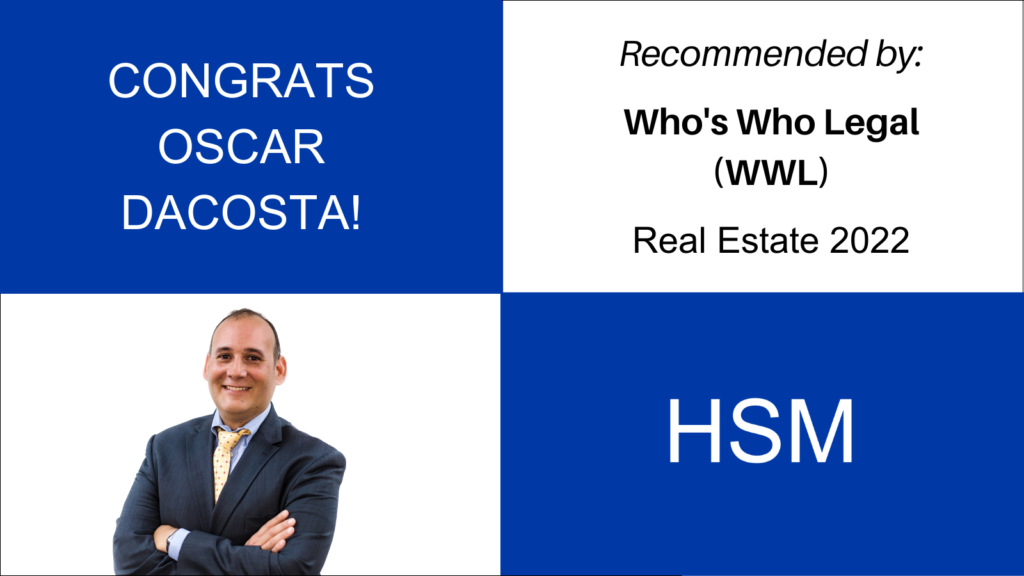
Who’s Who Legal (WWL) has featured Oscar DaCosta, a real estate lawyer in the Cayman Islands, in their 2022 Real Estate Guide.
Oscar has over 5 years of legal experience and focuses on property law, assisting with property transactions across residential/commercial properties and coordinating financing alongside banks. Oscar also has experience in banking and commercial.
WWL identifies the foremost legal practitioners in multiple areas of law and recognition is based strictly on merit – you cannot buy entry into their publication. Recipients must be recommended for their expertise in the field by independent sources, either from clients or peers.
Congratulations Oscar.
The HSM Group is thrilled to welcome Shelly Perryman-Pollard to their law firm. Shelly joins HSM Partners Kerrie Cox and Linda DaCosta in their family law practice and will help people navigate through divorce and separation, financial considerations, custody matters, property settlement and more.
Shelly comes to HSM as an Associate with 12 years of legal experience in the family field. Shelly attained her Bachelor of Laws Degree (Hons) from the University of London in 2006. She is an experienced litigator and received a certificate of Enrolment to the Supreme Court of Judicature Trinidad and Tobago in 2009.
Shelly has substantial experience in contested matters before the Courts whilst always having an eye on the possibility of achieving a settlement with the attendant saving of legal costs.
Family affairs encapsulate many areas and to complement these services, HSM’s team of experts can also advise on immigration issues, family trusts, wills and estate administration.
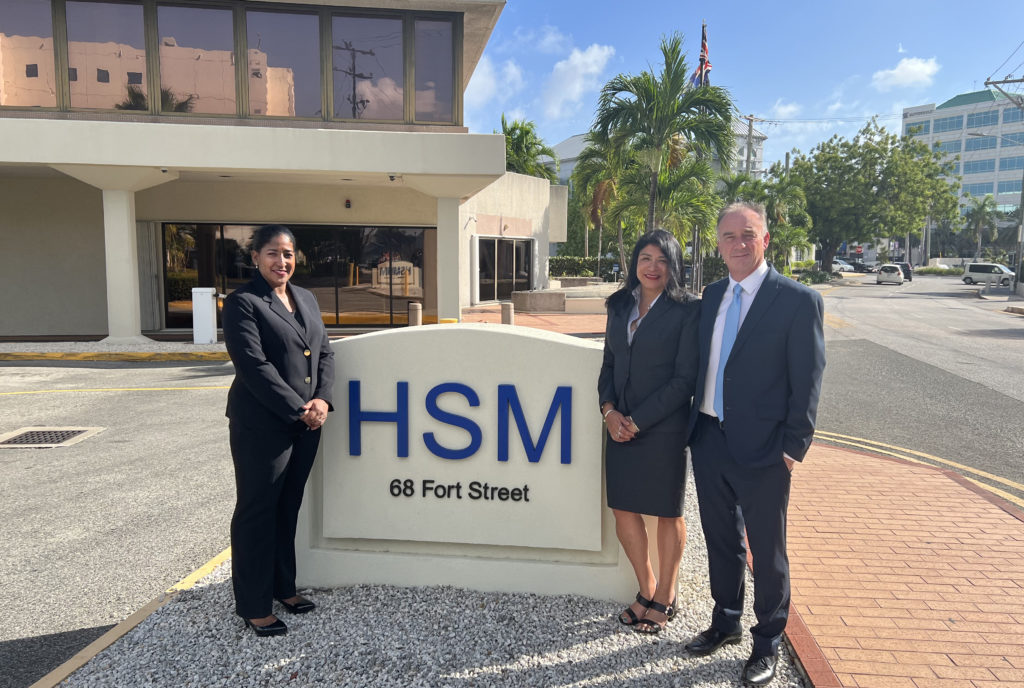
Photo (L-R): Shelly Perryman-Pollard (HSM Associate), Linda DaCosta (HSM Partner) and Kerrie Cox (HSM Partner)
Fatal error: Uncaught Error: Call to undefined function twentythirteen_paging_nav() in /home/clients/d17af2243e6f179e393695ba6e9ce04e/hsmnew/wp-content/themes/hsm/author.php:52 Stack trace: #0 /home/clients/d17af2243e6f179e393695ba6e9ce04e/hsmnew/wp-includes/template-loader.php(86): include() #1 /home/clients/d17af2243e6f179e393695ba6e9ce04e/hsmnew/wp-blog-header.php(19): require_once('/home/clients/d...') #2 /home/clients/d17af2243e6f179e393695ba6e9ce04e/hsmnew/index.php(17): require('/home/clients/d...') #3 {main} thrown in /home/clients/d17af2243e6f179e393695ba6e9ce04e/hsmnew/wp-content/themes/hsm/author.php on line 52