All posts by hsmoffice
The HSM Group is proud to sponsor the 2nd Annual Society of Trust and Estate Practitioners (STEP) Cayman Conference, taking place at Kimpton Seafire Resort + Spa in Grand Cayman from January 31 – February 1.
Visit our booth during the conference to learn more about our legal and corporate services, and be entered to win one of our 5-in-1 BBQ tools – a useful memento to remind you of our law firm in the Cayman Islands.
Robert Mack, HSM’s Head of Private Client and Trusts, will be speaking during one of the breakout panel sessions on February 1 at 12pm and will be exploring wealth structuring for PEPs (politically exposed persons) – the impact of politics, conflict and sanctions on PEPs.
Since 2010, Robert has been a council member of the local branch of STEP, where he currently holds the position of Vice Secretary.
Robert also sits on the STEP legislative review sub-committee and the Global Transparency sub-committee, which works in partnership with the Cayman Islands Government to implement and improve legislation connected to the trusts and private client industry. Robert is also the Cayman Islands representative of the STEP Mental Capacity Special Interest Group.
We look forward to connecting with you at this conference.

(L-R): Samantha Bartley and Robert Mack
Several charities in the Cayman Islands have received secondhand office furniture provided by local law firm HSM.
The Family Resource Centre recently moved to a new location in George Town and were thrilled to receive a full desk set complete with joining desks, a filing cabinet and bookshelf.
One Dog at a Time collected two large filing cabinets, which volunteer Paula Wythe says is ideal for storing away pet products such as shampoos, brushes, medications and more.
The Frances Bodden Children’s Home selected a large desk for their facility in West Bay.
This is not the first time HSM has donated office furniture. A few years ago, HSM donated desks to Her Majesty’s Northward Prison for their F-wing, an enhanced living space for selected inmates.
“We are always looking for opportunities to support our community and what better way to start the New Year than helping these charities improve their daily operations,” shares HSM Managing Partner, Huw Moses OBE.
HSM still has desks, cabinets, keyboards, blinds and commercial UPS switches available to a worthy home. Email Alyson Hay at ahay@hsmoffice.com to register your charity for these items.
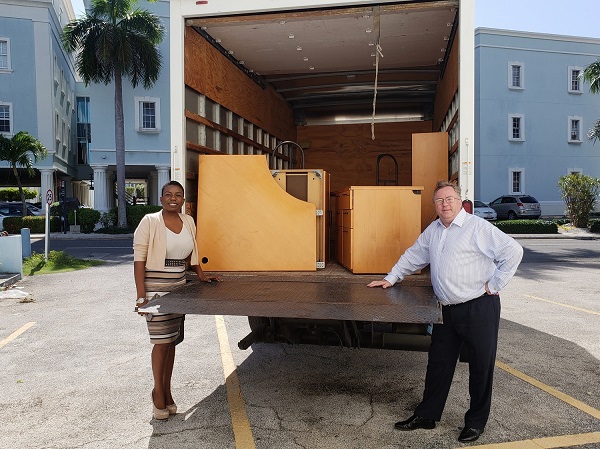
Photo R-L: Huw Moses (HSM Managing Partner) overseas the departure of this furniture set to Racquel Duhaney (Programme Facilitator at the Family Resource Centre).
Corey Neysmith and Gabriel Morla of HSM IP Ltd. presented International Trademark Association’s (INTA) Unreal Campaign to over 40 students at the Cayman Islands Further Education Centre (CIFEC) on Thursday, 29 November 2018.
INTA’s Unreal Campaign is a consumer awareness programme aimed at educating teenagers about the importance of trade marks, intellectual property and the dangers of counterfeit products.
Corey, a Senior IP Assistant, started the presentation by explaining the role and importance of registering a trade mark. Corey explains, “A trade mark can be a word, design, service mark and can even be the shape of a building. If a company doesn’t register their distinct features, then a competitor can rightfully take ownership of their ideas and with it, their customer base.”
Since 1 August 2017, it has become possible to register a trade mark in the Cayman Islands without having to go through the United Kingdom or European Union first, thanks to the implementation of The Trade Marks Law, 2016.
Gabriel, an IP Assistant and past CIFEC student, delivered the second part of the presentation which focused on counterfeiting. Gabriel shares, “We stressed the economic impact created when people purchase knockoffs. Counterfeits not only pose a threat to your health and safety, but they directly hurt businesses in the form of job losses and their reputation.”
The students then enjoyed a game of “spot a fake”, where they had to guess between two similar looking products and identify the reasons as to why one of them was the fake. Afterwards, there was a lively discussion for Q&A.
This is the fourth time that HSM IP has presented to students in the Cayman Islands as part of the Unreal Campaign initiative and encourages all consumers to be vigilant when shopping.
Studies show that counterfeiting is rising at an alarming rate. It is estimated that by 2022, the global total value of counterfeit goods could reach US $2.8 trillion, according to a 2017 impact study, The Economic Impacts of Counterfeiting and Piracy, released by Frontier Economics and commissioned by INTA and the International Chamber of Commerce’s Business Action to Stop Counterfeiting and Piracy.
“It is rewarding for our team to be able to share their expertise with our local community and to bring awareness of the negative impacts caused by purchasing counterfeit products,” shares HSM IP Managing Partner, Huw Moses. “Consumers of all ages need to be alert to the risks of purchasing counterfeits, which may expose them not just to financial loss but physical harm.”
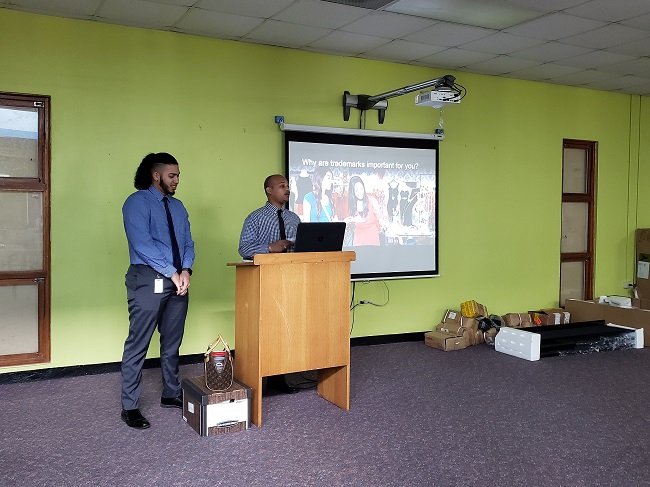
Gabriel Morla (left) and Corey Neysmith (right) Share the Importance of Trade Marks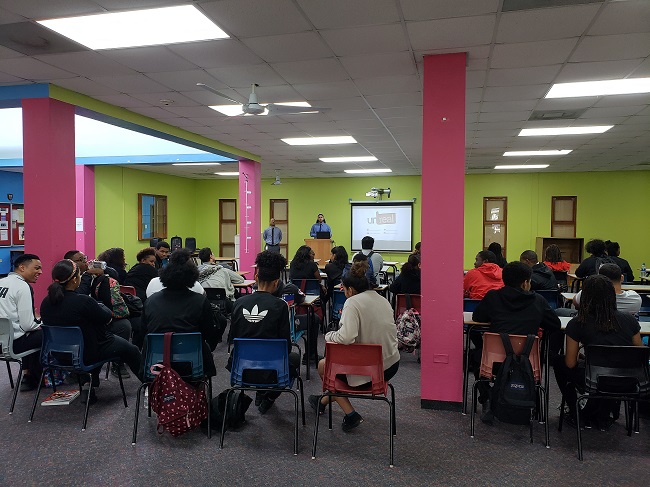
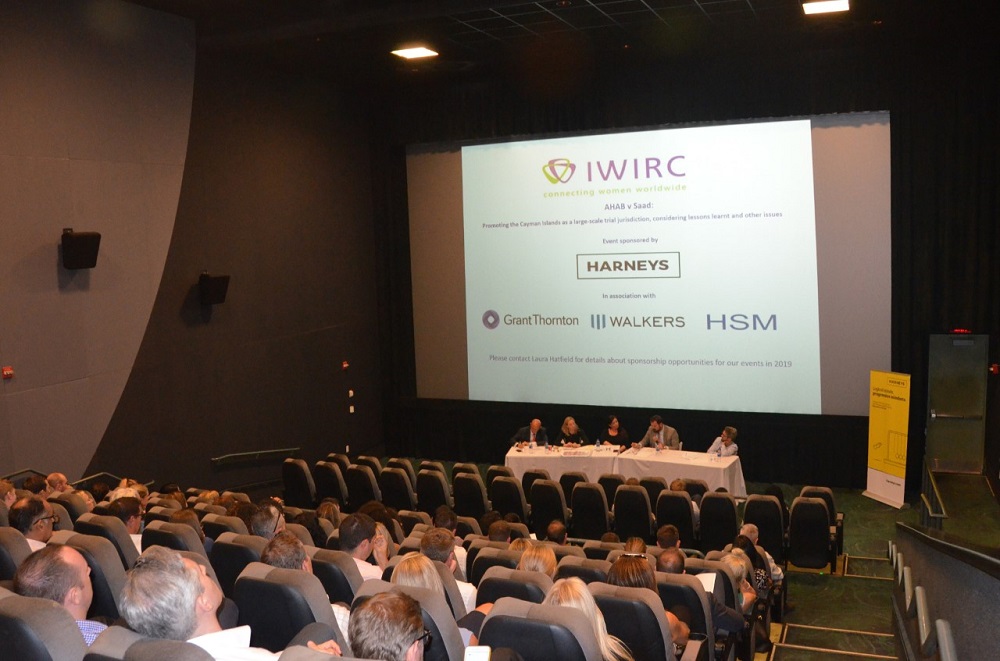
HSM Partner Ian Lambert promotes the Cayman Islands as a large-scale trial jurisdiction with International Women’s Insolvency & Restructuring Confederation (IWIRC) Cayman.
On November 26, Ian participated in a panel discussion on lessons learned and other issues for Cayman’s longest and most expensive case, AHAB v Saad.
Panelists also included Shelley White (Walkers), Hugh Dickson (Grant Thornton), Grainne King (Harneys) and William Peake (Harneys).
Their lively discussion and recount of this case showcased how the Cayman Islands’ legal framework is able to handle complex litigation and insolvency matters.
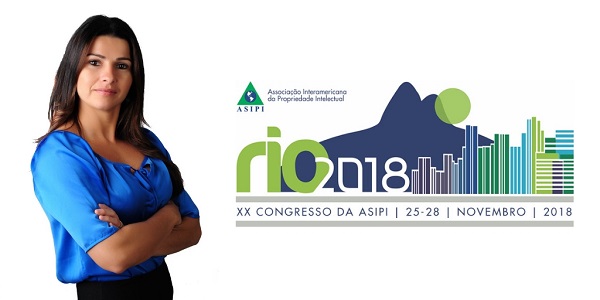
Jennifer Cotarelo-Choice, a Paralegal at HSM IP, will attend Asociación Interamericana de la Propiedad Intelectual’s (ASIPI) meeting in Brazil from Sunday, 25 November 2018 to Wednesday, 28 November 2018.
Jennifer is looking forward to catching up with existing clients and making new connections, email jcotarelo-choice@hsmoffice.com.
Our Head of Private Client and Trusts, Robert Mack, takes a look at Foundation Companies in the Cayman Islands and how they differ to trusts in the private client context.
In late 2017, Foundation Companies in the Cayman Islands were unveiled to the world. The Foundation Company (“FC”) was designed to act as a corporate wealth and succession planning vehicle; in some cases, it could be a viable alternative to a trust.
There are also new and unexpected uses for FCs, such as acting as a platform for emerging cryptocurrencies and special purpose vehicles in commercial transactions.
The first thing to understand about FCs is that they are merely a variant of a Cayman Islands company and are distinct in nature from civil law foundations found in places such as Panama, Lichtenstein, and certain offshore financial centers such as Jersey. FCs also have a separate legal personality, directors, officers, plus a registered office. So what sets them apart from other Cayman Islands companies? A few key distinctions are as follows:
- FCs are not designed to distribute profits to members, but rather they are meant to carry out particular purposes in accordance with its constitution. In the trust-substitute context, a key purpose is usually to hold valuable assets in order to provide a financial benefit to a defined class of beneficiaries;
- FCs do not have to issue shares, and can, therefore, be ownerless or ‘orphan’ vehicles;
- The purposes of an FC can be entrenched, so no person or court can alter them unless the founder of the FC permits it.
It is also important to understand just how FCs differ from trusts:
- Trusts do not have a separate legal personality. The term ‘trust’ merely describes the relationship which arises when assets/property are held by one person (i.e., a trustee) for the benefit of other persons or purposes (i.e., beneficial objects);
- Trustees are the legal owners of the trust assets;
- The terms of a trust can, in certain circumstances, be changed without the consent or approval of the settlor;
- Unless a Cayman Islands trust is a private purpose or charitable trust, it has a maximum duration of 150 years; FC’s, on the other hand, are perpetual;
- The courts of the Cayman Islands have broader scope to interfere in the administration of trusts than FCs.
Perhaps the biggest ‘leap of faith’ any person wishing to set up a trust must face is the fact that once they part with their valuable assets, it is the trustee who becomes the legal owner of those assets and it is the trustee who makes all the decisions about the management of those assets going forward[1]. This loss of control, while often beneficial from a planning perspective, is often a step too far for some clients, even though it is possible for a settlor of a Cayman Islands trust to reserve to himself or others, certain key administrative powers such as a power to control distributions of capital and income[2].
On the other hand, FCs allow a client to achieve effective control over the FC assets, whether directly (i.e., by taking up a role as a director or officer of the FC), or indirectly (i.e., by appointing trusted individuals as directors or officers of the FC).
While the vast majority of settlors will appoint a professional trustee to administer their trusts[3], an FC may be staffed by the client, family members, or trusted advisors[4]. This could result in minimising administrative expenses if professional directors and officers are not involved[5]. In contrast, for example, private purpose trusts (known as STAR trusts in the Cayman Islands) require that at least one of the trustees is a regulated Cayman Islands trust corporation, and such professional trustee will look to charge market rate for their services.
Foundation Companies in the Cayman Islands offers clients a new and exciting way for clients to structure their affairs with a more familiar corporate entity, and in addition the FC enables clients to be as hand-on or hands-off on the administration of the FC as they wish to be without the risk of tainting the structure[6]. For the client wary of trusts, the FC is an excellent alternative and worthy of consideration.
Cayman Financial Review
This article can also be seen in Cayman Financial Review – Q4 2018 issue.
Footnotes
[1] Subject to the terms of the trust instrument and the law generally. It is possible in some circumstances for a client to act as the trustee of his or her own trust, however, that is often inadvisable for a whole range of reasons which are outside of the scope of this article.
[2] Often times it is impractical or inadvisable for a Settlor to reserve such powers as it may have an adverse tax consequence in his or her place of tax residence.
[3] Due to the complexity of trust administration, tax efficiency, and Cayman Islands legislation which prescribe that professional trustees must appointed for certain types of trusts (ie. STAR trusts).
[4] The only requirement is that the Secretary of an FC must be a ‘qualified person’ being a person who is licensed to provide company management services in the Cayman Islands.
[5] An annual government maintenance fee of approximately US$853 is payable for each year the FC is registered however. Trusts to not attract any such annual fees.
[6] If too many trustee powers are usurped, or if the trustee/settlor relationship becomes corrupted there is a risk the trust may be deemed to be a ‘sham trust’.
HSM’s newest Senior Associate Adam Crane has been called to the Cayman Islands Bar on November 6, 2018.
Adam’s admission was moved by HSM Partner Ian Lambert, who summarised his qualifications for Justice Richard Williams. Adam hails from Nova Scotia, Canada and has substantive experience in commercial litigation, insolvency, restructuring and financial recovery matters.
Adam will focus on a wide range of civil litigation, acting for insolvency practitioners, banks, strata corporations and leading businesses based both in the Cayman Islands and overseas.
Managing Partner, Huw Moses, OBE notes: “Adam’s international experience is a real asset to our firm and we look forward to extending his services to our valued clients.”

L-R: HSM Partner, Ian Lambert; HSM Senior Associate, Adam Crane and Justice Richard Williams.
HSM’s Immigration team explores The Immigration (Amendment) Law, 2018 (“the Amendment Law”) that came into effect on 13 August 2018, and following this passage, new opportunities present themselves for persons who are married to a Caymanian and hold (or are seeking) Residency and Employment Rights Certificates as the spouse of a Caymanian.
According to documentation recently received from the Department of Immigration there are approximately 350 expatriates holding Residency and Employment Rights Certificates (RERC’s) as the spouse of a Caymanian. We expect this number will increase.
Unlike the RERC’s awarded to Permanent Residents, the RERC’s awarded to the spouse of a Caymanian were not previously permanent in nature. They only lasted for 7 years and the holder either had to seek the Right to be Caymanian (on the basis of 7 years’ marriage to a Caymanian) or seek to renew their RERC prior to its expiry.
Until the spouse of a Caymanian became Caymanian, they could not be said to be free from any immigration restriction on the period they are permitted to remain in the Islands given the 7 year period of validity of their RERC. This meant that they were unable to be naturalised or obtain a Cayman Islands passport during that 7 year period.
Cayman Islands Passports are only available to persons who hold British Overseas Territories Citizenship (“BOTC”) by virtue of a connection with the Cayman Islands. The process for being, or becoming, a BOTC of the Cayman Islands is set out in and governed by the British Nationality Act. That Act has at all relevant times required applicants for Naturalisation to have been resident in the Territory for a minimum of twelve months’ “free from Immigration Restriction for the period for which they may remain” prior to becoming eligible to apply for Naturalisation.
In contrast, the spouse of a Permanent Resident was able to seek Naturalisation a year after marrying a PR holding expatriate, and thereafter obtain a Cayman Passport. The result was that a spouse of a Caymanian was until very recently with the passing of the Amendment Law treated far less favourably. They would have to be married to a Caymanian for 7 years’, apply for Caymanian status on the grounds of 7 years’ marriage, obtain that status, and hold it for 12 months’ before being eligible to apply for naturalisation and thereafter, a Cayman Passport.
The Government has acted to ensure that a spouse of a Caymanian is subject to the same rules when seeking naturalisation and a Cayman Passport as the expatriate spouse of an expatriate PR holder. This change is welcomed and the authorities should be congratulated for making it.
The relevant amendment which came into effect on 13 August, has removed the 7 year expiry date on every RERC issued to a spouse of a Caymanian, in effect making their RERC Certificate indefinite in nature.
With no expiry date to their Certificate, a spouse of a Caymanian holding an RERC may now, provided they have held an RERC for no less than 12 months’ and have been legally and ordinarily resident in Cayman for no less than 5 years’, apply for Naturalisation on the Grounds of Residence. If they are married to a Caymanian, who is also a BOTC by virtue of a connection to the Cayman Islands and have been married and resident for 3 years’, an application for Naturalisation on the Grounds of Marriage to a BOTC can now be made.
This will greatly expedite the ability of a spouse of a Caymanian to seek and obtain Cayman Islands Passports and further, for them to thereafter seek registration as full British Citizens which, if granted, would enable them to hold full British Citizenship in addition to being British Overseas Territories Citizens.
Once the spouse of a Caymanian has been naturalised as a BOTC, they will be eligible to seek to become Caymanian on the basis of Residence some 5 years’ later or 15 years’ after first becoming Resident in the Cayman Islands, whichever is less. This is the mechanism by which most long term residents may become
Caymanian and is entirely consistent with the original intention of what started as the Caymanian Protection Law, that in order to be eligible to become Caymanian, applicants must first be British Subjects.
The ability of a spouse of a Caymanian to seek to become Caymanian relying on 7 years’ of marriage to a Caymanian (rather than on the basis of Naturalisation/Residence set out above) continues; although not least given issues that may arise following any breakdown of the marriage, prospective applicants for Caymanian Status may prefer (all other considerations being equal) to follow the Naturalisation/Residence route to becoming Caymanian rather than seeking status based on marriage.
Holders of RERC’s as a spouse of a Caymanian continue to enjoy unfettered access to the labour market and to be free to engage in any category of gainful occupation without having to pay annual fees.
The Government has elected to not require a spouse of a Caymanian to undertake any annual reporting requirements but given perceptions as to marriages of convenience and the potential for such spouses to be living apart, such provisions may need to be introduced in the future.
This article can also be seen in The Journal – November 2018 issue.
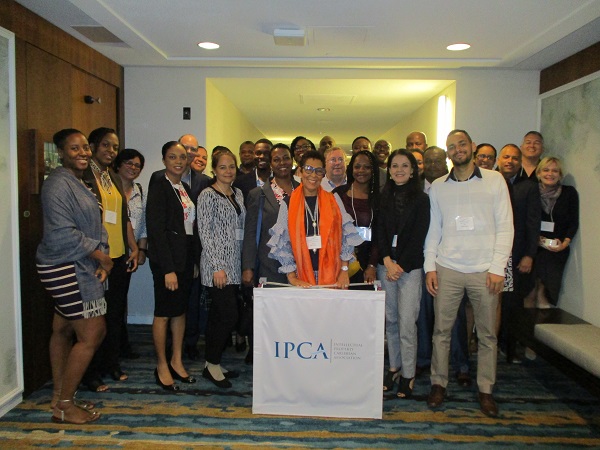
Huw Moses and Natasha Whitelocke of HSM IP attended the Intellectual Property Caribbean Association’s (IPCA) 4th AGM held at the Hilton Miami Airport Blue Lagoon in Miami, Florida on 3 November 2018. IP practitioners from all over the Caribbean attended the conference. The Panel Discussion considered the “(Lack of) Patent Protection in the Caribbean: Problems and Solutions”. For more details on this conference and to see photos, visit the IPCA website at http://www.ipca.website/annual-general-meeting-2018.
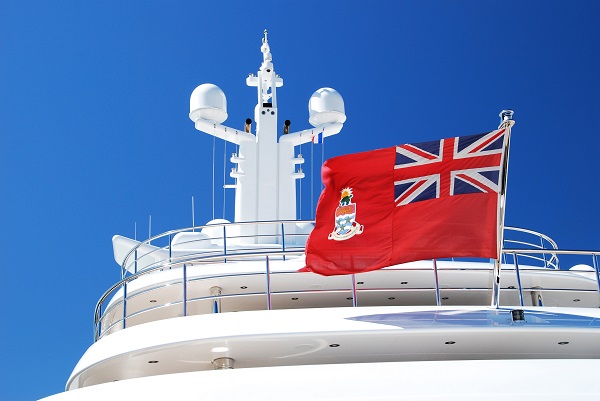
The Cayman Islands is recognised as one of the most prestigious flag states internationally and is a popular and attractive base for the registration of foreign owned vessels.
The Cayman Islands, consisting of Grand Cayman, Cayman Brac and Little Cayman, are a British overseas territory located in the western Caribbean Sea. Cayman is a major world offshore centre, which, in conjunction with its comprehensive maritime legislation, allows flexibility and safety for vessel owners in a tax neutral environment.
Cayman is a category 1 British Registry, affording Cayman registered vessels all the privileges that accompany the British Flag, along with full international recognition.
Additionally, a wide range of ownership structures is available to facilitate flagging a vessel in Cayman, and it is not always necessary for a Cayman Islands flagged vessel to be owned by a Cayman Islands individual or entity. Moreover, there are few restrictions on crew nationality for Cayman flagged vessels.
A full range of vessel registration options are offered by the Cayman Islands Shipping Registry (from bareboat charters to full registration).
HSM advises on all aspects of the vessel registration process in the Cayman Islands and maintains excellent relationships with the Cayman Islands Shipping Registry and is listed as a maritime services provider/partner.
For more details on our vessel registration services, visit hsmoffice.com/law/vessel-registration.
Fatal error: Uncaught Error: Call to undefined function twentythirteen_paging_nav() in /home/clients/d17af2243e6f179e393695ba6e9ce04e/hsmnew/wp-content/themes/hsm/author.php:52 Stack trace: #0 /home/clients/d17af2243e6f179e393695ba6e9ce04e/hsmnew/wp-includes/template-loader.php(86): include() #1 /home/clients/d17af2243e6f179e393695ba6e9ce04e/hsmnew/wp-blog-header.php(19): require_once('/home/clients/d...') #2 /home/clients/d17af2243e6f179e393695ba6e9ce04e/hsmnew/index.php(17): require('/home/clients/d...') #3 {main} thrown in /home/clients/d17af2243e6f179e393695ba6e9ce04e/hsmnew/wp-content/themes/hsm/author.php on line 52