All posts by hsmoffice
HSM IP’s Attorney Sophie Davies participated in World Intellectual Property Day celebrations on Wednesday April 26, 2017. Ms. Davies joined in a public forum in conjunction with the Cayman Islands Intellectual Property Office. She answered questions from members of the general public in regards to the new Intellectual Property laws which will soon come into force in the Cayman Islands.
The Cayman Islands has strong reasons to celebrate World Intellectual Property Day as three updated laws pertaining to trade marks, patents and design rights will be enacted very soon. A new and modernized copyright law was also enacted last year.
Managing Partner Huw Moses notes: “We appreciate participating in events such as these as they allow us to the opportunity discuss the importance of Intellectual Property rights with the local community and raise awareness.”
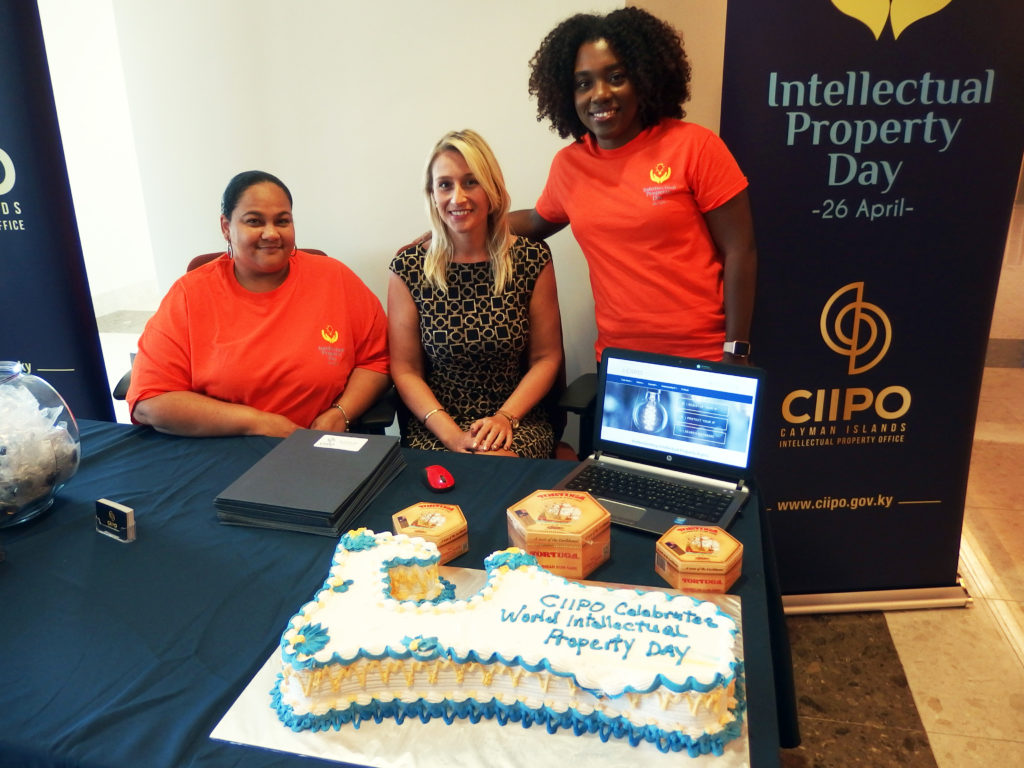
Photo Caption – IP Attorney Sophie Davies at The Government Administration Building with CIIPO Staff members.
HSM IP’s Attorney Sophie Davies and Head IP Paralegal Natasha Whitelocke presented the International Trademark Association’s (“INTA”) Unreal Campaign to a group of students at John Gray High School at a morning assembly held on Monday, 3 April 2017. The Unreal Campaign is INTA’s public awareness initiative designed to educate teenagers about the importance of trade marks, intellectual property, and the dangers of counterfeit products.
During the Assembly, Sophie and Natasha educated the students on the importance of trade marks and anti-counterfeiting initiatives. They showed the students examples of counterfeit and genuine goods by way of comparison and explained what to look out for in order to spot the difference. They also explained the many ways in which counterfeit goods can affect the local consumer as well as the local community.
Managing Partner Huw Moses notes: “We are pleased to present INTA’s Unreal campaign to JGHS students in the Cayman Islands. We appreciate the opportunity to educate, empower and encourage young adults in the local community about the importance of trade marks and anti-counterfeiting in order to equip them to make smarter purchasing decisions.”

Sophie Davies, Attorney presenting to JGHS Students

Natasha Whitelocke, Head IP Paralegal presenting to JGHS students.
HSM IP was given the opportunity to discuss the firm’s internship possibilities with John Gray High School Students on Friday, February 24, 2017. The IP team consisting of Ms. Lisa Chin-Forde, Ms. Kenyah Pinnock and Ms. Sophie Davies were on hand to present and join in the conversation with students in regards to their next education options, including attending the CIFEC programme.
Ms. Lisa Chin-Forde and Kenyah Pinnock who are both currently IP Assistants with HSM IP, revealed their experiences in the CIFEC programme. They also discussed their on the job experience and future ambitions to become paralegals at the firm. Ms. Pinnock and Ms. Chin-Ford were recruited a part of the CIFEC progamme and took part in the HSMIP Internship programme. IP Associate Ms. Sophie Davies additionally spoke with students about what employers look for when considering hiring CIFEC Students as well as a career in the legal profession especially in Intellectual Property.
HSM has worked with the CIFEC progamme since 2012 and recruits up to 12 new students per year from CIFEC to join our internship programme. The firm’s continued involvement in the CIFEC programme forms part of our commitment to the local community, as we continue to provide opportunities for young Caymanians to access the legal industry.
Managing Partner Huw Moses notes: “We are incredibly pleased to have CIFEC students play an integral role in our team. We aim to train them with the skills to achieve their full potential. We appreciate the opportunity to share our expertise with them and future students who may be interested in pursuing a career in law.”

Photo Caption – L- R: IP Associate Sophie Davies, Ms. Lisa Ford-Chin and Ms. Kenyah Pinnock Presenting at the John Gray High School Assembly.
NEW YEAR CHANGES TO PENSIONS
December 31, 2016 will mark not only the eve of a new year but also the commencement of The National Pensions (Amendment) Law 2016 (the “Law”). The Law will amend various sections of the principal law, The National Pensions Law (2012 Revision).
The provisions of the Law come into effect at various times and a few provisions will only come into force on a date yet to be announced by Cabinet.
This advisory highlights the major changes that relate primarily to Employers and Employees.

CHANGES AS OF 1 JANUARY 2017
- The year’s maximum pensionable earnings will increase to CI$87,000 requiring some Employees to contribute more towards their pension each year.
- All Employees between the age of 18 and 65 must be members of a pension plan.
- Persons who will attain age 60 in the next 12 years (i.e. between 1 January 2017 and 31 December 2029) can choose age 60 as their age of pension entitlement rather than having to wait until age 65 in order to apply for pension benefits.
- A new definition, the “Normal age of pension entitlement” has been introduced with effect from 31 December 2016. It refers to persons who have attained the age of 65 and to persons who will attain age 60 in the next 12 years and have elected age 60 as their age of pension entitlement.
- This is not a mandatory retirement age. It is the age at which a member can start to receive pension benefits.
- This definition will replace the commonly used term “normal retirement age”.
- The normal pension entitlement date will be reduced to 3 months after the attainment of age 65.
- Early retirement eligibility will increase from age 50 to age 55.
CHANGES AS OF 9 JANUARY 2017
- There will be changes to the pension withdrawal schedule and allowances for Retirement Savings Arrangements.
- There will be a minimum and maximum annual withdrawal amount that a pensioner can make based on the pensioner’s age and account balance. The current withdrawal maximum of CI$12,000, which has been in effect for the past 18 years will cease. The minimum annual withdrawal for all pensioners will be CI$12,480. This figure will be adjusted for inflation going forward.
- Pensioners who have larger amounts in their account will be able to withdraw an increasing amount on a yearly basis above the CI$12,480 threshold as well as have the option to withdraw a lump sum amount after age 90.
CHANGES AS OF 1 FEBRUARY 2017
- Employers, for any purpose, will be able to apply to the Director for verification of their compliance with the Law. If the Director is satisfied of their compliance, a verification will be issued upon payment of a prescribed fee.
- An Employer will be deemed compliant with the Law if all pension contributions, interest and fees have been paid and the Director has no knowledge that the Employer has contravened any provisions of the Law.
- Fines will be increased up to CI$10,000 for Administrators of pension plans and Employers who fail to comply with requests for information from the Director of Labour & Pensions. The late or non-payment of pension contributions will be handled by a new and extensive procedure that has been created under the Law.
- The fine for the administration of an unregistered pension plan will increase up to CI$10,000 and/or one year imprisonment.

CHANGES AS OF 1 MARCH 2017
- Comprehensive provisions protecting Employees from victimisation by Employers will be introduced. Victimisation will include dismissal, suspension, denial of promotion, demotion, redundancy, intimidation, reduction of earnings and/or benefits and discrimination by the Employer or other Employees.
- An Employee that reasonably believes that an Employer has failed to comply with the Law can make a written disclosure to the Director or an authorised officer.
- Where an Employee believes that he has been victimised as a result of a disclosure, he may file a complaint with the Labour Tribunal. It is unknown what types of awards the tribunal will make in cases where there is a finding of victimisation.
- The definition of “employee” will be amended to expressly exclude Caymanians (as defined in the Immigration Law 2015 Revision) who are under age 23 and pursuing full-time education. These persons and their Employers will be exempt from having to contribute to a pension plan.
- The definition of “household domestic” found in the Labour Law (2011 Revision) will be added to the definitions in the Law. This will have the effect of excluding from the Law not only maids but also care givers (of adults or children) and gardeners who work in a private home and not for themselves or a company.
- Employers must keep proper payroll accounts, books and records for all sums paid to a pension plan. These records must give a true and fair view of the state of affairs of the Employer’s pension plan transactions.
- The records must include the names of Employees; current employment contract information; employment date and duration; full-time and part-time status; rate of pay; gross and net pay; bonuses; resignations and terminations; name of pension plan; all deductions from earnings for pension contributions; all contributions made on behalf of Employees; evidence of pension plan payments; contribution period and dates of payment and any pension plan interest payments.
- Records must be kept for a minimum of 5 years. Failure to maintain these records is an offence and the Employer will be liable on summary conviction to a fine of up to CI$10,000.
- Employers must provide their Employees with information about their pension plan and obtain a written acknowledgement of receipt signed by the Employees. Failure to comply is an offence and the Employer will be liable on summary conviction to a fine of up to CI$10,000.
- Pension contributions must not be co-mingled with other payments that Employers are required to make such as health insurance.
CHANGES AS OF 31 MARCH 2017
- Personal liability for corporate directors and officers will be introduced. Where a company commits an offence under the Law, every director and officer concerned in the management of the company commits the offence.
- The directors and officers will not be held liable if they are able to prove that the offence was committed without their consent or connivance or that they exercised reasonable diligence to prevent the commission of the offence.
- The Director will be able to bring criminal proceedings for any offence committed under the Law provided the consent of the Director of Public Prosecutions is first obtained. The Director will also be able to appear in court to prosecute the offence. This gives the Director the ability to choose whether to bring a criminal or civil claim.
- Subject to the pension plan, a member may access their additional voluntary contributions (“AVCs”) prior to age 65 but only for certain purposes.
- AVCs can be accessed for (1) medical purposes not covered by the member’s health insurance; (2) temporary unemployment for the first 6 months following the first 3 months after termination; (3) housing purposes including the construction of the member’s dwelling house, purchase of residential land or the payment of the total balance owed on the member’s mortgage; and (4) educational purposes of the member or a dependent child under the age of 23 pursuing full-time education.

CHANGES AS OF 31 DECEMBER 2017
- An Employee who has terminated employment with a specific Employer and is entitled to a deferred benefit may ask the Administrator of the fund to transfer the commuted value of the benefit outside the Cayman Islands if the Employee ceases to reside in the islands and no contributions have been made to the plan for 2 or more years.

CHANGES AS OF 31 DECEMBER 2019
- Refunds of contributions to pension plans will only be permissible where (1) the Director approves; (2) the pension plan permits refunds; (3) the member has attained age 65; and (4) the member provides evidence that the benefit cannot be transferred to another pension plan, saving arrangement or life annuity.
CHANGES TO TAKE EFFECT AT A LATER DATE
- Upon application for membership to a pension plan Administrators must provide details of the returns and expense ratios of the fund in addition to the information normally provided.
- Administrators of pension funds must issue written statements of the fund semi-annually. The statements can be issued electronically with the consent of the plan members.
- Employers will not be required to contribute to a pension plan for Employees on work permits who are working in the islands for the first time for a continuous period of 6 months or less.
- Pension contributions must be remitted on or before the 15th of the next month following the Employee’s receipt of remuneration or expectation of remuneration. This will be known as the “Contribution Date Deadline”.
- If the contribution is not received by the Administrator on close of business on the Contribution Date Deadline the contributions will be classified as a “Delinquent Contribution”.
- The Administrator will then be required to take immediate action to collect the Delinquent Contribution (including accrued interest).
- The Administrator must notify the Director and the affected Employees in writing and may also publish the name of the Employer in more than one publication if the Director instructs.
- The additional expenses of the Administrator for the additional reporting will be borne by the Employer and not the pension plan or the Employees.
- The Director can write a letter of demand giving the Employer 14 days to effect payment or demand the appearance of the Employer to explain the delinquency.
- The Director can then order payment, commence legal proceedings or publish the Employer’s breaches including their name, offence and the applicable penalty. Personal information of the Employees cannot be published.
- Where the Director orders payment and the Employer fails to pay within the time specified by the Director, the Employer will be liable on summary conviction to a fine of up to CI$20,000 or 2 years imprisonment or both (in addition to the delinquent contributions, fees and expenses).
- The Employer will be liable to pay interest to the pension fund from the Contribution Date Deadline up to the date of actual payment of contributions to the fund.
- Interest is payable on all monies due in respect of the pension fund at the current prime rate plus 5% calculated on a daily basis. This is in addition to any other fees, fines and penalties specified by the Law or a court order.
- The Director will be able to investigate the activities of Employers in respect of their contributions to pension plans and share any information obtained with other Government departments and agencies.
At A Glance

For more information contact the HSM Employment Team:

The HSM Group is growing and is enhancing its legal services with a new Head of Private Client & Trusts attorney, Mr. Robert Mack.
Mr. Robert Mack previously worked at top-tier international law firms in the Cayman Islands and London and was most recently Head of Private Client & Trusts at Mourant Ozannes in the Cayman Islands. He specialises in private and commercial trusts including purpose/STAR, reserved powers, unit, charitable, and fixed interest trusts. Robert also has expertise in the area of Will and Estates including drafting Wills and Codicils, preparing applications for Grants of Probate, applications to re-seal foreign Grants of Probate, and all matters concerning the administration of estates.
He was admitted as an attorney in the Cayman Islands in 2007. Since 2010 Robert has been a member of the local branch of the Society of Trusts and Estate Practitioners (“STEP”) where he currently holds the position of branch Secretary. Robert also sits on the STEP legislative review sub-committee, which works in partnership with the Cayman Islands Government to implement and improve legislation connected to the trusts and private client industry. Robert is also holds a TEP designation.
Partner, Huw Moses OBE notes: “Robert brings years of valuable experience to the firm. We are delighted to be able to extend Robert’s expertise to our valued clients.”

Robert Mack
On 16 November 2016, the Cayman Islands Government passed two IP laws: (1) The Design Rights Registration Law, 2016 and (2) The Patents and Trade Marks (Amendment) Law, 2016. Copies of the laws were published with Gazette No. 25 dated 5 December 2016. The long-awaited new Trade Marks Law has also been approved by Government and is expected to be published shortly. We anticipate that the laws will be implemented on or before 1 April 2017.
What is the impact of The Design Rights Registration Law, 2016?
The new law provides owners of original UK registered designs (UKRD) and registered Community designs (RCDs) with the opportunity to extend their rights to the Cayman Islands. The extension / re-registration process affords the owner with all the equivalent rights and remedies available to them in respect of that design right in the UK. The Cayman Islands does not have its own unregistered design right regime, so protection should be sought through the registration process.
In order to obtain protection, applications must be made via a registered agent in the Cayman Islands. No power of attorney is required. All that is needed to proceed are the particulars of the UKRD or RCD to be re-registered, along with the applicable fee. The official fee is US$182.93, which is reasonable, but more expensive than in the UK for example, where it costs £60 (around US$76) to file a paper application and £50 (around US$64) to file an application electronically.
Given that most applications should be accepted on the basis that they have already been registered in the UK or the EU, generally it will not be necessary to conduct a pre-application search of the Cayman Designs Register. Examination will be limited to checking the particulars of the UKRD/RCD and determining whether the application consists of or contains: (a) national flags, insignia of royalty, insignia of international organisations and national emblems or the design of such flags, insignia or emblems; or (b) words, letters or devices likely to lead persons to think that the applicant either has, or recently has had, government patronage or authorisation. Such applications will be accepted only if the Registrar is satisfied that consent to the re-registration has been given by, or on behalf of, the respective government or international organisation.
Once an application passes the examination stage, it will proceed to registration and a certificate of registration will be issued. The duration and validity of the Cayman registration will be entirely dependent on the duration and validity of the underlying UKRD or RCD. The Cayman re-registration will have the same expiry/renewal date as the underlying UKRD or RCD.
Annual maintenance fees will become payable on 1 January each year until the expiration or renewal of the Cayman Islands Design Registration. A penalty fee will be incurred where annual fees are not paid within the grace period, which ends on 31 March each year. Upon renewal, the annual fee cycle will begin again. Failure to pay annual fees will result in the rights protected by the registration being placed in abeyance, and the proprietor will be unable to enforce the registration against third party infringers in the Cayman Islands. Furthermore, it will not be possible to process renewals until all outstanding annual fees are paid up to date. Moreover, default in the payment of the annual fees and penalties for more than twelve months renders the record of a design right liable to cancellation by the Registrar.
What is the impact of The Patents and Trade Marks (Amendment) Law, 2016?
The primary purpose of the Amendment Law is to essentially strip out all references to “trade marks” in the existing Patents and Trade Marks Law in order to make way for the new Trade Marks Law expected to come into force in 2017. Whilst under the new Trade Marks Law only national trade mark applications will be accepted in the Cayman Islands, the Patents law will continue only to provide for the re-registration / extension of UK Registered Patents to Cayman; there is no national registration route.
One interesting addition to the existing law concerns the assertion of patent infringement in bad faith. Section 15A of the new Patents Law provides that “A person shall not make an assertion of patent infringement in bad faith […]” in the Cayman Islands. The Court will not recognize or enforce a foreign judgment or give effect to an estoppel based on a foreign judgement insofar as the claim is based on an assertion of patent infringement made in bad faith. Given that Cayman has not to date been a target jurisdiction for patent trolls it is doubtful whether the new provision will be utilized.
If you would like more information on design, trade mark or patent protection please contact our Attorney, Sophie Davies, at sdavies@hsmoffice.com.
HSM proudly sponsored a team of staff members to run in the annual Intertrust Marathon on December 4, 2016. Harriet Waterhouse, Sarah-Jane Allison, Daniella Booden and Dillion Ebanks all participated in the event. This was the first time for the team and they did exceptionally well during the race. The team was able to complete the marathon in just over five hours.
Managing Partner Huw Moses notes: “We are thrilled at the outcome for the HSM sponsored team. Each of the team members trained hard and their dedication paid off for the event.”

Photo Caption: HSM Participates in 2016 Intertrust Marathon L-R (Harriet Waterhouse, Daniella Bodden, Sarah-Jane Allison and Dillion Ebanks)
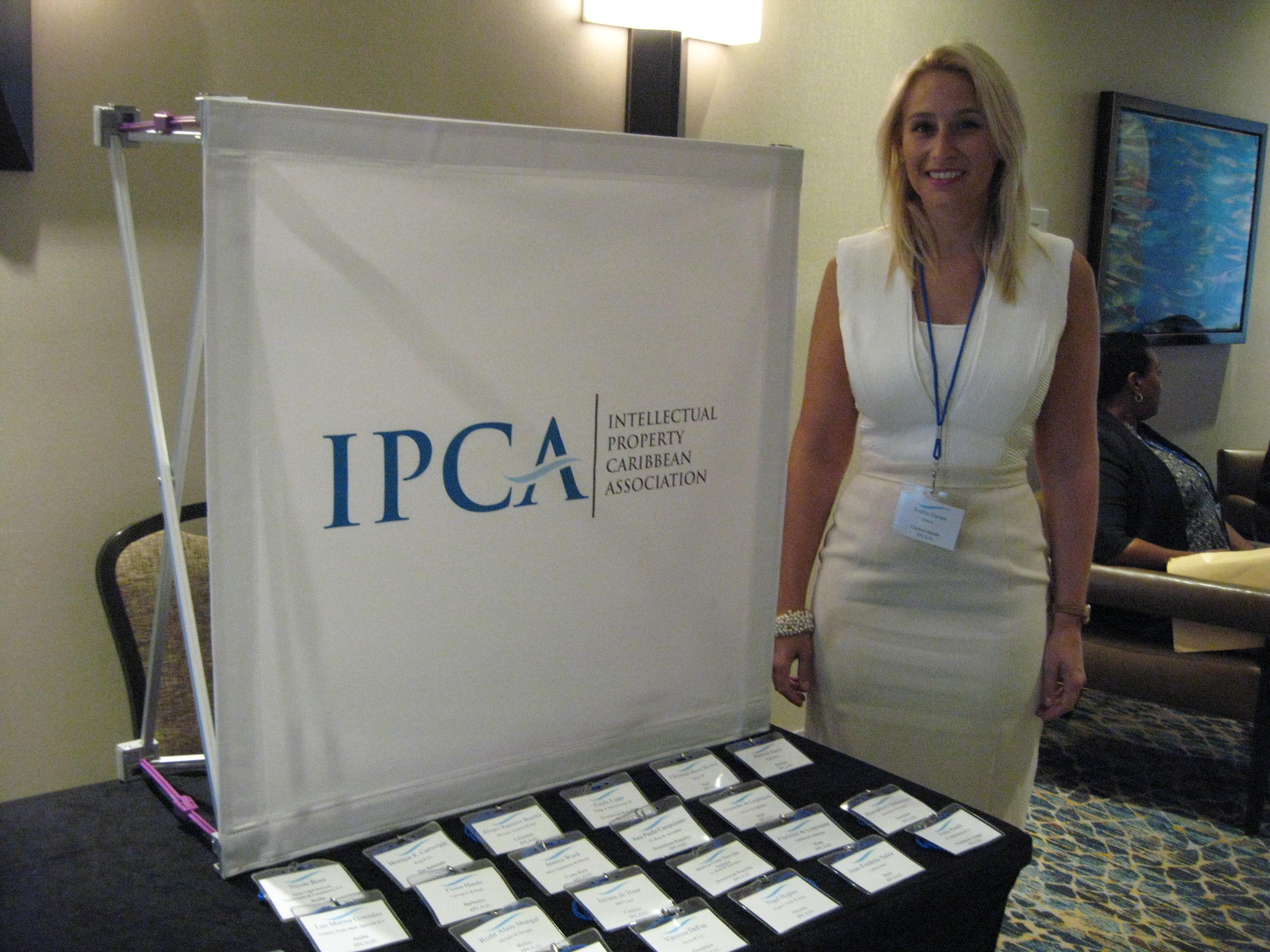
Huw Moses and Sophie Davies of HSM IP attended Intellectual Property Caribbean Association’s (IPCA) 2nd AGM held at the Miami Marriott Biscayne Bay on 12 November 2016. Huw Moses chaired the meeting, which was well attended by 30 representatives from 26 firms from 18 countries from the Caribbean. A panel session about IP enforcement in the Caribbean focusing on the reality and challenges fostered some good discussion. At the meeting Sophie Davies was appointed Chair of the Education and Training Committee of IPCA. An evening reception for members took place from 6 p.m. and was well attended.

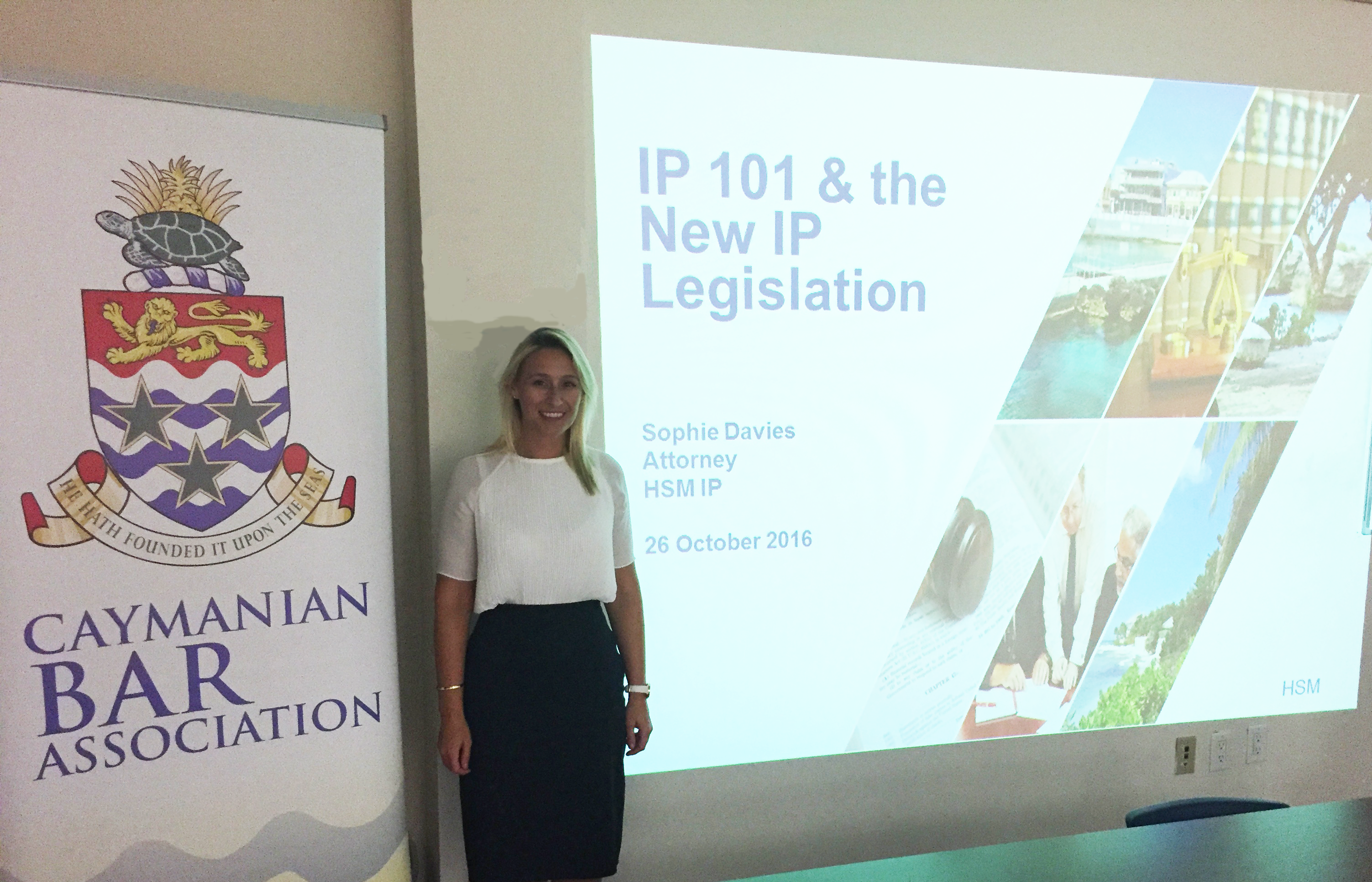
Sophie Davies delivered a presentation focusing on IP basics to the Caymanian Bar Association on 27 October 2016. The session was attended by PPC Students, Articled Clerks and Newly Qualified Lawyers (up to 3 years PQE) amongst others.
Sophie Davies spoke on the “Unlikely Yet Lucrative Relationship between Money Laundering and Intellectual Property” at Global Compliance Solutions’ 12th Annual Anti-Money Laundering / Compliance & Financial Crime Conference held at the Grand Cayman Marriott Beach Resort, Cayman Islands, on 14 October 2016. The Conference was a two-day affair and featured a variety speakers from the USA and Canada.
Fatal error: Uncaught Error: Call to undefined function twentythirteen_paging_nav() in /home/clients/d17af2243e6f179e393695ba6e9ce04e/hsmnew/wp-content/themes/hsm/author.php:52 Stack trace: #0 /home/clients/d17af2243e6f179e393695ba6e9ce04e/hsmnew/wp-includes/template-loader.php(86): include() #1 /home/clients/d17af2243e6f179e393695ba6e9ce04e/hsmnew/wp-blog-header.php(19): require_once('/home/clients/d...') #2 /home/clients/d17af2243e6f179e393695ba6e9ce04e/hsmnew/index.php(17): require('/home/clients/d...') #3 {main} thrown in /home/clients/d17af2243e6f179e393695ba6e9ce04e/hsmnew/wp-content/themes/hsm/author.php on line 52