Category Archives: HSM LAW
The Cayman Islands are widely known for being a tax-neutral jurisdiction. This means that there are no income, inheritance, sales, corporation, capital gains or withholding taxes in Cayman.
As such, newcomers or first time buyers are often confused by the requirement to pay ‘stamp duty’ on real estate transactions. We are often met with the question “but I thought there was no property tax in Cayman?”
What is Stamp Duty and what is it payable on?
Stamp duty is a charge that is levied on a number of specified instruments[1] at a prescribed rate, for the revenue of the Islands.[2] It is usually payable by the transferee (i.e. the purchaser or tenant) and must typically be paid within 45 days of the execution of the relevant documents to that transaction (e.g. the Transfer of Land, Charge documents, or Lease Agreement).
The amount of stamp duty payable may be fixed (fixed duty) or may vary in accordance with the value of the consideration passing under the instrument (ad valorem duty).
Real estate documents which attract stamp duty include, but are not limited to:
| · Administration | · Deeds | · Probate |
| · Assignments of Contracts | · Discharge of Interest | · Purchase Agreements |
| · Assignment of Leases | · Easements | · Release of Interest |
| · Bills of Sale | · Exchanges | · Sale of Land |
| · Charges | · Leases | · Transfer of Land |
| · Contracts for Sale | · Mortgages | · Withdrawal of Caution |
| · Conveyance | · Power of Attorney |
Additionally, subject to certain exceptions, [3] ad valorem stamp duty is payable on the following real estate transactions:
Conveyances or transfers[4] of any immovable property (freehold or leasehold):
Ad valorem stamp duty is payable on conveyances of property, Transfers of Land, Sales of Land or on any document[5] which has the effect of legally passing the freehold or absolute title in land, property or condominium from one entity to another.
The stamp duty payable on such instruments is assessed by the Valuation and Estates Office and is payable on the consideration (purchase price) or market value[6] of the property, whichever is higher.
Generally, stamp duty is payable at a rate of 7.5% on the market value of property, whether undeveloped ‘raw’ land or developed land with buildings on it. However, concessions or waivers may be available in, inter alia, the following circumstances:
- (i) First time Caymanian purchasers;
- (ii) Transfers through Natural Love and Affection
- (iii) Pre-construction/ Developments;
- (iv) Transfers through the death of an owner, or subsequent divestment of estate;
- (v) Transfers from a landholding company to a shareholder owning at least 45% of the shares (or vice versa.
Leases
Stamp duty is payable on all written documents which convey or transfer a proprietary interest, including a leasehold interest (whether registerable at Lands and Survey or not) of a particular parcel or parcels of land. It is irrelevant whether the document itself is entitled “tenancy”, “lease”, “agreement” or indeed “licences” or “licences to occupy” if the true nature of the document conveys or transfers a proprietary interest.
The current rates of stamp duty payable on a lease or lease agreement are:
- (i) For terms less than 1 year: 5% of the total rent payable;
- (ii) For terms lasting 1 year or more, but not exceeding 5 years: 5% of the average annual rent;[7]
- (iii) For terms exceeding 5 years, but not exceeding 10 years: 10% of the average annual rent;
- (iv) For terms exceeding 10 years, but not exceeding 30 years: 20% of the average annual rent.
For terms exceeding 30 years, the duty is the same as on a Transfer of Land based on the full market value of the real estate or interest in it. If the rent in the lease is considered to be less than market value, for the purposes of calculating the stamp duty, the average annual rent will be declared at the market value having regard to any premium charged.
It is worth noting that verbal agreements providing exclusive possession of a property do not attract stamp duty. However, it is often said that verbal contracts are “not worth the paper they are written on” because of the inherent risks associated with a lack of written evidence, particularly where disputes between the landlord and tenant arise
Mortgages over immovable property (i.e. real estate)
For a traditional mortgage or charge over a property including debentures, equitable mortgages or legal mortgages, the rate of stamp duty payable is dependent on the amount of money advanced (or sum secured) and the type of mortgage granted as follows:
- (i) where the sum secured does not exceed CI$300,000, 1% of the money advanced; or
- (ii) where the sum secured exceeds CI$300,000 (whether initially or after a further advance), 1.5% of the money advanced.
Insurance Policies
When purchasing property, most purchasers will attain property insurance, for which the stamp duty payable is 2% of the cost of the new or renewed property insurance premiums.
Additionally, the majority of lending institutions will require assignment of life insurance/assurance equal to or exceeding the value of the amount borrowed. For life insurance policies, the stamp duty payable is:
- (i) CI$25 for policies not exceeding CI$1,000; or
- (ii) The greater of CI$25 or 0.01% of the amount insured, up to a maximum of CI$200, for policies exceeding CI$1,000.
Caymanians and Stamp Duty Waiver Eligibility
(Updated September 2023)
The Cayman Islands Ministry of Finance and Economic Development (“MoF”) updated stamp duty concessions for Caymanians as follows:
Individual First Purchase
Raw land:
- no stamp duty up to CI$250,000
- stamp duty will be assessed on the property value difference above CI$250,000 but less than $350,000 at 3.75%.
Developed residential property or home:
- no stamp duty up to CI$550,000
- stamp duty will be assessed on the property value difference above CI$550,000 but less than CI$650,000 at 3.75%.
Group (2-10 Caymanians) First Purchase
Raw land:
- no stamp duty up to CI$450,000
- stamp duty will be assessed on the property value difference above CI$450,000 but less than CI$550,000 at 3.75%.
Developed residential property or home:
- no stamp duty up to CI$600,000
- stamp duty will be assessed on the property value difference above CI$600,000 but less than CI$700,000 at 3.75%
Individual Second Purchase
Raw land:
- stamp duty will be assessed at 3.75% up to CI$300,000.
Developed residential property or home:
- stamp duty will be assessed at 3.75% up to CI$600,000.
Group (2-10 Caymanians) Second Purchase
Raw land:
- stamp duty will be assessed at 3.75% on property value up to CI$550,000.
Developed residential property or home:
- stamp duty will be assessed at 3.75% on property value up to CI$700,000.
Other
Subject to limited exceptions, ad valorem share transfer tax is payable on the transfer or issue of equity capital in a land holding corporation at the rate of 7.5% of the proportionate value of the entire land holding. A land holding corporation includes a partnership, foreign corporation, chartered corporation, mutual fund or incorporated company (but not a corporation sole or charitable corporation) holding any legal or beneficial interest (excluding interests created pursuant to bona fide security instruments) in landed property in the Cayman Islands (or interest in another land holding corporation). Landed property includes freehold interests in Cayman Islands real property and any leasehold interest where the original term exceeded 30 years.
Most other instruments and documents are subject to a fixed rate of stamp duty in comparatively nominal amounts. Registrable instruments are also subject to relatively immaterial registration fees.
Subject to limited exceptions, real estate used for paid tourist accommodation attracts tax at 13% of the amount charged to each tourist.
There are no other domestic taxes or municipal rates currently payable on the occupation, acquisition, ownership or disposal of Cayman Islands real property or income deriving therefrom.
Penalties for failing to pay stamp duty?
Importantly, the Schedule to the Stamp Duty Law (2019 Revision) provides for heavy fines and even potential criminal liability for persons found to have failed to pay the relevant stamp duty on an instrument upon which duty is payable.
Have questions?
Please contact the property team at HSM directly at property@hsmoffice.com.
Footnotes
[1] These instruments are specified in the Schedule to the Stamp Duty Law (2019 Revision) (the ‘SDL’).
[2] Importantly, duties chargeable under section 1 of the Stamp Duty Law (2019 Revision) are recoverable as civil debts at the suit of the Commissioner. The Minister of Finance is the Commissioner but has delegated responsibility to Lands and Survey for the Assessment and Collection of Stamp Duty on all documents relating to immovable property.
[3] Subject to certain exceptions at the discretion of the Minister of Finance.
[4] See the Schedule to the SDL for definition of “conveyance or transfer”.
[5] This includes any instrument transferring an interest in land, whether prepared pursuant to the Registered Land Law (2018 Revision), Registered Land Rules (2018 Revision) or otherwise.
[6] Pursuant to para (3) of the Schedule to the SDL, the market value of any property is the estimated amount for which a property should exchange on the date of valuation between a willing buyer and a willing seller in an arm’s-length transaction after proper marketing wherein the parties had each acted knowledgeably, prudently and without compulsion.
[7] Notably, any lease reserving a term of 2 years or more must be in the prescribed form (Lands & Survey Form RL8).
Our Senior Associate, Adam Crane, will be attending and speaking at the American Bankruptcy Institute (ABI) Cross-Border Insolvency Program on November 7, 2019 in Manhattan (New York) at Dentons US Conference Center.
Adam will be speaking in a panel discussion from 10:45am to 11:45am. The topic is: ‘Scaling the Tower of Babel: Stakeholder Communications in Cross-Border Cases’ – hosted by ABI’s International Committee.
The panel will explore strategies and pitfalls of communications among different types of stakeholders in cross-border cases, including communications between the debtors and their creditors, the various creditor groups themselves, stakeholders and the applicable courts, and communications between the judges in various jurisdictions.
Joining Adam on the panel will be Hon. Robert D. Drain of U.S. Bankruptcy Court (S.D.N.Y.) (White Plains, N.Y.), Judith Elkin of Judith Elkin PLLC (New Rochelle, N.Y.), Seth R. Freeman of GlassRatner Advisory & Capital Group LLC (San Francisco) and Tim Wright of Bedell Cristin (Road Town, BVI).
We look forward to connecting with you at this conference.
Key Contact:
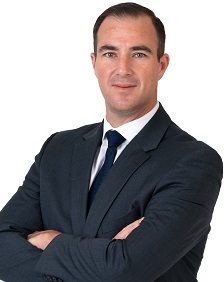
Adam Crane – Senior Associate
acrane@hsmoffice.com
Tel: +1 345 815 7364
HSM celebrates seven years in business in the Cayman Islands. Named after Huw St. J. Moses OBE. HSM was founded on 1 October 2012.
HSM is comprised of three entities: HSM Chambers, offering legal services; HSM Corporate Services, a corporate service provider and HSM IP, a specialist intellectual property law practice.
The years have been filled with exciting growth, rising from 12 employees (2 partners) to over 50 employees (4 partners) and adding on practices to become a full-service legal provider.
When HSM launched, they originally offered expert advice on matters pertaining to intellectual property, immigration, employment, litigation, property and debt collection. In December 2013, HSM welcomed Robert Mack – Head of Private Client and Trusts. In August 2015, they launched HSM Corporate Services Ltd. and with its growth, welcomed Peter de Vere – Head of Corporate and Commercial in February 2018.
In October 2016, HSM moved offices from Buckingham Square to its own building (formally Butterfield House) on 68 Fort Street in George Town. This move was necessary to facilitate the growth in staff and the location is within walking distance to Court and other Government Offices.
HSM is committed to giving back to the community in many different ways. Each year they support the Cayman Islands Further Education Centre (CIFEC) Internship Programme by participating in their annual Career Fair and offering internships for up to 16 students during the academic year, as well as offering paid summer placements. For the past four years, HSM is proud to support sports with sponsoring the HSM Vipers – a team with the Cayman Islands Flag Football Association Women’s League.
HSM recognises the importance of offering article clerkship opportunities to aspiring lawyers and has offered two positions so far. Majdi Beji was the first, being called to the Cayman Islands Bar in 2017 and Suneeta Lee was called to the bar in May 2019. Both attorneys are employed with HSM.
Reflecting back on the progress HSM has made within seven years to become a leading law firm in the Cayman Islands, Huw Moses commented “I can only but wonder what may happen in the next seven years but with a strong and dedicated team which we have built up I know we are well paced for the future.”
HSM looks forward to creating and maintaining close relationships with their clients whilst continually seeking to enhance their delivery of legal services for many years to come.
Local law firm HSM has once again sponsored a flag football team, the HSM Vipers. For the past four years, HSM is proud to support sports with the Cayman Islands Flag Football Association Women’s League.
HSM values the role that sports play in our community. It not only promotes a healthy lifestyle, but encourages teamwork both on and off the field.
The HSM Vipers prove to be an unstoppable force having won the league three years in a row and already six weeks into the 2019 season, their current record is 5-1
Sporting new jerseys, the HSM Vipers team is comprised of the following teammates: Jennifer Cotarelo-Choice (Paralegal at HSM IP), Jamie-Lauren McTaggart, Nathanya Tibbetts, Lisa Malice, Alicia Evans, Shanelle Frederick, Dionne Whittaker, Schmarrah McCarthy, Renee Chisholm, Stephanie Watler, Racquel Brown, Tanjana Campbell, Sara Marino, Glenita Logan, Maggie Ebanks, Kimberly David, Kimeria David, Hortencia Jackson, Joanne Ziegler, Erica Burke, Paige Russell and Mirta Sally.
To keep track of their upcoming games, visit www.ciffa.ky.

HSM is proud to be ranked in the 2019 assessment of notable law firms by Benchmark Litigation Latin America in the Cayman Islands.
This recognition highlights HSM’s ability to successfully handle litigation and dispute matters.
In addition to the firm being recognised, HSM Partners Ian Lambert and William Helfrecht have been featured as stars in the field by Benchmark Litigation along with Senior Associate Adam Crane, who has been featured as a future star.
Benchmark Litigation highlights HSM’s involvement in acting for the Joint Official Liquidators of six Cayman Islands Funds related to Bahraini Awal Bank BSC (AwalCos) – the longest trial ever litigated in the Cayman Islands. Click here to read more details.
Benchmark Litigation Latin America is known to be the definitive guide to the region’s leading litigation law firms and lawyers. They have been researching and publishing firms since 2008 and their coverage expands beyond Latin American to cover areas in the Unites States, Canada and most recently, Europe and the Asia-Pacific region.
Key Contacts:

Ian Lambert
Partner
ilambert@hsmoffice.com
Tel: +1 345 815 7421

William Helfrecht
Partner
whelfrecht@hsmoffice.com Tel: +1 345 815 7418
Adam Crane
Senior Associate
acrane@hsmoffice.com
Tel: +1 345 815 7364
The HSM Group has once again opened its doors for their summer internship programme and has welcomed four students from the Cayman Islands Further Education Centre (CIFEC).
Paula Brown, Amelia Lamie, Xylina Ritch and Yanina Montero have joined HSM’s team. As a full-service law firm in the Cayman Islands, HSM is able to offer them a wide-range of experiences including Corporate Services, Debt Collection, Immigration and Finance.
This internship comes off the heels of a 10-month work experience stint with the CIFEC programme, where these students along with 12 others came to work at HSM twice a week during school hours. HSM’s summer internship will allow them to hone in on the skills they have learned thus far and make meaningful contributions as regular members of the team.
“Their ambition and willingness to learn inspires us,” shares HSM Managing Partner, Huw Moses OBE. “Our team looks forward to this experience each year and we are proud to be able to help mold Cayman’s next generation of leaders.”
HSM is an avid supporter of the CIFEC programme and will be participating at CIFEC’s annual career fair in September. At this time, they plan to take on at least 10 students who are looking for a dynamic experience in the legal field. HSM has supported the CIFEC programme since they opened their doors in 2012 and employs six CIFEC graduates full-time.
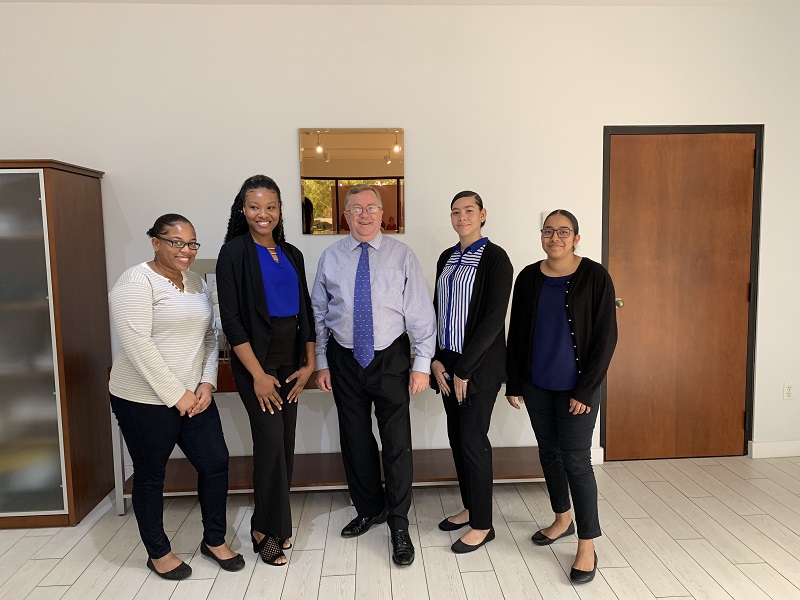
(L-R): Paula Brown, Amelia Lamie, Huw Moses (HSM Managing Partner), Xylina Ritch and Yanina Montero.
The Cayman Islands, consisting of Grand Cayman, Cayman Brac and Little Cayman, are a British overseas territory located in the western Caribbean Sea.
Cayman is a major world offshore centre and a tax neutral environment, which, in conjunction with the Cayman Register being rated as a “Category 1 Aviation Regulatory Authority” by the US Federal Aviation Administration, makes it an attractive choice for many owners and management companies with corporate aircrafts.
The Cayman Islands, since 1976, has been attracting a number of Aircraft Registrations and presents a viable alternative to the US, and other registration jurisdictions.
The Cayman Islands acts under the purview of the British Civil Aviation Authority.
The process of registration generally takes 2 to 3 weeks to complete.
The Cayman Islands aircraft register is highly respected and recognised throughout the international aviation industry. The majority of the aircraft on the Aircraft Register are private exclusive jets but there is also increasing interest in the Cayman Register to register commercial aircrafts.
The Cayman Register can be used to register an aircraft in the “private” category, and this has been expanded to include all turbo-jet aircraft, all other aircraft above 5,700kg and helicopters that are based on yachts.
Benefits of Cayman Registration
- Tax Neutrality
- Low Profile Registration Mark
- Compromise Jurisdiction where an owner and financier reach an agreement to register in a neutral jurisdiction.
- Efficient Regulation
- Type Certifications – By registering on the Aircraft Register the expense of being the first to register a given type of aircraft elsewhere can potentially be avoided
- The Cayman Islands Civil Aviation Authority are efficient at responding to owners and operators’ queries
Why HSM?
HSM is a law firm in the Cayman Islands that can guide you on how to register an aircraft in the Cayman Islands and is listed as a service provider by the Civil Aviation Authority of the Cayman Islands.
For more details on our aircraft registration services, visit https://staging.hsmoffice.com/law/aircraft-registration.

HSM explores the requirements for Economic Substance in the Cayman Islands and what it means for this jurisdiction. For a full overview on whether or not your business may be affected by this new Law, download our client guide here.
“I know it when I see it.” With those words Justice Potter Stuart, in the United States Supreme Court, unravelled the most Gordian of knots, with the most Gordian of ease. He was called upon to define that which commentators what was potentially undefinable – what constituted “obscene” in the context of hard-core pornography. Not an easy task for any judge, particularly one in the United States in 1964, but that was his solution. It was beautiful, and simple, and for many, at least for a while, it worked.
The Tax Cooperation (Economic Substance) Law has created a similar dilemma. It requires legal practitioners to advise, and government officials to determine, whether or not an entity is a relevant entity, and if is a relevant entity, whether or not it is carrying out a relevant activity.
What is and what is not a relevant entity can be readily determined on a case-by-case basis, as can a determination as to what constitutes a relevant activity. For those interested, these may include banking business, distribution and service centre business, finance and leasing business, headquarters business, fund management business, holding company business, insurance business, intellectual property business, and shipping business (all defined). It expressly does not include investment fund business.
Any relevant entity carrying on a relevant activity is generally required to satisfy ‘the Economic Substance Test’. That test is satisfied if the relevant entity conducts Cayman Islands core income generating activities in relation to the relevant activity, is directed and managed in an appropriate manner in the islands in relation to that relevant activity; and has an adequate number of full-time employees or other personnel with appropriate qualifications in the Islands.
Whilst the Law is vague as to what constitutes ‘adequate’ and ‘appropriate’, it itself defers to Guidance Notes as to the meaning of those words for the purposes of the Law.
The problem that confronted authors of those Guidance Notes, and must now confront Cayman legal advisors and the Tax Information Authority is uncannily very similar to that which confronted Justice Potter. They may similarly have been expected to define the undefinable. When requiring an entity to demonstrate ‘adequate’ and ‘appropriate’ mean in the context of physical presence, we could regret that lack of specificity in any guidance (though I would think us wrong to do so). Instead we should take a lesson from the US Supreme Court. We will know it when we see it.
Whether the Economic Substance is adequate or appropriate should be obvious, and if it is ever not, the Cayman courts may be asked to sort it out.
Until then, we must know it when we see it. Affected businesses will be advised to employ people, rent premises, spend money and hold meetings here, all to the level they think appropriate to meet the expectations of the legislation. Real estate agents, IT service providers, contractors, restauranteurs and indeed most existing businesses and individuals in the Cayman Islands should probably be delighted. That the core activity is actually being carried out in the Islands should be readily apparent.
Of course, issues will develop. William T. Goldberg described that “I know it when I see it” can be “paraphrased and unpacked as: ‘I know it when I see it, and someone else will know it when they see it, but what they see and what they know may or may not be what I see and what I know, and that’s okay.’”
For now, we should see opportunity, for our islands and our customers, and know it for what it is. That’s okay.
Physical Presence
The idea that a business should have a physical presence in order to claim that it has its seat of operations in a particular jurisdiction is not new. The brass nameplate era, exacerbated by the virtual presence age, has been the subject of chagrin from many western leaders. These criticisms date from well before President Obama found fit to comment on the size of a particular office building in George Town housing some 12,000 companies (and omitted to note the fact of a much smaller building in Delaware (1209 North Orange Street) housing many more companies. Indeed, as Cayman’s companies registry has grown to more than 100,000 companies in the intervening decade, 1209 North Orange Street was recently reported as having some 300,000 companies registered there, three times the number of companies registered at every office building and residential home in the Cayman Islands combined.
Whatever the arguments, the tide has shifted. We can lament the apparent passing of a golden age, and dwell on the hypocrisy of foreign politicians, or look forward with excitement to the opportunities this changing current brings.
All change brings challenge and even fear. That latter sentiment often proves baseless (albeit too often with 20:20 hindsight). Yes, we are going to lose some business, including perhaps to 1209 North Orange Street, but these changes will also affect key competitors, including the BVI and Bermuda. With a level playing field (at least against those jurisdictions) Cayman’s size, depth and range of world class financial services industry professionals, sets us apart.
However, we also have an ace up our sleeve – our immigration regime.
Although frustrating to many, and even confounding to some, most aspects of our immigration regime work well. It does something that other territories fail at. It asks if a local person stands ready to fill a role at an appropriate standard and if not, subject to sensible checks as to such things as health and character, the permit is yours. Yes, there is a price to pay and other cost associated with administration, but the government is actively working to streamline processes. What is more, with a relatively nominal express fee paid, a work permit can be available in less than 72 hours. Where the business is international in nature and does not compete locally, the answer is not only yes, but often enthusiastically so.
We are also fundamentally very good at assimilating large numbers of foreign nationals into our community, allowing them to advance towards becoming Caymanian, and even encourage them to purchase (or build) their own homes here.
These are not optimistic statements as to how the Cayman Islands will address the challenge of foreign executives wishing to move here. This is a statement of what has pertained for decades. Anyone contemplating such a move can ask one of the numerous executives who have already, before there was any Economic Substance Test, established their mind management and control firmly on our soil. Their experience has overwhelmingly been positive.
As a new generation of executives arrive, perhaps in significantly increasing number, they will do so under a tried and tested system. The opportunities for the Caymanian people will be many. The real challenge will be ensuring that they participate as fully as they should for many years to come.
This article can also be seen in The Journal – May 2019 issue.
Our Head of Private Client and Trusts, Robert Mack, will be travelling this year to attend two conferences by the Society of Trust and Estate Practitioners (STEP).
STEP Miami’s 10th Annual Summit takes place on May 31 at the Four Seasons Hotel. Robert will also be moderating a panel discussion on Planning Strategies + Substance with Wendy Warren of Caystone Services (Bahamas), Alejandro Gil Rivero TEP of Sophos Advisors (USA) and Chris Reimer TEP of Long Reimer Winegar Beppler LLP (USA).
STEP Canada’s 21st National Conference takes place June 6-7 at the Metro Toronto Convention Centre. The two days will be filled with technical sessions, insightful keynotes and valuable networking opportunities.
These conferences attract hundreds of leading trusts professionals from around the globe and provides Robert the opportunity to keep abreast of the many issues and regulatory changes affecting the trust and private client world.
We look forward to connecting with you at these conferences.
Since 2010, Robert has been a council member of the local branch of STEP where he currently holds the position of Vice Secretary. Robert also sits on the STEP legislative review sub-committee and the Global Transparency sub-committee, which works in partnership with the Cayman Islands Government to implement and improve legislation connected to the trusts and private client industry. Robert is the Cayman Islands representative of the STEP Mental Capacity Special Interest Group. He also attended and was part of a panel discussion at this year’s STEP Cayman Islands Conference that took place January 31-February 1.
Key Contact:

Robert Mack
rmack@hsmoffice.com
Tel: +1 345 815 7356
On March 8 2019, the Legislative Assembly approved a broad series of enhancements to the Trusts Law of the Cayman Islands as described in the Trusts (Amendment) Bill, 2019. Our Head of Private Client and Trusts, Robert Mack, shares that while some of the enhancements are highly technical in nature, there are four key changes to be aware of.
Statutory “Hastings-Bass”
The Courts of the Cayman Islands now have statutory powers to rectify mistakes in relation to the exercise of fiduciary powers where:
- The person who exercised the power (typically a trustee) failed to take into account one or more considerations that were relevant to the exercise of the power; or
- Where such person took into account one or more considerations that were irrelevant to the exercise of the power; and
- But for acting the way they did in the light of these relevant considerations the power holder would not have exercised the relevant power at all, or would have exercised it on a different occasion or in a different way.
Such a procedure is typically deployed by trustees where an unforeseen onshore tax consequence has arisen as a direct result of the exercise, or rather mis-exercise, of a fiduciary power. It is useful where the effect of the exercise of the power is not what was expected. It can be viewed as a ‘get out of jail free card’ as it allows trustees and other power holders to reverse what might otherwise be very negative and unintended outcomes. Although the Cayman Islands Courts have applied Hastings-Bass principles in the past, the fact that the principle is now codified should provide an extra layer of comfort to every holder of a fiduciary power.
Variation of Trusts by the Cayman Court
The Cayman Islands Courts have long held statutory powers to vary the terms of Cayman Islands trusts provided the circumstances were right, however, for such applications to be successful it had to be shown that such variation(s) would be for the ‘benefit’ of the beneficiaries who were unable to speak up for themselves – typically minor beneficiaries and beneficiaries who have yet to be born. To put this into context, many trust instruments are drafted in such a way to benefit a large group of family members over long periods of time. As such, it is possible, and very common, for some of the beneficiaries to be under the age of majority, in the womb, or not yet born. In such circumstances where a trust variation is ongoing, separate legal counsel will usually be appointed to represent this group. Since many trust variations are necessary to create family harmony, settle some dispute, or achieve some form of onshore tax advantage(s) these would often be viewed as a ‘benefit’ to the minor and unborn beneficiaries, but in some cases it may be difficult to locate a ‘benefit’ at all as some trust variations are neutral in effect, and as a result lawyers had to get creative in order to make their applications successful. The term ‘benefit’ in this context is not limited to financial benefits, but may also include wider social benefits, such as achieving family harmony.
The recent change now only requires that such variation(s) are not to the ‘detriment’ of such persons.
Compromise of Trust Litigation
As with the variation of trusts, the endorsement by the Cayman Islands Courts to compromise or settle trust litigation no longer requires the presence of any ‘benefit’ but rather the ‘no detriment’ test is also to be applied in relation to beneficiaries even in circumstances where there is clearly no ‘benefit’ present. This is certainty helpful in a litigation context as the settlement of litigation inevitably requires some ‘give and take’ and it is often the case that the only benefit to be had is the extinction of protracted and expensive litigation.
Firewall ‘Beefed Up’
The so-called ‘firewall’ provisions of the Trusts Law of the Cayman Islands, which are the provisions which seek to repel claims which attack the validity of a Cayman Islands trust (and Foundation Companies) on the basis that its creation did not conform to or offended some provision of foreign law, have been enhanced by expanding the class of persons offered protection from such claims. Previously this group included persons who have a “personal relationship with the settlor” (whether by way of blood or marriage) but now includes “any beneficiary (whether discretionary or not)”. The end result is that the revised Trusts Law now provides enhanced protection from such attacks.
Conclusion
Whilst there are some other minor amendments not discussed, such as the inclusion of controlled subsidiaries and private trust companies in the definition of “trust corporations” these points are really left for the trust nerds amongst us to ponder. Otherwise, all of the refinements should be welcomed by practitioners, fiduciaries, and beneficiaries alike and will certainty keep the Cayman Islands on the cutting edge of progressive trust jurisdictions worldwide.
This article can also be seen in The Journal – May 2019 issue.
Fatal error: Uncaught Error: Call to undefined function twentythirteen_paging_nav() in /home/clients/d17af2243e6f179e393695ba6e9ce04e/hsmnew/wp-content/themes/hsm/category.php:31 Stack trace: #0 /home/clients/d17af2243e6f179e393695ba6e9ce04e/hsmnew/wp-includes/template-loader.php(86): include() #1 /home/clients/d17af2243e6f179e393695ba6e9ce04e/hsmnew/wp-blog-header.php(19): require_once('/home/clients/d...') #2 /home/clients/d17af2243e6f179e393695ba6e9ce04e/hsmnew/index.php(17): require('/home/clients/d...') #3 {main} thrown in /home/clients/d17af2243e6f179e393695ba6e9ce04e/hsmnew/wp-content/themes/hsm/category.php on line 31