Category Archives: HSM LAW
Suneeta Lee has successfully completed her articles at HSM and is now a qualified lawyer in the Cayman Islands having been called to the Cayman Islands Bar on Wednesday 1 May.
Suneeta’s admission was moved by HSM Senior Associate and Principal, Sarah-Jane Allison, who summarised her qualifications for Justice Cheryll Richards.
Suneeta joined the firm in June 2016 as a Legal Intern and started her clerkship in October 2017. HSM is a full-service law firm in the Cayman Islands and as a result, she was able to learn a wide-range of practice areas including intellectual property, debt collection, litigation, corporate services, property, immigration and employment.
Suneeta graduated from the Truman Bodden Law School in 2017, attaining a Distinction in the Professional Practice Course. She was awarded the OL Panton Memorial Prize for best overall performance on the Professional Practice Course 2016/2017 and the Attorney General’s Trophy for outstanding performance in the Qualifying Examination. She also attended the Truman Bodden Law School from 2013-2016 and attained an LLB (Hons) degree from the University of Liverpool.
Addressing the Court, Suneeta shares, “I recognise and accept the responsibility that comes with being an officer of the Court. I would like to thank Huw Moses and the Partners and management of HSM for giving me the opportunity to work for such an incredible firm.”
Since HSM opened their doors in 2012, this is the second articled clerk to be called to the Cayman Islands Bar. Majdi Beji was the first and remains at the firm.
Suneeta will be joining HSM as an Associate in their property division, assisting with development transactions, acquisitions and disposals as well as landlord/tenant matters across residential and commercial properties.
Managing Partner, Huw Moses, OBE notes, “Our firm continues to grow with a qualified local attorney and we couldn’t be more proud of Suneeta. I look forward to working with her in serving our valued clients.”
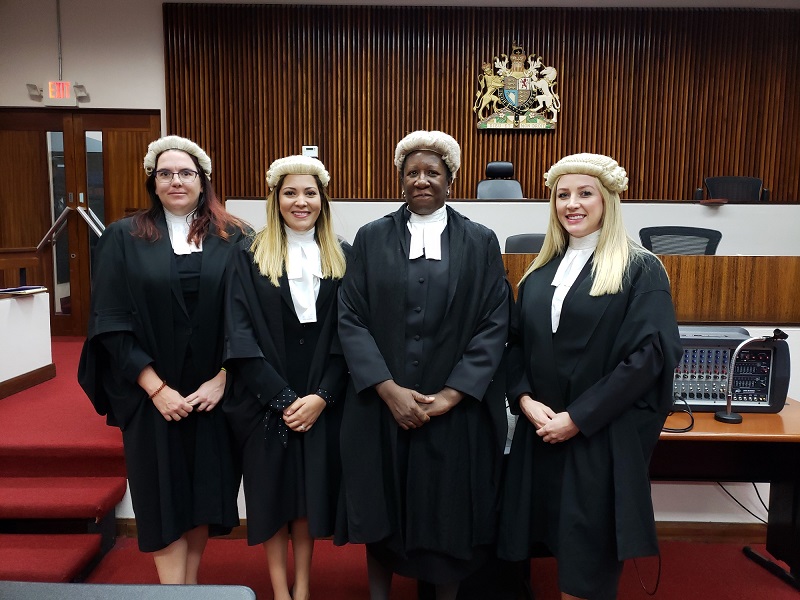
L-R: HSM Associate, Hilary Brooks; HSM Associate, Suneeta Lee; Justice Cheryll Richards and HSM Senior Associate, Sarah-Jane Allison
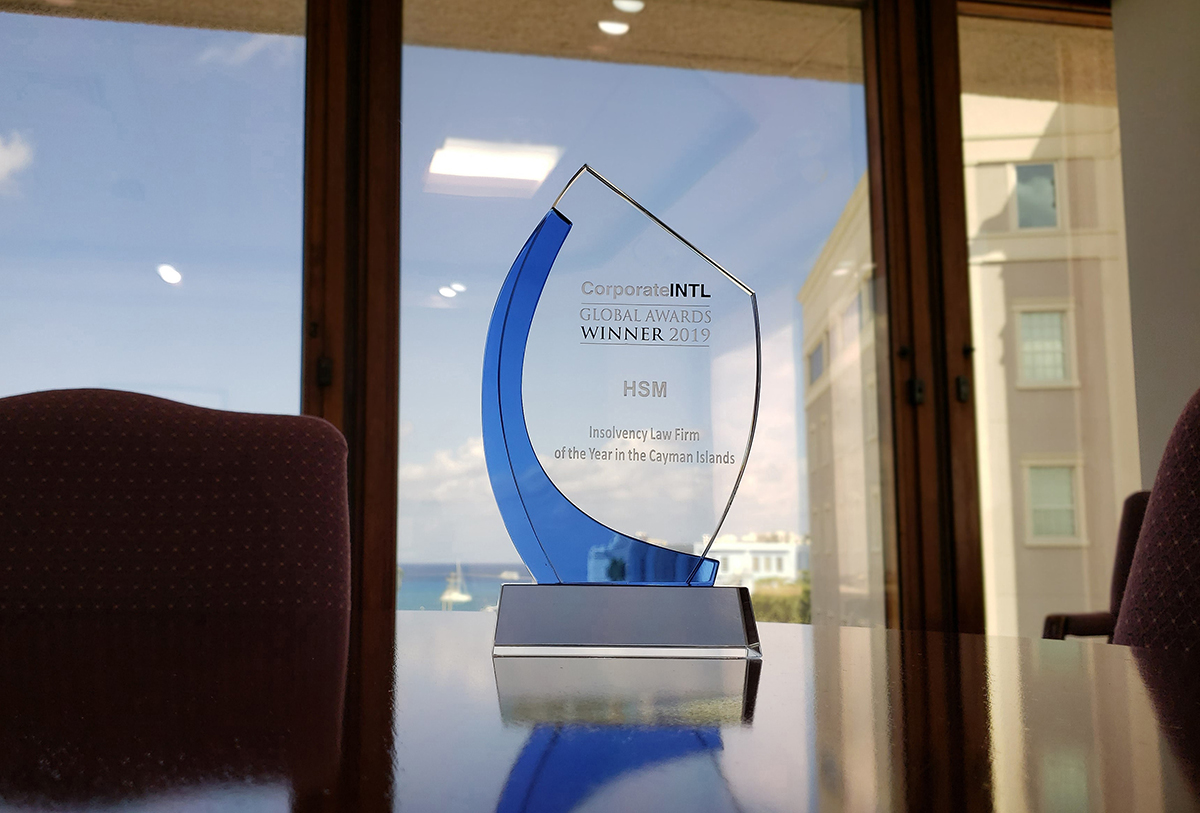
Corporate INTL publishes notable businesses throughout the world and has recognised HSM as Insolvency Law Firm of the Year in the Cayman Islands in their 2019 Corporate INTL Magazine Global Awards.
Corporate INTL has been connecting business leaders, financiers and advisers from around the world since 2005. Research for their awards include extensive reviews not only in expertise, but in service. Their independent and editorial team researchers focus on service type, service range, business type, geographical location, how the business operates and the expertise each team can offer.
“This award is testament to our perseverance and high level of customer service,” says Ian Lambert, Litigation Partner at HSM. “We are always looking for innovative ways to assist clients and are proud to receive this award.”
Our Senior Associate, Adam Crane, will be attending and speaking at the American Bankruptcy Institute (ABI) Annual Spring Meeting on April 11-14, 2019 at the Marriott Marquis in Washington, D.C.
Adam will be speaking in a panel discussion on April 13 from 8:30am to 9:30am. The topic is: ‘how to find hidden foreign assets here and there’ – hosted by the Commercial Fraud and International Committees.
The panel will explore the challenges with foreign asset discovery in chapter 15 proceedings. Most foreign discovery is obtained either pursuant to Federal Rule of Bankruptcy Procedure 2004 or through the application of the Hague Convention. But how effective are these methods given the cumbersome and often complicated process of obtaining discovery? Are there more effective and efficient methods toward obtaining these results? Do other foreign jurisdictions have less cumbersome and more expedited processes to propound this type of discovery?
The discussion will include: commonly faced issues in obtaining discovery when locating and seizing assets, how to obtain records to determine the financial condition of the parties, and how foreign law may work to limit discovery.
Joining Adam on the panel will be Patricia A. Redmond of Stearns Weaver Miller Weissler Allhadeff & Sitterson (Miami), Ryan W. Blackney of Freeborn & Peters LLP (Chicago) and Ian De Witt of Tanner De Witt (Hong Kong).
We look forward to connecting with you at this conference.
Key Contact:
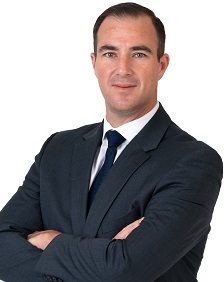
Adam Crane – Senior Associate
acrane@hsmoffice.com
Tel: +1 345 815 7364
In order for a Cayman Islands Will to be valid it must be both ‘essentially’ valid and ‘formally’ valid. HSM’s Head of Private Client and Trusts, Robert Mack, explores this structure and what’s new for 2019.
Essential Validity
For a Cayman Islands Will to be ‘essentially’ valid, the person creating it must possess the fundamental power derived from the law of their domicile1 to dispose of their property by Will. Persons who are suffering from a loss or a diminishment of mental capacity for example would typically, under most legal systems, be incapable of disposing of the property by Will or otherwise until such time (if any) as they regain a sufficient degree of their mental faculties.
Legal systems themselves can sometimes impose restrictions on its citizens concerning the disposal of property on death. This typically occurs in ‘civil’ law jurisdictions in Europe and Latin America, Islamic law-influenced jurisdictions, and in some common law jurisdictions,2 where such legal systems prescribe that a deceased person’s property or a portion a deceased person’s property must pass to certain people in certain prescribed shares. Typically those people are comprised of spouses3, children, and other close blood relations of the deceased.
In relation to real/immovable property, it is usual that the legal system of the country where the real/immovable property is situated will be the legal system which governs how such real property will pass on the death4. Therefore, any attempts to use a Cayman Islands Will to control the devolution of foreign5 real property may fail if the succession regime of the foreign country differs from that of the Cayman Islands. In such circumstances it is usually preferable to have a separate Will (if possible/permissible) governed by the law of the country in which the real property is located and to take advice from local attorney in that country regarding the local laws and procedures governing the devolution of real property on death.
The Cayman Islands, in contrast to many other legal systems in the world, offers complete freedom of testamentary disposition, meaning that so long as the Will is ‘essentially’ valid and ‘formally’ valid (see more below), a testator or testatrix may dispose of his or her own property6 as they see fit, and it is extremely difficult for disappointed heirs to challenge an otherwise valid Cayman Islands Will.
Formal Validity
Formal validity refers to the legal formalities which must be observed in order to perfect an ‘essentially’ valid Will. For a Will to be formally valid in the Cayman Islands, it must be (1) in writing, (2) signed at the foot of the Will by the testator or testatrix and (3) be witnessed by two witnesses who must be present at the moment the Will is signed by the testator or testatrix and must attest as such by way of signature on the Will.
If any one of the above three elements are missing, the Will cannot be formally valid as a matter of Cayman Islands law, even if the Will is essentially valid.
So what’s new?
On 1st February 2019, The Formal Validity of Wills (Persons Dying Abroad) Law, 2018 (the “Law”)7 came into force. The Law seeks to simplify the formal validity process by allowing Cayman Islands governed Wills, which are executed by foreign domiciled individuals, from being declared invalid on the grounds that they fail to satisfy the formal validity procedures prescribed by the testators or testatrix’s place of domicile.
The Law states that so long as the Cayman Islands requirements for formal validity are satisfied, the Will should not be declared invalid simply because the testator or testatrix failed to observe the formal validity requirements imposed by the legal system of their place of domicile8.
So for example, if a testator is domiciled in a jurisdiction which requires that Wills must be executed in the presence of a Notary Public and that does not in fact happen, so long as the Will is expressed to be governed by Cayman Islands law and it conforms to the Cayman Islands formal validity requirements, it will be considered valid as a matter of Cayman Islands law.
It’s important to note that the Law doesn’t attempt to modify the requirements for the ‘essential’ validity of a Will.
Why is this important?
Given the Cayman Islands is a magnet for international investment and asset structuring, many people from around the world routinely own valuable assets in the Cayman Islands and often utilise Cayman Islands holding companies to hold such valuable assets. As such, the well-advised client is usually encouraged to put a Cayman Islands Will in place to govern how their Cayman Islands property, including shares in a Cayman Islands company, should devolve upon death. Before the Law came into force, simply adhering to the Cayman Islands test for formal validity might not be sufficient to guarantee the validity of a Cayman Islands Will where a foreign domiciled testator or testatrix was involved — a critical point which is sometimes overlooked.
In a nutshell, the Law provides a safety net in such circumstances to make an otherwise formally invalid Will valid, so long as the Cayman Islands requirements regarding formal validity are observed.
Helpfully, the Law is drafted such that it covers Wills made prior to the introduction of the Law, so it appears to have retrospective effect. This is great news for all of the Cayman Islands Wills floating around the four corners of the Earth, as the Law increases the chances of Wills made prior to the 1st of February 2019 being considered formally valid as a matter of Cayman Islands law even if prior to the 1st of February 2019 they may have been formally invalid.
Conclusion
The Law has improved the odds that Cayman Islands Wills for international clients whether past, present or future will be found to be formally valid as a matter of Cayman Islands law, regardless of any contradictory laws, policies, or procedures which may exist in other parts of the world. This will certainly provide an extra layer of comfort and protection for international clients who utilise or have utilised the Cayman Islands as a planning and structuring base.
This article can also be seen on Mondaq – March 2019.
Footnotes
1 The method of establishing a persons’ domicile is outside of the scope of this article, however, it can be quite complex and requires a careful examination of the personal history of the testator or testatrix.
2 England, for example, has in place The Inheritance (Provision for Family and Dependants) Act 1975, which allows persons closely connected with a deceased testator or testatrix, such as a child or spouse/civil partner, or other dependants to make a claim for financial provision against an estate even where the Will is otherwise valid if such aggrieved individual believes they are entitled to a share or a greater share of the estate by reason of a close relationship with the deceased.
3 Often civil or common law partners are included in this definition.
4 Section 5(1)(b) of the Law specifically states that in relation to foreign real property, the execution formalities regarding the devolution of such real property must conform with the laws of such foreign territory rather than those of the Cayman Islands.
5 Meaning outside of the Cayman Islands.
6 Assuming the property is unencumbered, and is not jointly owned for example.
7 Despite the name of the Law, the Law is meant to cover persons who are not domiciled in the Cayman Islands at the time of their death. A person may be domiciled in the Cayman Islands and yet die abroad, but the Law is not intended to address that situation.
8 Section 4(1)(a) of the Law.
Both the same, right? Under the Immigration Law of the Cayman Islands, seemingly not. Unexpected twists and pitfalls await the unwary.
Through decades of tweaking we now find ourselves in a position whereby there are (by our estimation) eight types of Permanent Residence in these Islands (not including The Right to be Caymanian which carries with it many of the fundamental attributes of Permanent Residence, or the various persons granted permission to remain by the Cabinet).
First is that which has been headline-grabbing in recent years, Permanent Residence on the basis of the now (in)famous points system.
Then there is that available to the spouses of such persons (as a Dependant).
Then there is that available to the spouses of Permanent Residents who have applied, on the basis of marriage, for their own Residency and Employment Rights Certificate on the basis of Marriage.
Then there is that available to the children of Permanent Residents following their reaching the age of 18.
Then there is that available to wealthy investors.
Then there is that available to their spouses.
Then (since 13 August 2018) there is that available to the spouses of Caymanians.
The above are all available in consequence of applications made to Workforce, Opportunities and Residence Cayman (“WORC”) under the Immigration (Transition) Law. Each has differing attributes and requirements. Some require annual fees and Annual Declarations, others do not. Some require investment in real estate (and for it to be maintained), others do not. Some restrict the right to work, others prohibit it, and others do not.
Notwithstanding complications and occasional confusion arising from the sheer variety available, the system fundamentally works. Those holding the various types of Permanent Residence outlined above do have one thing in common. They are all able to present their passports to the Immigration Authorities and to receive within it a stamp confirming that the holder of the passport is a Permanent Resident of the Cayman Islands (with or without the Right to Work).
Lastly, there is Permanent Residence available to persons who are Registered as BOTC’s by Registration by Entitlement under the British Nationality Act. Registration by Entitlement is in consequence an application made to the Deputy Governor’s Office that can be made by (or on behalf of) any child who was born in the Cayman Islands and remains a resident until their 10th birthday. These applications do not arise under Cayman Islands domestic legislation. There is no basis to deny such an application, if made by a qualified applicant. There is no need for either parent of the child to be Caymanian, a Permanent Resident, or a BOTC. Simple birth and residence here for the first 10 years of an applicant’s life (together with completing a form, supplying supporting documents, and paying relatively nominal fees) is all that is required.
Our Immigration (Transition) Law (like the Immigration Law before it) clearly confirms that these children have “the Right to remain Permanently in the Islands.” Nevertheless, any attempt by them to obtain a stamp in their passport confirming their right to remain has in our experience been refused. The Authorities contend that the Right to Remain and the Right to Reside are different things. This has been the case for some years and no solution seems imminent. Meanwhile the number of children eligible for confirmation of their “Right to Remain” immigration status in their passports continues to grow.
Those studying our laws governing residence and immigration will note that (appropriately, if they are to have its desired effect of allowing the People of the Cayman Islands to manage the growth of the Permanent Population of these Islands) Term Limits are set at 9 years. Nevertheless, due to numerous loopholes and delays there is no shortage of children who were born here and are still here on their 10th birthday. Their right to Permanent Residence (however described) is appropriate and enshrined within our own Law.
If only they could be given a stamp in their passport, then they could confirm their status in these Islands and freely demonstrate it.
This article can also be seen in The Journal – March 2019 issue.
The HSM Group congratulates Partner William (Bill) Helfrecht for his recognition by Chambers and Partners. For the second consecutive year, William is featured in the Band 3 ranking in the 2019 Chambers Global Guide for dispute resolution: trusts in the Cayman Islands.
William’s practice primarily focuses on advising and acting for liquidators, professional trustees, trust protectors and high net-worth individuals in relation to non-contentious and contentious trust matters, professional negligence and other tort actions, Company Law matters (including directors’ liability and shareholders’ rights) and all forms of disputes concerning the ownership and occupation of land.
A peer who was contacted by Chambers and Partners says: “Bill Helfrecht of HSM Chambers is a highly appreciated practitioner whose practice has a particular focus on trust disputes. He garners respect in the market for his wealth of experience in this field.”
Chambers and Partners is a prestigious hub for lawyer recommendations. They diligently research and feature the world’s best lawyers and have done so since 1990, covering over 185 jurisdictions.
Key Contact:

William Helfrecht – Partner
whelfrecht@hsmoffice.com
Tel: +1 345 815 7418
The HSM Group is thrilled to welcome Associate Shula Sbarro. Shula will be assisting HSM’s Debt Solutions practice, acting for banks, strata corporations and other leading businesses.
Shula joins HSM with over eight years of experience in the legal field with a background in commercial and civil litigation. These matters included mortgage possessions, orders for sale, warrant applications, charging orders, redeterminations, third party debt orders, orders for questioning, return of goods and money claims, summary judgment applications and more.
“Shula’s wide-range of litigation experience will undoubtedly be an asset to our clients, who are seeking solutions in respect of debt recovery. We are proud to have her be part of the team,” shares Huw Moses, Managing Partner at HSM.
Shula is a qualified lawyer in the Cayman Islands and was admitted to the Cayman Islands Bar on March 5, 2019.

HSM’s Immigration team explores the immigration issues that exist in the Cayman Islands between Caymanians and British Overseas Territory (BOT) Citizens.
Passports seem to have originated as a document authorising persons to pass through “the gate” of a medieval city. Times have moved on and (at least according to Wikipedia) passports today are a “travel document usually issued by a country’s government that certifies the identity and nationality of its holder primarily for the purpose of international travel.”
Great in principle, but not accurate in the Cayman context.
Cayman Islands passports are neither issued by the Cayman Islands government, nor do they (usually) confirm the nationality of the holder. They are travel documents certifying the identity of the holder and are used for international travel. Everyone lawfully issued a “Cayman Islands Passport” is a British Overseas Territories Citizen by virtue of a connection with the Cayman Islands.
They may or may not however be Caymanian, and unless the immigration authorities place a stamp in it confirming the bearer to be a Caymanian, the passport itself is not determinative of whether or not the holder is Caymanian. Even persons who hold Cayman Islands passports and were born and have always lived in the Cayman Islands may not be Caymanian.
Even more confusingly, many British Overseas Territories Citizens by virtue of a connection with the Cayman Islands have no inherent right to live and work in (or even enter) the Cayman Islands, even if they have been British Overseas Territories Citizens (automatically) from birth. These will include children born in the Cayman Islands today to parents who hold Permanent Residence (whether or not they are also themselves British Overseas Territories Citizens).
According to the Cayman Islands Immigration Law, the only time a British Overseas Territories Citizen has any inherent right to live in the Cayman Islands by virtue only of their passport is if they became a British Overseas Territories Citizen by registration by entitlement under the British Nationality Act.
Such persons are persons who were born without British Overseas Territories Citizenship in the Islands and, having lived here for the first 10 years of their life, then apply for such registration or, if born in the Islands, have a parent who subsequently becomes settled. Even then, if they work without a work permit, or move away for five years, their right to reside is lost.
Non-Caymanians who are born British Overseas Territories Citizens (i.e. can hold Cayman Islands Passports without having to apply for Registration by Entitlement under the British Nationality Act) have no inherent right to reside or work in the Cayman Islands.
All of this creates an enormous conundrum for all manner of Departments of the Cayman Islands Government. There does not appear to be any uniform or consistently applied mechanism for distinguishing Caymanians from non-Caymanians and (particularly since having a Cayman Islands Passport and being born in the Cayman Islands are often irrelevant considerations to the question of whether or not someone is qualified to (for example) register to vote or obtain a stamp duty waiver as a first time buyer), the risk of arbitrary (and incorrect) determinations is significant.
The Immigration Regulations provide that the holders of Cayman Islands Passports need not fill in landing cards. It is ironic that Caymanians not travelling on a Cayman Islands Passport (many Caymanians do not have one, and some may not even be entitled to obtain one) have to complete landing cards whilst hundreds (or even thousands) of non-Caymanians with Cayman Islands Passports are exempt.
A Gordian Blade is available to the authorities to resolve this longstanding issue through minor changes to the Immigration regime. All that seems required is the will to wield it.
This article can also be seen in The Journal – February 2019 issue.
The HSM Group is proud to sponsor the 2nd Annual Society of Trust and Estate Practitioners (STEP) Cayman Conference, taking place at Kimpton Seafire Resort + Spa in Grand Cayman from January 31 – February 1.
Visit our booth during the conference to learn more about our legal and corporate services, and be entered to win one of our 5-in-1 BBQ tools – a useful memento to remind you of our law firm in the Cayman Islands.
Robert Mack, HSM’s Head of Private Client and Trusts, will be speaking during one of the breakout panel sessions on February 1 at 12pm and will be exploring wealth structuring for PEPs (politically exposed persons) – the impact of politics, conflict and sanctions on PEPs.
Since 2010, Robert has been a council member of the local branch of STEP, where he currently holds the position of Vice Secretary.
Robert also sits on the STEP legislative review sub-committee and the Global Transparency sub-committee, which works in partnership with the Cayman Islands Government to implement and improve legislation connected to the trusts and private client industry. Robert is also the Cayman Islands representative of the STEP Mental Capacity Special Interest Group.
We look forward to connecting with you at this conference.

(L-R): Samantha Bartley and Robert Mack
Several charities in the Cayman Islands have received secondhand office furniture provided by local law firm HSM.
The Family Resource Centre recently moved to a new location in George Town and were thrilled to receive a full desk set complete with joining desks, a filing cabinet and bookshelf.
One Dog at a Time collected two large filing cabinets, which volunteer Paula Wythe says is ideal for storing away pet products such as shampoos, brushes, medications and more.
The Frances Bodden Children’s Home selected a large desk for their facility in West Bay.
This is not the first time HSM has donated office furniture. A few years ago, HSM donated desks to Her Majesty’s Northward Prison for their F-wing, an enhanced living space for selected inmates.
“We are always looking for opportunities to support our community and what better way to start the New Year than helping these charities improve their daily operations,” shares HSM Managing Partner, Huw Moses OBE.
HSM still has desks, cabinets, keyboards, blinds and commercial UPS switches available to a worthy home. Email Alyson Hay at ahay@hsmoffice.com to register your charity for these items.
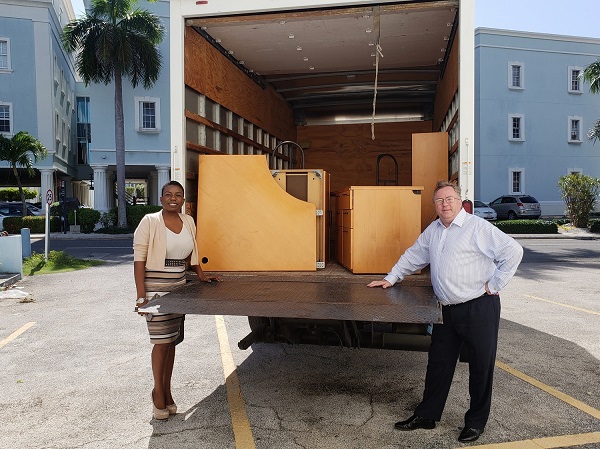
Photo R-L: Huw Moses (HSM Managing Partner) overseas the departure of this furniture set to Racquel Duhaney (Programme Facilitator at the Family Resource Centre).
Fatal error: Uncaught Error: Call to undefined function twentythirteen_paging_nav() in /home/clients/d17af2243e6f179e393695ba6e9ce04e/hsmnew/wp-content/themes/hsm/category.php:31 Stack trace: #0 /home/clients/d17af2243e6f179e393695ba6e9ce04e/hsmnew/wp-includes/template-loader.php(86): include() #1 /home/clients/d17af2243e6f179e393695ba6e9ce04e/hsmnew/wp-blog-header.php(19): require_once('/home/clients/d...') #2 /home/clients/d17af2243e6f179e393695ba6e9ce04e/hsmnew/index.php(17): require('/home/clients/d...') #3 {main} thrown in /home/clients/d17af2243e6f179e393695ba6e9ce04e/hsmnew/wp-content/themes/hsm/category.php on line 31