Category Archives: HSM LAW
HSM’s immigration team has been recognised for the second consecutive year with a gold medal by the Best of Cayman Islands for their 2024 awards.
Led by HSM Managing Partner Huw Moses, the team handles everything from work permit applications to the right to be Caymanian to permanent residency and everything in between, including relocation assistance, registration as a British Overseas Territory Citizen and passport applications.
HSM’s immigration team includes: Senior Attorney Alastair David; Attorney Gavin Dixon, Immigration Services Manager Samantha Bartley; Immigration Services Supervisors: Pete Iton and Ariella Smith; Senior Immigration Services Assistant: Dwyane Wright and Immigration Services Assistants: Chandra Bodden, Ayla Ramirez-Ebanks and Tarec Francis.
Should a matter become contentious, unlike immigration providers who are not also law firms, we can assist our clients with court proceedings should this be required. Some of Alastair’s noteworthy cases include a domestic violence victim challenging Cayman’s immigration law and another case where the Court of Appeal declared that the Immigration Act is incompatible with section 9 of the Bill of Rights, which deals with family and private life. Gavin joined HSM in December 2023 and his prior advocacy experience at the Office of the Director of Public Prosecutions makes him well-versed before the Cayman Courts.
HSM strives to be at the forefront of immigration matters in the Cayman Islands. For the latest news, HSM sends regular newsletters that contain up-to-date statistics, application timelines and covers other interesting topics related to immigration.
Subscribe to our immigration newsletter: https://hsmoffice.us18.list-manage.com/subscribe?u=fdabad5b2687d06bedff93086&id=291c453425.
The Best of Cayman Islands is a vote-based contest and nominations are provided by the community.
HSM is thrilled to be featured again and thanks the public as well as clients for their votes.
This recognition is a testament to HSM’s high-quality immigration support in the Cayman Islands.
Alexander Davies, HSM litigation attorney, applied on behalf of a defendant to proceedings, Butterfield Bank (Cayman) Limited, to strike out the plaintiff’s claim for want of prosecution. The claim for damages flows from a personal injury sustained when the plaintiff tripped on stairs on her employer’s premises in 2014. Proceedings were protectively issued in 2017. Following a protracted history, including an interlocutory appeal to the Cayman Islands Court of Appeal heard in 2019, and several changes of attorneys by the plaintiff, the case had ground to a halt. The key issue had become the plaintiff’s claimed permanent disability due to chronic pain, and whether this was caused by the index injury. The defendant’s nominated expert in chronic pain, whom had examined the Plaintiff in 2018, was by January 2024 no longer available to give evidence due to having retired.
Giving judgment on the application, Hon. Asif J. K.C. found that the plaintiff had caused or contributed to inordinate and inexcusable delay in bringing her claim, which had resulted in genuine prejudice to the defendant, and the test for striking out the claim was therefore satisfied. Rather than striking out the entire claim, however, the learned Judge instead restricted the scope of the claim, debarring the plaintiff from pursuing a claim based upon the reported chronic pain and associated disability.
The judgment on 10 July 2024 provides a useful summary and review of the law pertaining to applications to strike out proceedings for want of prosecution in the Cayman Islands.
The HSM Group has once again opened its doors for their summer internship programme and has welcomed seven students from the Cayman Islands Further Education Centre (CIFEC).
Cliff Weeks Jr, Alanee Morgan, Janiya Jackson, Javari Pearson, Robert Chung, Korey Berry and Eva Bothwell have joined the HSM team for the summer.
The HSM Group is a full-service law firm and corporate services provider, which offers students the ability to gain experiences across a variety of practices including property, debt collection, intellectual property, corporate services, compliance and even areas outside of law, such as marketing and finance.
HSM’s 2024 summer internship programme takes place July through August and falls shortly after an 8-month long work experience stint with the CIFEC internship programme. HSM offered 13 placements for the 2023/24 academic year.
“For over a decade, HSM’s summer internship programme has been instrumental in developing young professionals,” shares HSM Managing Partner, Huw Moses OBE. “…and I am proud to say that some interns have continued into full-time positions with our firm.”
HSM will be participating at CIFEC’s 2024 Career Fair in September. HSM has supported the CIFEC programme since they opened their doors in 2012 and employs six CIFEC graduates full-time.

Front Row (L-R): Cliff Weeks Jr., Alanee Morgan and Janiya Jackson. Back Row (L-R): Javari Pearson, Robert Chung and Korey Berry. Missing from photo: Eva Bothwell.
The breakdown of a marriage is often one of the most difficult things a person may face. It is emotionally draining, and it can be difficult to make clear decisions. However, for children, it can be devastating, as they are faced with the loss of security of their home and family, and they often feel torn by having to choose between their parents. It is for this reason that parents are encouraged to make decisions that ensure the continued well-being of their children. This can become difficult when it seems like a parent is trying to use the children as tools in the divorce process. This is where the welfare principle takes precedence. The welfare of the children is always the paramount consideration in all matters where children are involved. This means that in order to make all decisions, including in divorce proceedings, the court must consider the well-being of the children first.
In the Cayman Islands, persons can apply for a divorce in person, meaning that they are not required to have an attorney to seek a divorce from the court. In circumstances where parties are able to agree the arrangements for the children’s maintenance and schooling as well as settle the division of their property, they can proceed with this process through the courts, unrepresented.
However, more often than not, parties find it difficult to agree arrangements with the other party. In those circumstances, an application to the court may be required to settle those arrangements.
HSM Associate Shelly Perryman-Pollard is a divorce lawyer in the Cayman Islands and specializes in matters pertaining to children in a divorce. Shelly covers everything you need to know in this article.
The Children Act (2012 Revision)
Applications with respect to children of the marriage are filed pursuant to the Children Act (2012 Revision). Pursuant to this law, a “child” refers to someone who is under the age of 18 years. Further, a “child of the family” refers to any child who is born to both parents in a marriage, or though not born to both, has been treated by the parties as a child of the marriage.
Pursuant to s10 of the Children Act, the court is empowered to make a myriad of orders with respect to children of the marriage, including residence orders, contact orders, specific issue orders, prohibited steps orders and others. Residence orders were previously termed custody orders and refer to orders that clarify the parent with whom the child will primarily live. The ideal situation is where parents can agree to share the residence of the child so that the child is able to have equal time with each parent. Contact orders, previously called access orders, are orders which outline the staying or visiting arrangements which a child will have with the parent he/she does not live with, requiring the parent with whom the child lives to allow the child to spend adequate time with the other parent. It is the right of the child to have adequate contact with each parent. Specific Issue orders are sought in circumstances where parties are unable to agree specific arrangements for the children, such as schooling or travel. Prohibited steps orders are sought in circumstances where one party is seeking to prevent the other from taking an action with respect to the child which they are not in agreement with, such as removing the child from the jurisdiction to reside in another country.
It is important to note that, in the Cayman Islands, the court will not make any of the above orders with respect to a child of the marriage unless it considers that doing so would be better for the child than making no order at all. Additionally, the court will not make any order which will end after the child reaches the age of 16, unless it is satisfied that the circumstances of the case are exceptional.
When parties are unable to agree arrangements for their children and make an application to the court for assistance in settling those arrangements, the parties are first referred to the mediation department to attempt to settle the outstanding issues with the assistance of an experienced mediator. The mediator is an independent third party who is generally able to help parties put aside their personal feelings and make decisions that are conducive to the welfare of their children. The mediator has knowledge of the laws in the Cayman Islands and is able to advise the parties on what the likely outcome of court proceedings would be, without the cost of having to pursue a court matter. At the end of the day, the parents are generally the best persons to decide what arrangements will work for their children given their unique schedules and feelings.
The Welfare Checklist
On the occasions however, where the parties are unable to agree the arrangements for their children, even with the benefit of mediation, the court will be called upon to make those arrangements and the child’s welfare will be paramount. When considering any decision with respect to the child, the court will have regard to the Welfare Checklist laid out in the Children Act. The Welfare Checklist refers to the factors which the court will consider in making any arrangements for children. These include:
- The ascertainable wishes and feelings of the child– the court will decide what weight it will place on this factor based on the age and understanding of the child. Consequently, the court is more likely to place significant weight on the wishes of a 14-year-old as opposed to a 5-year-old.
- The physical, education and emotional needs of the child– under this factor, the court will consider any physical or learning challenges which a child may face and make a decision that best suits those challenges.
- The likely effect of any change in circumstances on the child– the court will consider how a change in living arrangements or even a change in country of residence will affect the child emotionally and physically.
- The child’s age, sex, religious persuasion, background and any other characteristic which the court considers relevant– the court will consider what effect a change in residence may have on a toddler or perhaps how a change in the religious background of a home may have on a child. Previously, there had been a presumption that children of tender years needed to be placed in the custody of their mother, but this has been debunked given the reality that more and more fathers have become versed in caring for their young children and share the responsibilities with the mother.
- Any harm which the child has suffered or is at risk of suffering– this refers to any physical, emotional or psychological harm which has been caused by one parent or the other, such as the effects of alcoholism, or any harm which presents itself as a risk which the child may face in the care of a parent.
- How capable the parents are of meeting the needs of the child– this factor does not refer to whether the parent is financially able to meet the needs of the child, but rather their emotional and physical capabilities.
- Any other relevant circumstances– this is a catch all factor which allows the court to use its discretion to consider any other factors, not mentioned above, which it considers relevant in making any decisions for the welfare of the child.
In applications of this nature, the court operates as the “parens patriae”, which is the stand-in parent of the child, and this empowers the court to make orders which one parent or the other may not agree with, but which is conducive to the welfare of the child.
HSM has the knowledge and expertise necessary to guide any parent through the intricacies of filing such applications in the court of the Cayman Islands. We can also effectively guide parents through mediation to sort these arrangements for their children without recourse to the courts as this is what works best for the welfare of the children involved.
When applying for Permanent Residency and claiming points for investment in a Locally Licensed company, there has been some uncertainty whether the value is to be calculated by reference to capital invested or by reference to the current market value of the company shares. HSM has long advocated that the correct approach was which ever is the most beneficial to the applicant. Whilst there appears to be no official published policy, our immigration team at HSM remains at the forefront of this issue.
Work permits continue to increase with 337 new permits since 18 April 2024. There has been an uptick in Nepalese residents and they are now the 5th largest nationality group of work permit holders in the Cayman Islands. The Board is concluding more Right to be Caymanian applications than they are receiving and the wait time for the processing of these applications is declining.
Market Value Reports
In September 2023, HSM Chambers on behalf of a client appealed a decision of the Immigration Appeals Tribunal (“IAT”) to the Grand Court of the Cayman Islands. The central issue of that case was surrounding the issue of Market Value Reports and whether they can be relied upon by an applicant for Permanent Residence to show investment in a Locally Licensed company. These have been long standing issues but thankfully it now appears that they have in part been resolved.
Market Value Reports are used when the professional assessed share value exceeds the initial capital/investment made to establish the company. In those circumstances, it appears that Workforce Opportunities & Residency Cayman (“WORC”), in principle, will now accept the Market Value of the shares held and if the value of those shares is greater than $50,000, points will be awarded to the applicant for Factor 3 up to the maximum of 30 points depending on their salary.
This has been a long standing issue, at one point in time it appeared that the Department would, by way of an example, not give points to an individual like Mark Zuckerberg, if he was to apply for PR in the Cayman Islands, if he sought to rely upon the value of his shares in Facebook. The rationale for this was because he had only initially invested $1,000 and this was below the threshold of CI$50,000 and therefore not worthy of the award of points for Factor 3. It now appears that this position has changed.
The reason why we are confident that the matter has been resolved is not only has the Grand Court matter been by agreement remitted back to the IAT but also last week WORC requested from one of our clients’ “as proof of investment in a locally licensed company, please provide an official report showing the market value…”. We can think of no reason for a request of this nature to be made, if Market Value Reports are not now to be considered. This is the first time we have seen wording of this nature in an official request by WORC.
While the parameters of what needs to be provided in these reports has not been disclosed in the form of policies, which are desperately needed, it is hoped that those individuals who have helped Caymanian businesses grow and be successful will be recognised and granted the appropriate points.
Latest Statistics
We recognise the significance of immigration statistics and application timelines. On 17 July 2024, we received details from the relevant authorities for our Freedom of Information (FOI) requests for May 2024 and June 2024.
Currently there are 37,309 work permits held in the Cayman Islands. This is an increase of 337 from the number reported to us at 18 April 2024.
The top nationalities are: Jamaica (15,404), Philippines (6,460), India (2,092), United Kingdom (2,016), Nepal (1,245), Canada (1,195), Honduras (1,172), United States of America (919) and Nicaragua (720).

What is noticeable is that the Nepalese have jumped from the 7th largest group to the 5th largest group, overtaking both the Hondurans and Canadians. Of the increase of 337 work permits, half are made up of Nepalese people.
In May 2024 the Board determined:
• 71 Right to be Caymanian (“RTBC”) applications on the basis of naturalisation.
• 107 Right to be Caymanian applications on the basis of marriage.
In that period of time there were only 38 RTBC applications on the basis of naturalisation submitted and 39 applications on the basis of marriage submitted. This suggests the Board is currently concluding far more applications than are currently being submitted and accordingly applicants for Caymanian Status may find the wait time for determinations reducing significantly from the position in January 2024 when it reached almost 2 years to an average of approximately 15 months.
The Cayman Islands Court of Appeal (“CICA”) provided clarity on the enforceability of secured loan agreements from unlicensed lenders. The ruling underscores the Court’s commitment to uphold contractual obligations while balancing legal requirements and financial regulations.
Facts
In the matter of Rogelio Antonio Hawkins v Abarbanel Limited (Unreported, the Hon. Ramsey-Hale C.J., 16 December 2022), Abarbanel Limited (the “Lender”), a resident Cayman Islands company incorporated for the express purpose of making loans and holding security (the “Lender”), agreed to advance to Mr. Hawkins (the “Borrower”) sums totalling of US$407,000 from February to April 2014, to be repaid together with interest thereon, including compound interest in the event of default (the “Loan”).
The Loan was secured by legal charges over the Borrower’s residential home and other rental properties owned by him.
The Borrower defaulted on the terms of the Loan and the Lender demanded repayment of the outstanding balance. The Borrower issued a claim for a Declaration that the Loan was illegal and void on the grounds that the Lender was carrying on the business of a moneylender in the Cayman Islands without possessing an appropriate licence under the Trade and Business Licensing Act (2007 Revision) (“TBLA”) and the Local Companies Control Act (2007 Revision) (“LCCA”). The Borrower also argued that the Loan was an unconscionable bargain as the applicable interest rate was exorbitant.
The Grand Court’s Decision
Whilst it was accepted that the loan had been advanced to the Borrower in the Cayman Islands, the Lender argued it was not in fact “carrying on business” as a moneylender as it had had no employees, no business premises, no advertisement of its services, and the lending activity was limited to a handful of transactions.
The Hon. Ramsay-Hale, C.J. summarised that in order to be deemed to be carrying on business:
“the conduct in issue must occur on a repeated or continuous basis. The cases do not establish a threshold as to how many activities – here the making of loans – would constitute a sufficient “repetition of acts” or for how long a period the activity must go one for it to be characterised as continuous.” “That is a question to be determined on the facts of each case.”
The learned Judge found that the Lender was carrying on business as a moneylender in the Islands without being licensed to do so as the facts established the “degree and continuity that the decided cases say must be present.”
Nevertheless, the Hon, Ramsey-Hale, C.J. held that the Lender’s breach of the LCCA and TBLA did not in itself render the Loan and security unenforceable, noting that:
“The purpose of the licensing regime in the LCCA was to control the level of participation in business …Given the provisions of section 23 of the LCCA there is little to sustain the argument that a breach of section 4 renders the loan agreement void, and even less with respect to a breach of the TBLA, the only purpose of which is to raise revenue.”
The Court of Appeal’s Decision
The Borrower appealed to the CICA on the basis that the Hon. Chief Justice erred in law.
In delivering judgment (Rogelio Antonio Hawkins v Abarbanel Limited (Unreported, CICA, 11 January 2024), the CICA held that the Chief Justice did not err in law in concluding that the TBLA and LCCA do not prohibit contracts made in breach of local licensing requirements. Further, the Loan was not unenforceable as a matter of common law.
CICA agreed with the Hon. Chief Justice’s reasonings on section 23 of the LCCA which states “For the avoidance of doubt it is hereby declared that no business transaction shall be void or voidable by reason only that, at the relevant time, any party thereto is in breach of this Law.”
CICA added that the Courts have been reluctant to hold the position that non-compliance with statutory requirements impliedly renders contracts made by a party in breach void or unenforceable. To hold otherwise could lead to opening floodgates that may undermine commercial certainty, impede legitimate transactions, or prejudice innocent parties.
In light of the above, the CICA dismissed the appeal.
Key Takeaways
- Carrying on business of any kind within the Cayman Islands will most likely require an appropriate licence under the TBLA or LCCA.
- Any form of lending to third parties may be considered as carrying on the business of moneylending.
- While the absence of a licence under the TBLA or LCCA may raise questions regarding compliance, it does not automatically render loan agreements and associated securities unenforceable in the Cayman Islands.
- The ruling is specific to the circumstances of the present case and should not be regarded as a blanket judgment for all moneylenders as each case will be assessed individually.
HSM Chambers was instructed by the bereaved family of Dr Amber Martinez, a newly-qualified doctor whom had died in a car accident on the Queen’s Highway in the early hours of 21st October 2022, aged only 29. The accident took place a mere 200 feet from the family’s property, in which the vehicle, a 2008 Honda Fit, lent to Amber by her godfather, left the road and slid into a 5-feet-deep ditch, colliding with some small trees. Shortly after the vehicle had left the road, as the emergency services were en route, it caught fire due to an electrical fault, burning vigorously and causing extensive damage.
The family, led by Amber’s parents, Barry and Joanna Martinez, subsequently discovered the vehicle Amber had been driving was subject to a recall to replace the defective “Takata” branded airbags. Takata airbags were (and remain) the subject of the most extensive vehicle recall in history; over 100 million affected vehicles from 19 well-known motor manufacturers, including: Honda, Toyota, Nissan, BMW, Chevrolet, and Ford, were urgently recalled, following deaths and horrific injuries caused to drivers. The recalls were effected in 2015 in the USA and many other jurisdictions worldwide, but some jurisdictions lag behind.
The Martinez family instructed Newsome Melton, a firm of attorneys based in Florida specializing in cases of injuries and deaths caused by Takata airbags. They agreed to investigate the circumstances surrounding the accident. HSM Chambers was instructed to advise on Cayman Islands procedure and law, from the perspective of civil liability and the Inquest investigating the death that was to be conducted by His Majesty’s Coroner.
The case presented very significant challenges. The fire destroyed much of the available evidence to investigators. Important clues as to the cause of the accident and the cause of death had been masked or destroyed. The result was that the interior of the vehicle was completely burned, destroying the “black box” telemetry recorder and its valuable data, as well as the interior of the vehicle. The dashboard, car seats, steering column and anything combustible was incinerated. The body of the deceased was badly burned. This rendered the identification of any wounding to the face or neck almost impossible. The cause of death was determined by the attendant pathologist, Dr Rajagopalan, to be a fracture to the C3 vertebra (in the neck) by blunt force, which had severed the spinal cord, likely causing almost instantaneous death.
There were, however, crucial pieces of the puzzle that remained. A piece of metal, described as resembling “something that has exploded, like a shotgun cartridge” by the pathologist was discovered during the autopsy embedded in the neck of the deceased. Despite the best efforts of Cayman’s most qualified accident investigators, the piece of metal remained unidentified, and was overlooked as an “artifact” likely picked up during the process of the recovery of the body from the vehicle. Fortunately, the instincts of the pathologist and the careful recovery of the evidence by the Royal Cayman Islands Police Service (RCIPS) ensured this innocuous-looking fragment was preserved as an exhibit.
Following receipt of instructions from the Martinez family, the team of attorneys at Newsome Melton formed the view that the metal fragment was a broken piece of the inflator mechanism from a Takata airbag. This was supported by research conducted by the family and HSM, as it resembled similar pieces of metal which had caused injuries in other cases around the world. HSM advised upon all aspects of Cayman civil procedure, law, liability and quantum, as well as upon the Coroner’s inquest procedure.
It was necessary for the inquest date to be adjourned, as there was too little time for the family’s investigation to be concluded prior to the hearing date. Arrangements were made efficiently through the office of the Coroner for access to all the police exhibits, including the piece of metal and the burnt shell of the vehicle.
An independent expert in Takata airbags, Michael DiCicco, a former engineer employed with Takata in the manufacture of the airbags, now an eminent accident reconstruction and airbag fault consultant, flew to Grand Cayman to conduct a further investigation of the accident site, the vehicle, the airbag mechanism, and the piece of metal recovered during the autopsy. The investigation was difficult, as it took place over a year after the accident itself. The vehicle had been left exposed to the elements for some months, and the accident site had changed: vegetation had begun to re-grow and a white “fog line” had been painted demarking the edges of the road. Fortunately, the detailed contemporaneous investigation conducted by RCIPS and local experts, including photographs of the scene, was available for review. Mr DiCicco concluded that the piece of metal was not simply an artifact, but was a piece of the airbag’s fractured “booster tube”. This portion of the mechanism is a sealed tube, containing a propellant. When “fired” by the deceleration forces during an accident, the propellant ignites, designed to inflate the airbag in a tiny fraction of a second using the expanding gas from the reaction through small vents located towards the end of the booster tube. He was able to identify a sticker with a serial number visible on the booster tube, as referring to a 2008 Takata airbag, ruling out the possibility that the airbag had been replaced prior to, or since, its importation to the jurisdiction.
Mr DiCicco recovered the burnt airbag mechanism from the vehicle. The steering column and steering wheel had been completely consumed by the blaze, leaving the metal skeleton of the airbag inflator in the driver-side footwell. Still, even after 15 months, the airbag housing disclosed important clues.
Mr DiCicco provided a report to the Coroner’s court, and gave evidence to the jury during the Inquest. He explained that the defective airbags have inadequate seals, which, particularly in hot and humid climates such as the Cayman Islands or southern states of the USA, results in the propellant reacting with moisture in the air and becoming corrupted. The corrupted propellant has a propensity to burn much more vigorously than intended, creating a far greater reaction than is necessary to inflate the airbag. The explosion can be so violent that it can rupture the metal booster tube, shearing it in two pieces, which will fly in opposite directions – one piece into the steering column, the other directly towards the driver. Tragically, this piece of flying shrapnel, akin to a bullet or grenade shrapnel, can injure and kill the driver. He noted the force of the explosion had also deformed the shape of the airbag inflator housing, from a flat cylindrical “hockey puck” into a spherical “softball” shape.
The pathologist was assisted by this information and fundamentally revised his opinion of the cause of the fatal injury, stating that the most likely explanation was that the piece of metal shrapnel had exploded from the airbag during the accident, passing through the driver’s trachea and colliding with the C3 vertebra with sufficient force to fracture it and sever the spinal cord. Somewhat mercifully, death would have been instantaneous, and prior to the fire starting. His opinion was revised to the extent that the presence of the piece of metal in the neck, close to the injury site, for any other reason would be an “unbelievable coincidence”. After hearing this important evidence at the end of the three-day inquest, the jury returned a verdict of “misadventure” on 5th June 2024.
This was a challenging case, both from technical aspects, requiring analysis of a large amount of technical information from numerous experts in a short period of time, managing an investigation 15 months after the subject incident, and from an emotional aspect, from the tragic circumstances and palpable grief of the family, friends, colleagues and all who knew Dr Martinez.
The case highlights important differences between the adversarial civil jurisdiction of the Grand Court and the inquisitorial, collaborative nature of a Coroner’s Inquest. Evidence at an inquest is not challenged in the same manner as in adversarial litigation: cross-examination is limited to only those matters which should assist the jury to decide the issues before them. Hon. Carter J. recently considered these matters in the Grand Court in Barnes-Newell v Biggs and Wood (Unreported Judgment GC 183 of 2020, 8th April 2024) highlighting that an Inquest does not comprise a “full ventilation” of the facts, tested to the extent that it would be in civil litigation by robust cross-examination.
The timing of instructions presented a crossroads between the two jurisdictions, in which there was a genuine risk that evidence presented at the inquest might be contradictory or prejudicial to anticipated civil action, which, if reported, may have had unintended effects, particularly upon any proposed international civil claims. The earnest and determined efforts of this bereaved family, seeking legal and expert assistance to bolster the evidence in the Inquest ultimately produced important answers.
Whether inquisitorial or adversarial, it is imperative that all courts and tribunals have as much evidence as is available to decide the issues before them, ensuring, to the greatest extent possible, consistency is maintained. If specialist knowledge is required to identify these issues, then it should be available to the courts in order that full investigations can be conducted, particularly when public safety is at stake.
HSM Litigation attorney Alex Davies has many years’ experience representing parties in serious and fatal vehicle accidents, and it was his privilege to provide support, advice, and representation to the Martinez family in this tragic case. The recommendations from the Coroner, it is hoped, will raise awareness of vehicle recall issues, and repeating warnings to the Government regarding vehicle safety. Ultimately, it is hoped this case will save the lives of motorists in the jurisdiction. HSM urges all drivers in the Cayman Islands’ community to check their vehicles’ VIN numbers online to ensure that they are not driving a potentially deadly ticking time bomb.
The time to have status applications determined has dropped dramatically from nearly two years in March 2024 to now one year, although we have a few applications filed more than one year ago still outstanding.
Indian Nationals are now the third largest group of permit holders having just overtaken the UK Nationals. The two largest nationalities of permit holders are still Jamaican and Filipino.
Indians on the Move
As of 18 April 2024, there were 37,437 work permits in effect. That is an increase of 465 since 12 March 2024. There are now more work permits held by Indian Nationals than UK Nationals. As at 18 April 2024, the top five nationalities and the number of work permits they hold are:
- Jamaican Nationals hold 15,519 work permits which is 41% of the total work permits held.
- Filipino Nationals hold 6,323 work permits which is 16.8% of the total work permits held.
- Indian Nationals hold 2,078 work permits which is 5.55% of the total work permits held.
- UK Nationals hold 2,057 work permits which is 5.49% of the total work permits held.
- Canadians hold 1,217 work permits which is 3.25% of the total work permits held.

It has long been expected that Indian Nationals would overtake UK Nationals and become the third largest work permit nationality in the Cayman Islands. However, their growth in permits might surprise some people. As of 30 September 2015, there were 893 work permits held by Indian Nationals (which was 4% of the total number of work permits) and 1,845 work permits held by UK Nationals (which was 8% of total work permits). In the period of less than 9 years while both total figures have increased, the proportion of work permits held by Indian Nationals has increased while the proportion of work permits held by UK Nationals has decreased.
With economic trends the way that they are, and the increasing economic power of Asia it is expected that the current trend is likely to continue.
Remember when applying for Permanent Residency your nationality affects the points you can claim. If your nationality holds over 10% of work permits held then no points (0) will be given; over 5%, five points will be given; and under 5%, ten points will be given.
Caymanian Status and Permanent Residency Board
Starting in March 2024, we have seen a dramatic increase in the Right to be Caymanian (“RTBC”) applications being determined. It seems that the Board are determined to clear the current back log and ensure that what had become potentially an unlawful situation will no longer exist and those who apply for the RTBC will now not have to wait, in some cases, close to 2 years for their applications to be determined.
In March 2024, 327 applications for the various types of RTBC were determined of which:
- 98 applications based upon Naturalisation were concluded.
- 21 applications based upon marriage were concluded.
In the first half of April 2024, 220 applications for the RTBC were determined of which 111 applications based upon the Naturalisation were concluded.
As at 18 April 2024, the two largest groups of outstanding RTBC applications are as follows:
- 422 applications based upon Naturalisation.
- 251 applications based upon marriage.
In total there are 867 applications outstanding relating to all the various different types of RTBC applications.
It is expected that if the Board keep up their current pace the back log will be reduced dramatically and those people waiting for RTBC’s to be concluded will not be waiting as long as they currently are.
By way of a comparison in March 2024, 18 people applied for the RTBC on the basis of Naturalisation and 10 people applied on the basis of marriage. Therefore, the Board’s actions in March can be seen as them getting impressively “ahead of the curve”.
This is a dramatic increase in the processing and concluding of these applications and would appear that it can only be down to the hard work and dedication of the Caymanian Status and Permanent Residency Board.
It also appears that the Administrators at Workforce Opportunities & Residency Cayman (“WORC”) are busy as well. In March 2024:
- They concluded 61 applications for a Residency and Employment Rights Certificate (“RERC”) based upon marriage to a RERC holder or being the Dependant of a RERC holder.
- They concluded 71 applications for a RERC based upon the Points system.
- They concluded 48 applications for a RERC based upon marriage to a Caymanian.
What this means is that across the board we are seeing a decrease in the processing time for applications for RERCs and the RTBC. Our best guess today (based on the determination of applications filed by HSM and the above statistics) is that a status application will now take about one year to be determined. In February 2024 we had applications for status that had been waiting two years.
Legal Update
The unintended consequence of the number of RTBCs on the basis of Naturalisation being concluded has exposed an issue in the Law which HSM have raised in the past with the Department but which has not been dealt with. Those of you who have been granted the RTBC recently (congratulations!) will have noted that the Department are saying that you have 45 days to ensure that any individual who is a dependent of yours has made an appropriate immigration application going forward. Most notably this affects the Spouses of those who obtained the RTBC, if they hold a RERC on the basis of their marriage to a PR holder, or are a dependent of an individual who obtained the RTBC and the children of those individuals.
The Department’s position is this:
- With the Primary RERC holder obtaining the RTBC, those people who held, a RERC on the basis of marriage or who were dependents of the primary RERC holder no longer have an immigration permission in the Cayman Islands.
- The Department hold this position because they say that the Primary RERC holder who has obtained the RTBC no longer is a RERC holder and therefore any immigration status based upon them being a RERC holder is void.
- The Department therefore provide 45 days for those individuals affected to apply for alternative immigration permissions which could include:
- Applying for the RTBC on the basis of marriage.
- Applying for the RTBC on the basis of naturalisation.
- Applying for a RERC pursuant to Section 38 or 39 of the Immigration (Transition) Act (2022 Revision).
Sadly, because all of the above applications can take many months to conclude the exact legal position of those affected is unclear. This is especially true as the 45 day window which the Department have provided is not set out in Statute and appears to be a creation of an unpublished policy of the Department. Unlike those individuals who are awaiting a work permit renewal to be granted and therefore who are Working by Operation of Law (“WOL”) or those who are awaiting a PR application being granted and have either a PCW or a Section 66 (10) or (11) work permit, the people who are having to apply within these 45 day window have no clear immigration status as set out in Law.
A possible solution to this issue (absent of legislative change) would be for the Department to link applications made by family members and permit certain applications to be made ahead of time, but only if the Primary RERC holder has applied for the RTBC. One could envisage a situation where the primary RERC holder applies for the RTBC and at the same time, their Spouse who holds a RERC as the Spouse of a RERC holder, is permitted to provisionally apply for a RERC as the spouse of a Caymanian and the children be permitted to apply for the RTBC on the basis of entitlement, i.e. they have a Caymanian parent. In affect a “family application or applications”.
The secondary applications would obviously be dependent upon the primary application being granted and would only be considered at the point of time that the primary application was granted. However, by linking all applications together, the Department could consider all family applications at the same time not spread out over many meetings (and in some cases months) and those applications which should be granted are granted and those which are to be rejected are rejected. This would have the benefit that family members who will be granted their applications are not held in a legal limbo where their status is not clear and those whose applications are to be rejected can proceed with the relevant appeal process.
In the coming months, this is one of many suggestions HSM are planning to suggest to WORC in a way which we believe will make the system more efficient and user friendly.
There has been a significant increase compared with prior periods in the determination of status applications based on marriage or naturalisation. In February 2024, 57 such applications were determined.
The previous statistics which we obtained showed a noticeable downturn in the conclusion of certain applications in particular the applications for the Right to be Caymanian on the basis of marriage or naturalisation.
In 2022, the Board concluded 432 applications on the basis of marriage or naturalisation, that figure was fairly consistent with the 2021 figures which showed the Board concluded 413 applications. However in 2023 only 160 applications were concluded a decrease of over half. If on average the Board were to continue to process 50 applications per month then we could see 550 applications processed this year.
In February 2024, 35 new applications for status (based on marriage or naturalisation) were submitted which means that it will take a considerable amount of time before the current wait time is shortened for new applicants.
Latest Statistics
As a result of a recent Freedom of Information request we can confirm:
- As of 11 March 2024, there were 36,972 work permits in effect. This is an increase of 1,438 since 1 February 2024 and a total increase of 1,529 since January 2024.
- Jamaican’s still hold the largest amount of permits (15,439) followed by Filipinos (6,219) and then British (2,051) and Indians (2,032).

- In regards to the PR Points system, the position remains that all applicants for PR are obtaining 10 points for their nationality, apart from Jamaicans and Filipinos, who score zero and British and Indians who score 5 points.
- There are currently 6,086 individuals who have Permanent Residence in the Cayman Islands. Of that number the largest groups of nationalities are: Jamaicans, British Overseas Territory Citizens (“BOTC”), British, Canadians and Americans.
Expected Timelines
In our experience, as of today’s date, applications on average can be expected to be determined as follows:
- Permanent Residence, via the points system | 12-14 months
(a few determinations have been received in less than 12 months) - Permanent Residence, as the Spouse of a PR Holder | 8 months
- Permanent Residence, as the Spouse of a Caymanian | 6 months
- Naturalisation | 12 months
- Right to be Caymanian on the basis of Naturalisation | 23 months
- Right to be Caymanian on the basis of Marriage | 19 months
Success Stories at the Immigration Appeals Tribunal
What was of particular concern to us, was the fact that in 2023, the Board rejected 24 applications for the Right to be Caymanian on the Basis of Naturalisation. HSM Chambers were instructed on 8 appeals arising from those 24 rejections and 6 of these rejections can be broadly grouped into two different groups, with the other two rejections being fact specific. The first group consisted of 4 children of Permanent Residents who have been Registered / Naturalised as a BOTCs. The second group consisted of 2 adults who stated in their application forms that they might one day wish to open a business in the Cayman Islands.
The 4 children of Permanent Residents, some of whom were Permanent Residents themselves, were informed that despite spending all of their formative years in the Cayman Islands that it was not in the public interest to grant them the Right to be Caymanian. These 4 decisions were made despite the fact that in 2022, the Immigration Appeals Tribunal had already overturned a decision of the Board and granted a child the Right to be Caymanian in similar circumstances.
On 5 February 2024, we received 6 decisions from the Immigration Appeals Tribunal and all 6 decisions were favorably to HSM’s clients. In relation to the children of Permanent Residents (4 of the 6 appeals), the Immigration Appeals Tribunal noted that:
1. The Board had not provided an explanation as to what they had considered before they determined that the Grant would not be in the public interest.
2. That the Board continued to apply a subjective assessment of the applications in the absence of policies.
In February 2024 the Board granted 2 applications by children of permanent residents, which suggests they are now following the guidance laid down in these recent Immigration Appeals Tribunal decisions.
The continued failing to produce policies and guidance to the Board, will only lead to more and more challengeable decisions being made and those decisions being overturned on Appeal. It is sincerely hoped that these 4 individuals will be the last children of permanent residents who have their Right to be Caymanian applications rejected on the basis that it is not in the “public interest” when that public interest is not set out and that there are no facts in the specific cases which supported such a finding.
In respect of the second group of 2 adults, they had both said in their applications that they wished to open a business if they acquired the Right to be Caymanian. Both applications were rejected on the basis that “it was desirable to keep economic resources of the Islands in the control of Caymanians”. The Immigration Appeals Tribunal overturned both decisions and granted the appeals on the basis that the decisions were unreasonable.
Therefore of the 24 applications for status which were rejected in 2023, at least one quarter of those decisions (6) have already been overturned on appeal by this firm’s immigration team.
HSM is proud to be recognised again as a Chamber Champion at the Cayman Islands Chamber of Commerce Annual General Meeting on 28 February 2024 at The Marriott Resort, Grand Cayman.
For the fourth year in a row, HSM’s recognition highlights the firm’s continuous involvement with the Cayman Chamber by offering training seminars to their members and businesses in the local community. Members in the top category of Chamber Advocate invested staff hours and contributed more than $10,000 in kind or in sponsorship over the past year.
Throughout 2023, HSM presented many courses across the legal field such as employment, immigration and work permits, business liabilities, debt collection, and wills and estate planning.
HSM is a full-service law firm in the Cayman Islands and has been an active member of the Cayman Chamber since opening its doors in 2012.
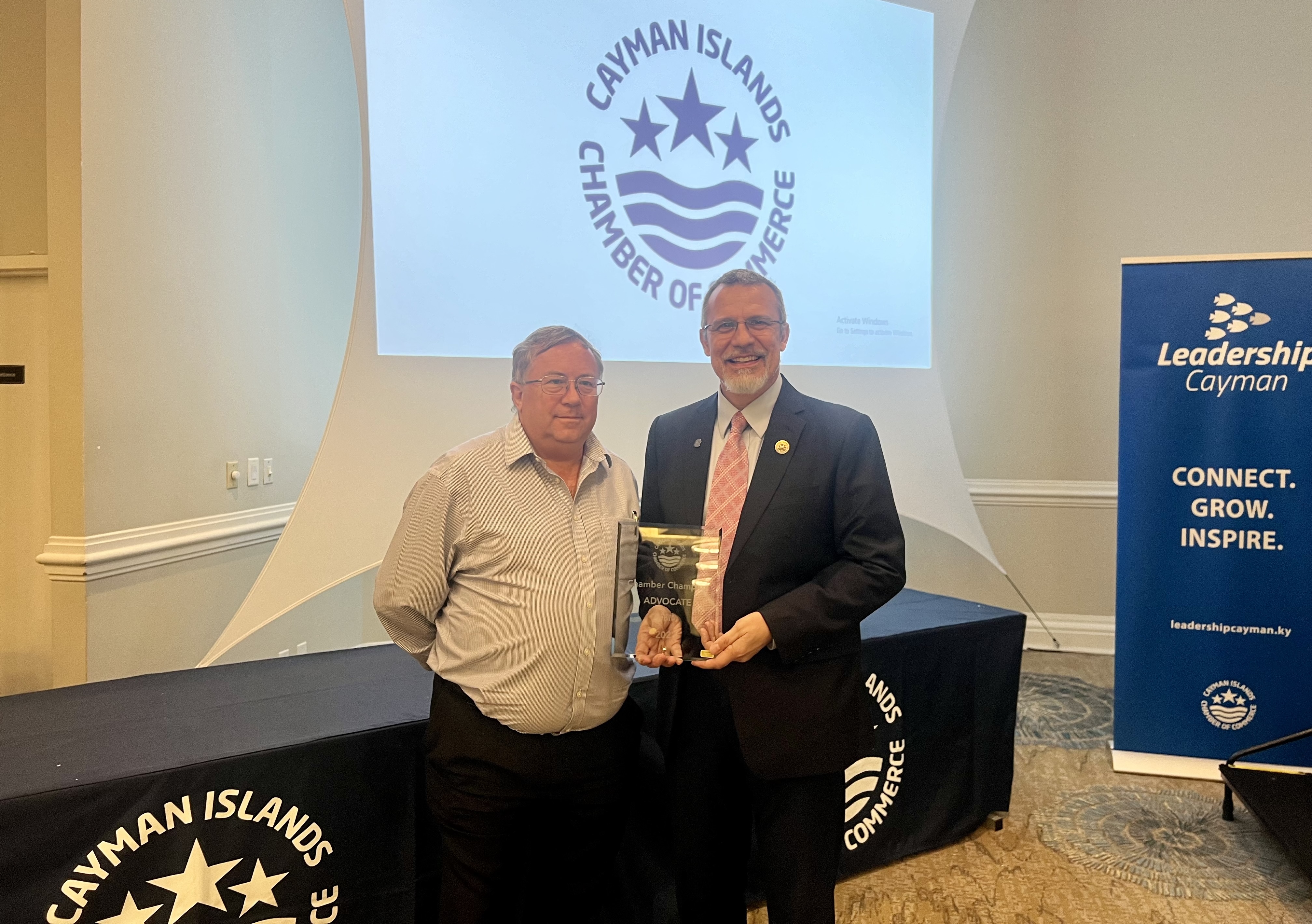
(L-R): Huw Moses (HSM Managing Partner) accepting the 2023 Chamber Champion award from Wil Pineau (CEO, Cayman Islands Chamber of Commerce).
Fatal error: Uncaught Error: Call to undefined function twentythirteen_paging_nav() in /home/clients/d17af2243e6f179e393695ba6e9ce04e/hsmnew/wp-content/themes/hsm/category.php:31 Stack trace: #0 /home/clients/d17af2243e6f179e393695ba6e9ce04e/hsmnew/wp-includes/template-loader.php(86): include() #1 /home/clients/d17af2243e6f179e393695ba6e9ce04e/hsmnew/wp-blog-header.php(19): require_once('/home/clients/d...') #2 /home/clients/d17af2243e6f179e393695ba6e9ce04e/hsmnew/index.php(17): require('/home/clients/d...') #3 {main} thrown in /home/clients/d17af2243e6f179e393695ba6e9ce04e/hsmnew/wp-content/themes/hsm/category.php on line 31