Category Archives: HSM LAW
The HSM Group is proud to once again offer a legal internship for the 2022/23 academic year in partnership with the Cayman Islands Further Education Centre (CIFEC).
The team at HSM has welcomed 15 interns: Tarek Figueroa, Briana Rodriquez, Jamari Samuda, Jelissa Bush, Elijah Lawrence, Jamila Andrade, Nathaniel Scott, Joel Watler, Antjuan Lawrence, Janely Reeves, Mahalia Archer, Phyliss Brown, Kayleigh Bush, Jenae Whittaker and Courtney Reid.
HSM is a full-service law firm and corporate services provider, which offers students the ability to gain experiences across a wide-range of practices including immigration, debt collection, intellectual property, corporate services and even areas outside of law, such as finance and marketing.
These students were interviewed at the CIFEC Careers Fair on 23 September 2022. HSM participated at this fair with a booth, which gave students an opportunity to learn about HSM as well as make a formal application.
Each of these students have been carefully paired with a lawyer or expert at HSM. These personnel will monitor the student’s work and provide mentoring.
While some students are still figuring out what they want to do with their career, CIFEC student Jamila Andrade asipires to become a lawyer and shares, “I am grateful for this experience and was over the moon when I found out I got a placement. I am learning a lot so far.”
As part of the CIFEC curriculum, the internship runs from October 2022 until April 2023 and each student attends work twice a week during school hours. When the programme ends, there may be opportunities for some students to attain a summer work placement at HSM.
HSM Managing Partner, Huw Moses OBE shares: “We look forward to this programme each year and are impressed by this year’s group of students. They are eager to learn and contribute. We are proud to be a part of their career foundation.”
HSM has supported the CIFEC Internship Programme since 2012 and also offers sponsorship opportunities for further education. HSM employs several CIFEC graduates fulltime.
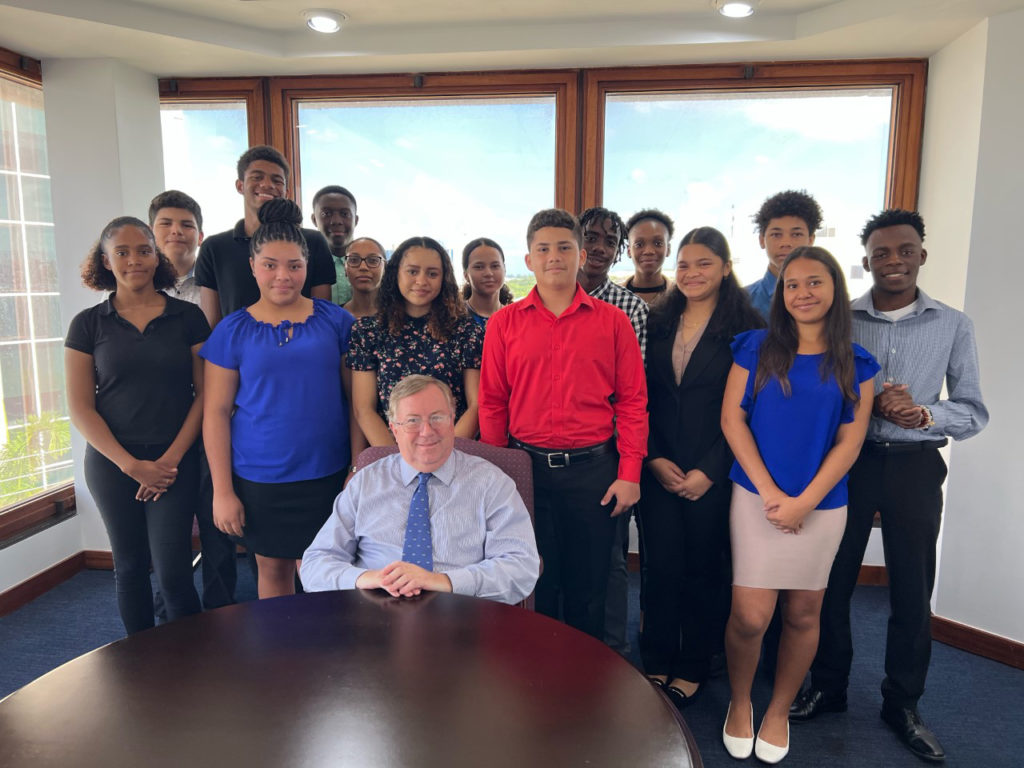
Huw Moses (HSM Managing Partner) sits with CIFEC interns standing around him.
Photo (L-R) Front Row: Jelissa Bush, Jenae Whittaker, Jamila Andrade, Joel Watler, Janely Reeves and Briana Rodriquez. Photo (L-R) Back Row: Tarek Figueroa, Elijah Lawrence, Antjuan Lawrence, Mahalia Archer, Kayleigh Bush, Courtney Reid, Phyliss Brown, Jamari Samuda and Nathaniel Scott
Quite often in family matters, when a relationship or marriage breaks down irretrievably, there is a question to be decided as to where the children will reside primarily and with which parent. Our family attorney, Shelly Perryman-Pollard, explores this dilemma. On most occasions, the parents can come to an agreement, in the best interests of the children, however, on the few occasions that this is not possible, the court may be called upon to make that determination. Sometimes, there may be an issue of one parent desiring to move the children to reside outside of the Cayman Islands. This situation may arise in circumstances where one parent has remarried and their spouse resides abroad, where one parent has acquired employment abroad or where one parent simply wants to return to their native country with the belief that it offers a better life for them and their children.
In any of those circumstances above, neither parent can simply remove the child from the jurisdiction, without the written consent of the other parent or by court order, especially in circumstances where the child is subject to the jurisdiction of the court of the Cayman Islands.
This does not apply to taking a child abroad for vacation for a period of 30 days or less, but even in those circumstances it is important to get the consent of the other parent.
The 1980 Hague Convention
The 1980 Hague Convention on the Civil Aspects of International Child Abduction is a treaty which was created in order to protect against the negative effects on a child of his/her wrongful removal from one jurisdiction to another, by one of his/her parents. It is the right of a child to have contact with both parents and when one parent unilaterally takes the decision to remove a child such that he/she will now be prevented from having contact with the other parent, this can have extremely deleterious effects on his/her wellbeing.
The Cayman Islands became a treaty partner on 1 August 1998. Other treaty partners include the United Kingdom, the United States, Germany, Australia, France, Italy and many more. This convention has established procedures to ensure the immediate return of a child to his/her country of habitual residence for the issues of residence and contact to be decided there. Each government has established a Central Authority tasked with the responsibility of managing wrongful removals. If a child is unlawfully removed by one parent to a treaty partner country, the other parent can seek the assistance of the Central Authority in that jurisdiction to have the child returned. The Central Authority will first write to the offending parent giving them the opportunity to willingly return the child to his/her place of habitual residence, however if that is not successful, the Authority, through its attorneys, will institute legal proceedings to have the child returned. It is only in exceptional cases that the court will not order the child returned immediately.
Defences to such removal can include:
- The parent who has remained originally consented to the removal and subsequently did not take any timely action after becoming aware of the removal.
- The parent who has remained was not exercising parental responsibility or contact prior to the move.
- There is a grave risk to the child of harm, if the child is returned.
- The child objects to the return and is of an age where the court could take his/her views into consideration.
In order to apply under the Hague Convention both countries must be treaty partners and the following requirements must be met:
- The child must have been habitually resident in a treaty partner country prior to the removal.
- The removal must have been wrongful (i.e. without consent or a court order).
- The application must be determined in the country where the child was brought.
It is important to note that the only issue being determined, by the country to which the child was wrongfully removed, is that of the return to his/her country of habitual residence. That court will not involve itself in issues of residence and contact as it is accepted that the most appropriate jurisdiction to hear such issues would be the child’s country of habitual residence.
Applications to remove the child with the sanction of the court
A parent who wishes to lawfully remove a child to reside in another jurisdiction must file an action in the Grand Court if the other parent does not consent. The court will try to hear this application in a timely manner given the effect of such an order on the wellbeing of the child. Each application is decided on its own facts and neither parent’s claim is considered superior to the other, especially in circumstances where both parents share parental responsibility.
Factors which the court will consider
Every parent wishing to remove a child permanently from the jurisdiction of the Cayman Islands needs to convince the court overall that such a move is conducive to the child’s welfare. This is the overarching principle in all such applications. The child’s welfare is paramount.
The leading case in the jurisdiction of the Cayman Islands is B v B delivered in April 2013. In that case, the court laid out the factors which would be relevant to any such application.
The court must consider:
- If the parent applying has a genuine application, not motivated by a selfish desire to exclude the other parent from the child’s life.
- If the opposition of the other parent is genuine and not motivated by some other ulterior motive.
- What detriment the move would have on the relationship between the child and the parent being left behind.
- Whether this detriment could be mitigated by the relationship between the child and other family members in the desired jurisdiction.
- If the application to move is realistic and founded on practical proposals.
- What the impact of the refusal would be on the applying parent.
HSM has the knowledge and expertise necessary to guide any parent through the intricacies of filing such applications in the court of the Cayman Islands. We can also effectively guide parents through mediation to sort these arrangements for their children without recourse to the courts as this is what works best for the welfare of the children involved.
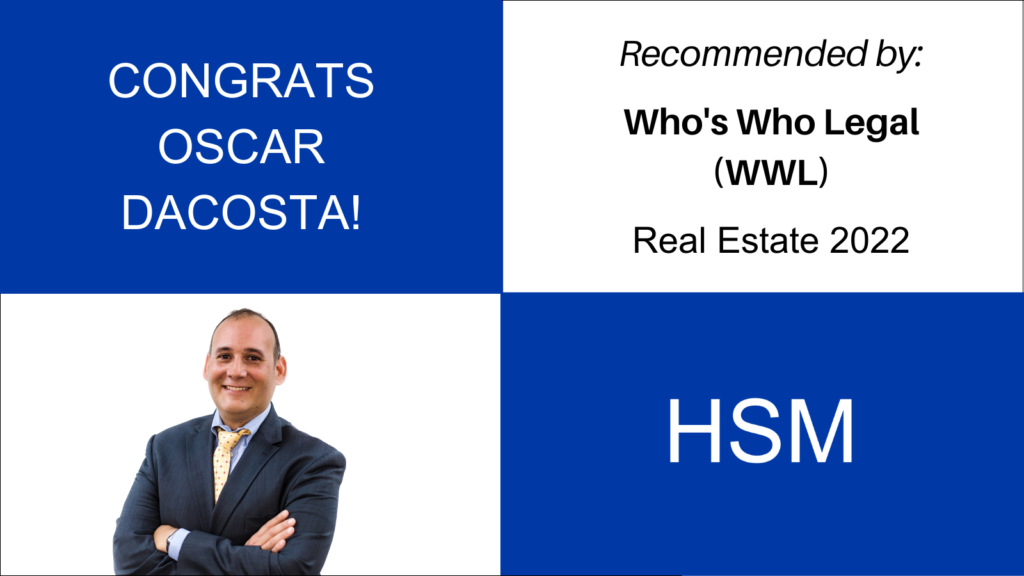
Who’s Who Legal (WWL) has featured Oscar DaCosta, a real estate lawyer in the Cayman Islands, in their 2022 Real Estate Guide.
Oscar has over 5 years of legal experience and focuses on property law, assisting with property transactions across residential/commercial properties and coordinating financing alongside banks. Oscar also has experience in banking and commercial.
WWL identifies the foremost legal practitioners in multiple areas of law and recognition is based strictly on merit – you cannot buy entry into their publication. Recipients must be recommended for their expertise in the field by independent sources, either from clients or peers.
Congratulations Oscar.
The HSM Group is thrilled to welcome Shelly Perryman-Pollard to their law firm. Shelly joins HSM Partners Kerrie Cox and Linda DaCosta in their family law practice and will help people navigate through divorce and separation, financial considerations, custody matters, property settlement and more.
Shelly comes to HSM as an Associate with 12 years of legal experience in the family field. Shelly attained her Bachelor of Laws Degree (Hons) from the University of London in 2006. She is an experienced litigator and received a certificate of Enrolment to the Supreme Court of Judicature Trinidad and Tobago in 2009.
Shelly has substantial experience in contested matters before the Courts whilst always having an eye on the possibility of achieving a settlement with the attendant saving of legal costs.
Family affairs encapsulate many areas and to complement these services, HSM’s team of experts can also advise on immigration issues, family trusts, wills and estate administration.
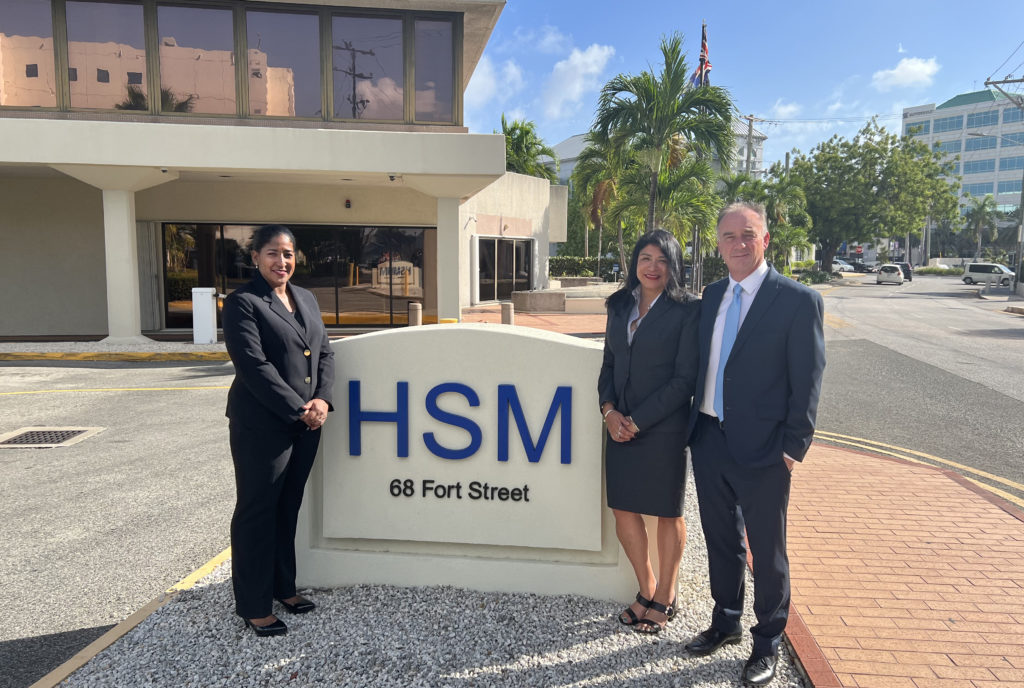
Photo (L-R): Shelly Perryman-Pollard (HSM Associate), Linda DaCosta (HSM Partner) and Kerrie Cox (HSM Partner)
Data breaches have made recent headlines in the Cayman Islands and you may have wondered what they were all about, and why they matter. Their significance in Cayman’s legal landscape is briefly explained below by Cory Martinson (HSM Paralegal).
The Data Protection Act (DPA), which came into force in September 2019, defines a breach as a security failure that leads to a person’s data being unlawfully exposed, accessed, transmitted or otherwise processed. Personal data is broadly defined as any information that relates to an identifiable living individual. If you own a business with employees then your business is processing personal data even if the business does not collect personal data from customers. It is difficult to think of a business, government entity or organization that does not process some amount of personal data. The DPA is far-reaching.
A breach could be a misdirected email, the insecure destruction of records, ransomware attacks, the loss of a USB drive containing personal data or even unauthorized access to personal data by an employee of an organization. For example, if a hospital employee views an individual’s medical data without a legitimate business need, then that activity may be a breach. Any unauthorized use of personal data could be a breach under the DPA and all organizations in the Cayman Islands, including government and private entities such as law firms, supermarkets, churches, gas stations, hotels, banks and clubs, are subject to this law.
Every organization has an obligation under the DPA to ensure it has taken appropriate organizational and technical measures to guard against the unlawful processing of personal data. If an organization has a breach and is found to have not implemented appropriate technical and organizational measures, it could be subject to enforcement action by the Ombudsman. The oversight body for the DPA is the Ombudsman. Examples of organizational measures include privacy policies, training for staff on the DPA and physical security such as locking filing cabinets and limiting access to personal data in paper format. Technical measures would include alarms, CCTV, computer firewalls and the use of encryption. Collectively, these measures increase an organization’s security posture and resilience to personal data breaches. The appropriate security measures for each organization will be dependent on the volume and types of personal data it collects, as well as its financial and technical resources. For example, the Health Services Authority would be expected to have multiple layers of security and protocols protecting the medical data it processes, while a bakery may only be required to have basic physical and technical security measures to protect employee personal data.
If an organization experiences a breach, the DPA requires that it be reported to the Ombudsman within 5 days. All individuals affected by the breach must also be notified within the same period. This requirement can be difficult to meet in some cases, especially when hundreds, or thousands, of people may be affected.
The Ombudsman’s office has broad investigative and enforcement powers that enable it to regulate and enforce compliance with the DPA. The office can issue fines of up to $250,000KYD for non-compliance with the DPA, and if a matter is referred to the Department of Public Prosecutions, the courts may also impose penalties up to $100,000KYD. The chances of being penalized for a first offence that is relatively minor is unlikely and the Ombudsman has yet to levy any financial penalties. However, over time, the Ombudsman may become less willing to forego enforcement action as the DPA will no longer be considered “new” (it came into effect in September 2019) and there will be more of an expectation that organizations should “know better”. As well, under the DPA, a person who suffers damage (which may include financial damage or mental pain or anguish) by reason of a contravention by an organization of any requirement of the law has a cause of action for compensation from the data controller for that damage.
When an organization experiences a breach there is a 4-step process it should follow:
- Contain the Breach: just as if you were on the water in a boat and it sprung a leak, you would want to do everything possible to stem the flow of water; the same goes for a breach. The organization must take immediate steps to prevent the further exposure of the personal data. These steps may involve shutting down computer systems, reporting a stolen laptop to the police or the physical or technical recovery of the compromised personal data.
- Evaluate the Risks: carefully consider the risk of harm to the individuals affected as well as to your organization. Some of these risks include financial harm, reputational harm, embarrassment, physical harm and identity theft.
- Notify: notify the Ombudsman and the individuals affected within 5 days of discovering a breach. The notification of a breach to the Ombudsman should be in writing, but notification to the individuals affected could be by phone, a prominent ad in the newspaper, an email or in person. Notification by phone or in person should be followed up in writing. The notification must describe the nature of the breach, the consequences of the breach, the steps taken or proposed by the organization to address the breach and the recommended measures to the affected individuals to mitigate the possible adverse effects of the breach.
- Prevention: carefully investigate the cause of the breach and take reasonable steps to prevent breaches in the future. The cause of some breaches may be self-evident and easily rectified, while others may require forensic computer analysis and the implementation of robust security measures, including staff training and written policies and procedures.
Breaches can be time-consuming and costly. The costs of legal advice, notification of the individuals affected, potential lawsuits, security audits and potential fines from the Ombudsman and the courts have the potential to be devastating to some businesses and individuals affected. In IBM Security’s Cost of a Data Breach Report for 2021, it was found that, globally, the average per-record cost of a breach was $161USD. Prevention is key and while it is often not a high priority for organizations it has the added benefit of enhancing customer satisfaction which can, in turn, increase reputation and revenues. Privacy is becoming ever more essential to a modern economy. As data protection awareness grows, so will the need for Cayman businesses and organizations to be privacy savvy.

The Coronavirus pandemic, and subsequent lockdowns, required timely amendments to many Cayman laws and regulations to enable the business community to continue to function. One such innovative change was the passing of the Notaries Public (Virtual Conduct of Notarial Acts) Regulations, 2020 which when combined with The Property (Miscellaneous Provisions) (Amendment Act), 2020 enabled persons to sign property related deeds or instruments remotely and removed the need for their physical presence before the notary.
HSM Property Partner Linda DaCosta explains that through video conferencing (Zoom, Teams etc.), lawyers in the Cayman Islands were for the first time permitted to meet virtually with clients to present passports and sign documents without compromising public health and safety. The amended law allowed unprecedented continuity and facilitated transactions effectively ensuring business generally and property transactions were still taking place during lockdown.
Unfortunately as of 13 April 2022, the Notaries Public (Virtual Conduct of Notarial Acts) Regulations, 2020 were stated to only be in effect for a period of 2 years and will expire on 16 April 2022. Whilst COVID related issues continue, it can only be hoped that the Regulations will be extended. Even in a post-COVID world the need for such a provision to assist the elderly and disabled is obvious. Further in a Green Cayman it cuts down on at least a few otherwise unnecessary car trips to the lawyer’s office.
There is still opportunity for further improvements. The amendments did not effectively allow for statutory documents to be executed remotely by a person located outside Cayman, we would like to see the scope extended to at least cover Caymanians overseas.
HSM stands ready to assist any clients with any appropriate notarial assistance and count five notaries amongst our team members. Notarial acts can be done either at our offices or remotely if the Regulations are extended. In cases of urgency or where clients are unable to attend our offices, we can also notarise documents at our client’s homes or at a hospital.
HSM hope that the Government will extend the Regulations and make the change a permanent one, embracing the electronic world we now live in.
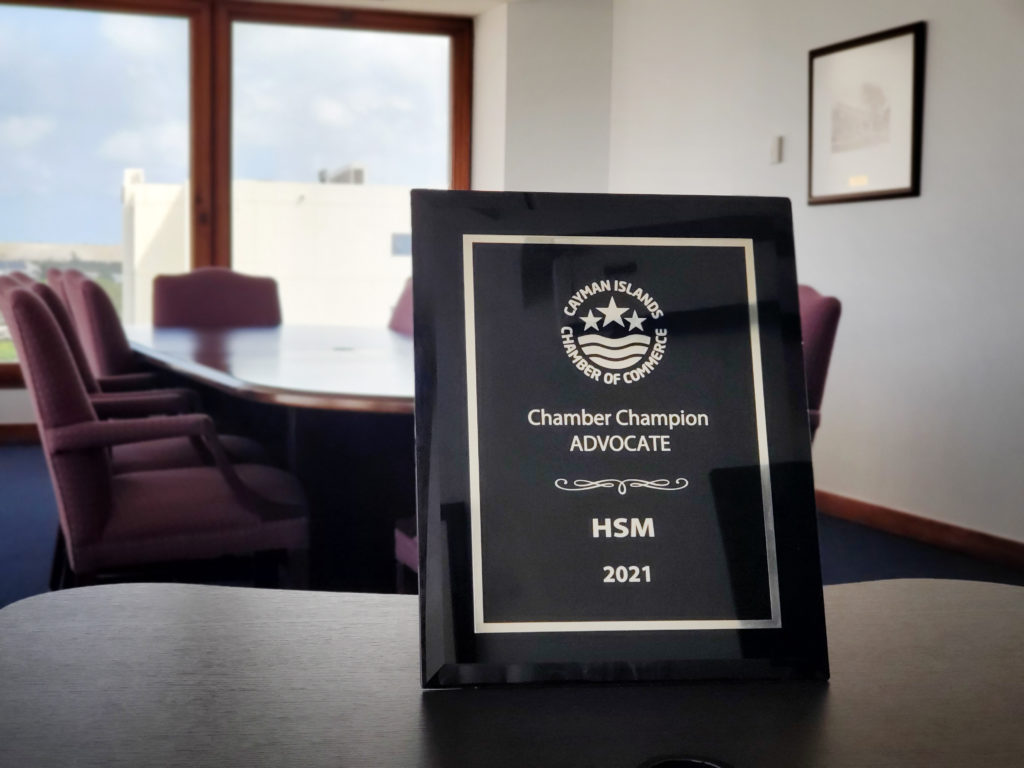
HSM is proud to be recognised again as a Chamber Champion Advocate at the Cayman Islands Chamber of Commerce Annual General Meeting on 21 February 2022 at The Westin Resort.
For the second year in a row, HSM’s recognition highlights the firm’s continuous involvement with the Cayman Chamber by offering training seminars to their members and businesses in the local community. Members in the top category of Chamber Advocate invested staff hours and contributed more than $10,000 in kind or in sponsorship over the past year.
Throughout 2021, HSM presented many courses across the legal field such as employment, immigration and work permits, business liabilities, debt collection, and wills and estate planning.
HSM has been an active member of the Cayman Chamber since opening its doors in 2012.
With effect from 8 January 2021, the Honourable Chief Justice via Practice Direction 11 of 2020 (“PD”) implemented an electronic filing and service platform (the “Platform”) pursuant to Order 1, rule 12(1) of the Grand Court Rules 1995 (Revised) (the “GCR”).
The Platform enables parties to issue proceedings and file Court documents electronically by uploading the same to the Platform, departing from the traditional practice of physically filing hard-copy documents at Court and the temporary post-COVID-19 practice of emailing the same to the registry. According to the PD, the objective of the Platform is to “improve access to justice by increasing efficiencies, timeliness and reducing costs.”
Until recently, use of the Platform was limited to all new matters commenced in the Financial Services Division of the Grand Court issued on or after the commencement date of the PD. However, use of the Platform has been extended to all divisions of the Civil Registry (in both Summary and Grand Court) and it is anticipated that the Platform will be extended to the Criminal Registry in the near future.
In order to file documents using the Platform, a party must register an account via the Judicial Administration website www.judicial.ky and click onto the e-filing Platform.
The effect of this PD impacts the manner in which parties interact with the Court and by extension each other. Subject to the GCR requirements for personal service of documents in the first instance, in addition to the methods of substituted service set out in GCR Order 65, the PD permits the electronic service of documents via e-mail and SMS or text message. A party is deemed to consent to electronic service by, inter alia, registering an account on the Platform and the email address provided during registration shall be presumed valid unless the party files and services a notice indicating otherwise. Similarly, the Court may also serve any notice, order or Judgment on a party to a case via electronic service.
The implementation of the electronic filing system in the jurisdiction presents a most welcome modernization to the procedures, in line with other jurisdictions around the world, which will hopefully bring material benefits to litigations in the long-term.
Lexology’s Getting The Deal Through guides are a trusted resource and allows professionals to directly compare laws and regulations between jurisdictions.
HSM is pleased to have contributed to their Insolvency Litigation 2021 publication and provided insight into the Cayman Islands regime covering commencing proceedings; avoidance actions; claims against directors, officers and shareholders; creditor actions and strategic considerations; pre-insolvency debtor claims; other claims; cross-border proceedings; remedies and enforcement; settlement and mediation; update and trends.
Click here to view our online chapter at no cost.
Alternatively, you can download the PDF chapter by clicking the icon below:

HSM’s newest lawyer Stephanie Mills became a qualified attorney-at-law in the Cayman Islands on 17 November.
Stephanie’s admission was moved by HSM Partner, Sarah Allison, who summarised her qualifications for Justice Richard Williams.
During her admission, Stephanie expressed her gratitude to the Court as well as her family and friends, and is thrilled to put her experience to use in her homeland.
Stephanie has over five years of experience in the legal field and prior to joining HSM, she practiced as a paralegal and subsequently as a solicitor at a UK law firm before returning to the Cayman Islands. Whilst working in the UK she was exposed to a wide range of practice areas and gained considerable experience in residential conveyancing matters.
Stephanie successfully completed her Legal Practice Course at Manchester Metropolitan University in 2015 and received a Bachelor of Laws (Hons) degree from the Truman Bodden Law School in 2014. During her studies she represented the Cayman Islands Law School in the Caribbean Law Clinic in Florida and their team received an ovation from the judges. Stephanie was admitted as a solicitor of the Superior Courts of England & Wales in 2020.
Stephanie is a part of HSM’s Litigation team and specialises in Debt Solutions and Recovery by providing assistance to a variety of banks and leading businesses enforcing secured/unsecured loan agreements, credit facilities and contracts for the supply of goods/services.
Managing Partner, Huw Moses, OBE notes, “We are proud to witness this significant milestone in Stephanie’s career and are delighted to see our firm grow with the addition of another qualified Caymanian professional. Congratulations Stephanie.”
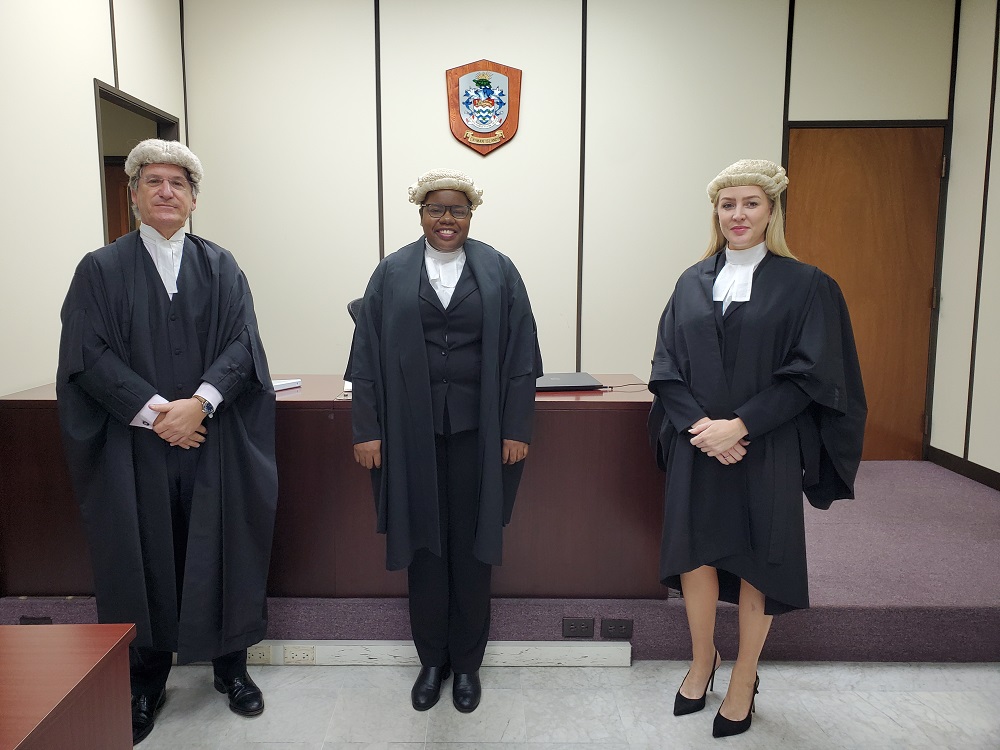
Photo (L-R): Justice Williams, Stephanie Mills (HSM Associate) and Sarah Allison (HSM Partner)
Fatal error: Uncaught Error: Call to undefined function twentythirteen_paging_nav() in /home/clients/d17af2243e6f179e393695ba6e9ce04e/hsmnew/wp-content/themes/hsm/category.php:31 Stack trace: #0 /home/clients/d17af2243e6f179e393695ba6e9ce04e/hsmnew/wp-includes/template-loader.php(86): include() #1 /home/clients/d17af2243e6f179e393695ba6e9ce04e/hsmnew/wp-blog-header.php(19): require_once('/home/clients/d...') #2 /home/clients/d17af2243e6f179e393695ba6e9ce04e/hsmnew/index.php(17): require('/home/clients/d...') #3 {main} thrown in /home/clients/d17af2243e6f179e393695ba6e9ce04e/hsmnew/wp-content/themes/hsm/category.php on line 31