Tag Archives: Caribbean Intellectual Property
HSM IP has been named Caribbean Firm of the Year at the Managing IP Awards 2026 Americas.
This marks two years in a row that our firm has achieved this prestigious recognition, reflecting the strength of our intellectual property practice and the outstanding work delivered by our IP team across the Caribbean over the past year.
We are immensely proud of this achievement, which is the result of the team’s dedication, technical excellence, and commitment to delivering strategic, high‑quality advice to our clients. We are deeply grateful to our clients for their continued trust and support.
The Managing IP Awards programme recognises remarkable IP achievements and developments across key practice areas and jurisdictions worldwide. Now in its 21st year, the awards highlight firms demonstrating excellence, innovation, and leadership in intellectual property.
Thank you to Managing IP for this honour, and congratulations to all other outstanding award recipients.
On 25 February 2025 the Bahamas Intellectual Property Office (BahaIPO) officially announced significant updates to its IP laws, including changes to the legislation governing copyrights, patents, and trade marks.
The following Laws have been introduced:
- The Trade Marks Act 2024: Repealing the Trade Marks Act (Ch. 322) and Trade Marks Act, 2015 (No. 39 of 2015)
- The Patents Act 2024: Repealing the Industrial Property Act (Ch. 324) and Patents Act, 2015 (No. 40 of 2015)
- The Copyright Act 2024: Repealing the Copyright Act (Ch. 323)
These new laws became retroactively effective as of 1 February 2025. However, the related rules, regulations, and official fees are still pending final approval.
It has also come to our attention that the BahaIPO has currently paused processing new applications until these regulations are finalised. Applications are still being accepted and can be filed to preserve relevant dates. Once the regulations are passed, applications will proceed.
The BahaIPO is expected to send an announcement to all local IP practitioners concerning the relevant updates in the coming days. HSM IP continues to monitor the situation for any progress. If you need assistance navigating these changes in the Bahamas IP landscape, please do not hesitate to reach out.
Kate Cleary, an Intellectual Property Manager at HSM IP, reached out to Peter Dutton, Managing Director at Jacques Scott to get his feedback on registering his trade mark in the Cayman Islands.
HSM IP is a specialist intellectual property law practice based in the Cayman Islands and protects creative works (trade marks, patents, copyright, designs and domain names) throughout the Caribbean and Latin America.
Jacques Scott, established in 1962, is a fine wines and spirits retailer. In April 2024 the company unveiled a new logo. The new logo still features the beloved cluster of grapes, which signifies the key ingredient of world-class vintages. The grapes design was refreshed to be more contemporary and received the addition of ‘1962’ to recognise that they have been trading for over 60 years.
What inspired Jacques Scott to register their trade mark?
Even before the logo rebrand, Jacques Scott placed priority on their previous logo by registering it in the Cayman Islands with HSM IP. Jacques Scott’s previous logo had been with the company for over 25 years. While a recognizable symbol in the Cayman Islands, it was time for a refresh. As part of their commitment to their brand Jacques Scott reached out to HSM IP to update and register their rebranded logo.
HSM IP encourages brand owners to ensure the latest versions of their trade marks are duly registered to maximise their level of protection and ensure all channels of legal recourse are available should a third party attempt to use or register a confusingly similar mark. In such cases, even small or minor differences can be of vital importance.
Why is registering your trade mark important to you?
Peter Dutton: “To protect the brand and logo, which are very important to us.”
Jacques Scott employs over 130 staff members and has opened three new stores in the past five years including a revamp of their airport duty-free location. With such growth, it is important to protect the brand to help foster brand loyalty with not only their staff but with its customers. Thanks to Cayman’s thriving tourism industry, a brand with a strong reputation locally in the Cayman Islands is likely to be exposed to an international audience. Registering a trade mark provides local brand owners with a degree of comfort that their brand is protected under the law.
How did you find the process of registering your trade mark?
Peter Dutton: “Lengthy but fairly straightforward. I appreciate HSM IP’s guidance throughout the process.”
A trade mark agent with extensive experience in registering trade marks in the Cayman Islands is an invaluable asset to businesses seeking to protect the rights in their brand. With over 100 years of combined experience, the HSM IP team is uniquely placed in Grand Cayman to offer tailored advice and assistance throughout the registration process, from providing pre-filing advice and conducting clearance searches, to preparing and filing the application, monitoring the progress of the application and generally making the registration process as seamless as possible.
What would you say to other businesses who are thinking about registering their trade mark?
Peter Dutton: “While ultimately, it is a business decision, it is worth looking into and provides peace of mind.”
The peace of mind includes a defense to an infringement action. The registration of a trade mark can deter others from seeking to profit from the good reputation of an established brand, as well as offering legal recourse in the event of third parties acting in bad faith. More details as to why you should file a trade mark in the Cayman Islands may be found here.
It is always recommended to conduct a trade mark search before committing to a brand to ensure that a similar/identical trade mark is not already owned by a third party in respect of identical/similar goods and/or services. In this case, HSM IP were the trade mark agents for Jacques Scott’s existing trade mark registrations and were able to assure Jacques Scott that there were unlikely to be any issues with the registration of its updated logo. Searching the Registry of Trade Marks affords the brand owner the opportunity to re-consider its (re-)branding if it transpires there are earlier conflicting registrations.
HSM IP understands the importance of a logo or name as an asset in driving loyalty and maintaining a competitive advantage in an often crowded marketplace. We are committed to safeguarding intellectual property to ensure ideas and creations are secure, protected and able to flourish.

Photo supplied by Jacques Scott. Photo credit: Cayman Compass.
The HSM Group is pleased to be featured by Chambers & Partners in their 2024 Global Legal Guide.
Our Intellectual property practice, HSM IP, has once again been ranked as a top tier law firm in their Global (Caribbean-Wide) Intellectual Property 2024 Guide. This marks the fifth year in a row being ranked and highlights our ability to successfully handle Intellectual Property (IP) registrations, filings and infringement matters across the Caribbean.
Citing Chambers and Partners, a commenter shared that HSM IP is a firm that is “knowledgeable about the laws in various jurisdictions and is able to walk us through them.”
HSM Chambers has also been ranked for Real Estate (Cayman Islands) with HSM Partner Linda DaCosta. Our team is praised for handling contract negotiations, conveyancing, acting for banking institutions and ensuring timely completions.
Chambers and Partners is a prestigious hub for lawyer and law firm recommendations. They diligently research and feature the world’s best lawyers and have done so since 1990, covering over 200 jurisdictions.
Mrinali Menon has joined HSM IP in the Cayman Islands as their new Senior Intellectual Property (IP) Manager. Overseeing a team of 10 IP specialists, Mrinali has over eight years of global legal experience, having worked in the United States (New York) and India.
She has a diverse background in handling contentious and non-contentious intellectual property matters, including trade mark prosecution, acquisition, licensing, technology transfer, data privacy and cybersecurity. Before joining HSM IP she has been involved in numerous lawsuits relating to infringement, media and entertainment disputes, cybersquatting and online counterfeiting.
Mrinali has a dual degree in law, including a Master’s Degree in Law (LL.M.) from Columbia Law School, New York, and a Bachelor’s Degree in Law (B.A. LL.B.) from Symbiosis Law School, India. She is also a part-time Instructor at Columbia University, New York where she covers IP and Technology Law.
Mrinali has been accepted into International Trademark Association’s (INTA) Brand Restrictions Committee for the 2024-2025 term. The Committee informs policymakers about the important role of trade marks in the economy and society, and the need for balanced regulations that address public health concerns while respecting private property rights.
“We are thrilled to have Mrinali join HSM IP,” commented HSM IP Managing Partner, Huw Moses OBE. “Her international experience will be a great resource for our clients while her leadership and teaching background will support our internal team development.”
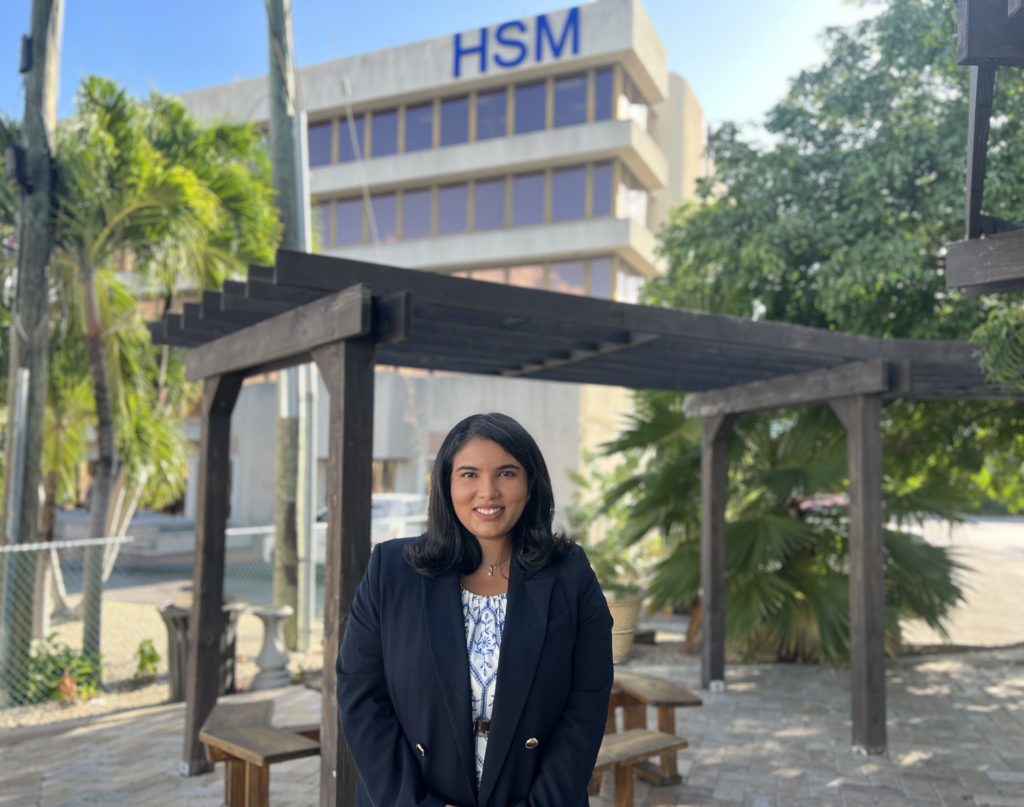
Mrinali Menon outside of HSM’s building on 68 Fort Street, George Town, Cayman Islands
Our firm is thrilled to be recommended once again by Chambers and Partners in their new Global (Caribbean-Wide) Intellectual Property 2023 Guide.
HSM IP has been listed in their top tier, band 1 ranking for the past four years. This recognition highlights our ability to successfully handle Intellectual Property (IP) registrations, filings and infringement matters across the Caribbean.
Citing the Chambers website, they refer to HSM IP as a “compact, IP-focused law firm advising on regional portfolio management from its base in the Cayman Islands. The firm primarily assists with trade mark filings, prosecutions and renewals. It also regularly advises on region-wide brand protection strategies, and is highly experienced at overseeing revocation and opposition proceedings. The team acts for a myriad of high-end clients, including household names from the technology and consumer goods sectors. HSM IP is especially notable for its experience concerning contentious trade mark issues arising in Cuba. Huw Moses is a notable practitioner.”
Chambers and Partners is a prestigious hub for lawyer and law firm recommendations. They diligently research and feature the world’s best lawyers and have done so since 1990, covering over 200 jurisdictions.
HSM IP Ltd. provides worldwide intellectual property services and specialises in the Caribbean. The firm’s experienced team of attorneys and paralegals deliver a full suite of intellectual property services and serve a broad client base which includes major Fortune Global 500 brand owners, international law firms and other specialist IP practices.
Update: The Trade Marks Act 2023 and Trade Marks and Service Marks Regulations Amendment and Validation Act 2023 received royal assent on 17 October 2023.
As Intellectual Property (IP) specialists in the Caribbean, HSM IP is thrilled to hear that the Bermuda Government is making efforts to update its intellectual property laws.
Vance Campbell (Minister for Bermuda Tourism and the Cabinet Office) recently shared in December 2022 that this huge undertaking would involve collaboration among the Ministry for Tourism and the Cabinet Office, the Ministry of Home Affairs with the Department of Registry General and the Ministry of Economy and Labour through the Economic Development Department. A special IP Taskforce has already been assigned.
Their objective is to make legislation governing trade marks, patents, registered designs and copyrights more fully aligned with UK and global standards and best practices allowing Bermuda to better compete for business.
Reports indicate that they are tackling trade marks first. Bermuda’s trade mark laws were originally enacted nearly 50 years ago.
One of the areas this new legislation plans to address is for Bermuda’s trade mark registration and renewal periods to be amended to cover 10-year terms. Since current registration periods are only seven years, this will be a welcome change.
As matters stand today in Bermuda, it typically takes 12 to 18 months for the Registry to process a local application for registration.
The Bermuda Government intends to submit to the UK formal requests for extension of several treaties governing the protection of IP rights. Their project team is coordinating with the UK Intellectual Property Office and will be submitting copies of the draft legislation to the UK IPO for review and comment.
With regard to Bermuda’s patent legislation, work has already begun to modernise the law and it will follow a similar course to that of the trade marks legislation.
Bermuda’s copyright laws are the most recently enacted, with the Copyrights and Designs Act 2004, but updates are still needed to enhance the regime, including the ability to voluntarily register copyright ownership.
HSM IP is monitoring this news and looks forward to updating our materials when they happen.
Click here to read HSM IP’s Bermuda trade mark guide.
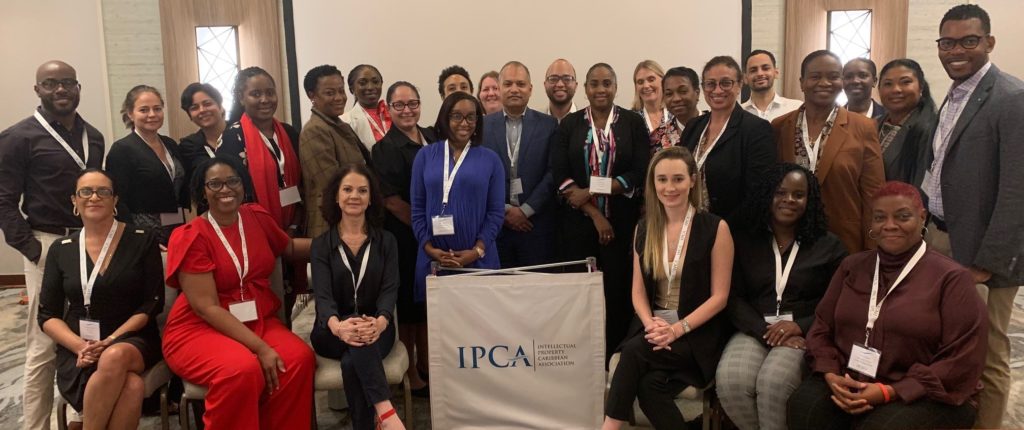
Kate Cleary (HSM IP Paralegal) attended the International Property Caribbean Association (IPCA) 2022 Annual General Meeting on 19 November in Miami, Florida. It was great connect with other IP practitioners across the Caribbean. IPCA exists to promote IP rights in the Caribbean and establish a forum for better communication amongst IP practitioners.
Our firm is thrilled to be recommended once again by Chambers and Partners in their new Global (Caribbean-Wide) Intellectual Property 2021 Guide.
HSM IP is listed in their top tier, band 1 ranking. This recognition highlights our ability to successfully handle Intellectual Property (IP) registrations, filings and infringement matters across the Caribbean.
Citing the Chambers website, they refer to HSM IP as a firm that is a “compact, IP-focused practice advising on regional portfolio management from its base in the Cayman Islands. Primarily assists with trade mark filings, prosecutions and renewals. Also regularly advises on region-wide brand protection strategies, and is highly experienced at overseeing revocation and opposition proceedings. Acts for a myriad of high-end clients, including household names from the technology and consumer goods sectors. Especially notable for its experience concerning contentious trade mark issues arising in Cuba.”
Sophie Peat (HSM IP Partner) has been listed for the first time as an Up and Coming individual. She is recognised for specialising in trade mark registration, renewal, protection and infringement issues. Satisfied clients comment: “Her style is efficient, responsive and clear.”
According to commentators, they appreciate HSM IP for its “clarity of advice,” adding: “HSM act efficiently, are responsive and meet our needs relating to trade mark activities. I consider them good value for money.” Another client commented: “HSM understand the needs and business of our company,” highlighting its “high professionality” and “great responsiveness.”
Chambers and Partners is a prestigious hub for lawyer and law firm recommendations. They diligently research and feature the world’s best lawyers and have done so since 1990, covering over 200 jurisdictions.
HSM IP Ltd. provides worldwide intellectual property services and specialises in the Caribbean. The firm’s experienced team of attorneys and paralegals deliver a full suite of intellectual property services and serve a broad client base which includes major Fortune Global 500 brand owners, international law firms and other specialist IP practices.
The long-awaited Trade Marks Act, No. 8 of 2015, (‘the New Act’) and accompanying Trade Marks Regulations, 2020, (‘the Regulations’) came into effect in Trinidad and Tobago on 25 June 2020.
The Act was originally passed in June 2015, but its implementation was delayed pending the finalisation of the accompanying Regulations. The Trade Marks Act, Chap. 82:81 (‘the Repealed Act’) has been repealed. The new official fees and forms are available on the Intellectual Property Office website at http://ipo.gov.tt/.
What’s new?
Trade mark applications can now be filed electronically and will be published through an online Trade Marks Journal, instead of in the local newspaper. These measures eliminate the need for the payment of official publication fees. Certificates will also be issued electronically. Trinidad and Tobago is now one in only a handful of Caribbean countries to modernise in this manner. It is hoped that other Caribbean countries will follow their lead, especially in light of the COVID-19 pandemic and its restrictions, which have accentuated the need for a more efficient way of working.
Under the Repealed Act, trade marks were registered in either Part A or B of the Register, Part A being for “distinctive” marks and, Part B being for marks with a lower level of distinctiveness yet “capable of distinguishing” goods or services of one proprietor from those of another. This distinction no longer exists under the New Act. Any sign which is capable of distinguishing will be accepted under the provisions of the New Act, so long as the usual absolute and relative grounds requirements are otherwise met. Trade marks registered in Parts A or B of the Register under the Repealed Act are now simply considered registered trade marks under the New Act without the former categorisation.
To the extent that non-conventional marks, such as sounds, scents and tastes, can be represented graphically and are capable of distinguishing, they are protectable under the New Act. However, in practice, the requirement for graphical representation is a challenging standard to meet for these types of marks and, therefore, it is yet to be seen how progressive this revision will be in practice.
Under the Repealed Act, Trinidad and Tobago was operating on the basis of the 7th Edition of the Nice Classification, which classifies goods and services in Classes 1 to 42. Applications filed under the New Act must now be classified in accordance with the latest version of the Nice Classification (as updated from time to time). Currently the 11th Edition of Nice is in effect. When trade marks with goods and/or services classified under the 7th Edition of the Nice Classification are renewed, they must be reclassified into the latest Edition of Nice at the same time. It is also possible to file an amendment application in order to reclassify the goods and services covered by an existing trade mark registration into the latest edition of Nice under the New Act, where reclassification is needed, at any time.
Brand owners may see a reduced number of office actions handed down under the New Act as a result of the abolishment of the archaic requirement for the association of similar / identical trade marks owned by a single proprietor. Any entry in the Register kept under the Repealed Act indicating that an existing registered mark is associated with any other mark also ceased to have effect with the implementation of the New Act. This also means that trade marks which were previously associated can be assigned separately, if desired.
The New Act also offers: enhanced protection for “well-known” marks under Article 6bis of the Paris Convention; protection for collective marks (protection under the Repealed Act extended to certification marks, but not collective marks); revised rules on grounds of revocation on grounds of non-use; and new criminal sanctions and enforcement measures.
What’s next?
Trinidad and Tobago still intends to accede to the Madrid Protocol in accordance with Section 57 of the New Act. Further Regulations will be required in order to give effect to the provisions of the Madrid Protocol once Trinidad and Tobago becomes a contracting party. In the future, it will be possible to designate Trinidad and Tobago as part of an application for International Registration or base an International Registration on a national Trinidad and Tobago trade mark application, where the applicant has a personal connection to Trinidad and Tobago (i.e. whether as a citizen, by domicile or by way of a local industrial or commercial establishment). Once Trinidad and Tobago accedes to the Madrid Protocol, it will join a small number of Caribbean Islands to do so to date, namely, Antigua and Barbuda, Cuba, the Caribbean Netherlands (BES Islands), Curacao and St. Maarten. However, it should also be noted that the French Caribbean can be protected under an International Registration designating France too, as well as a national French trade mark registration, of course.
It will be interesting to see if Trinidad and Tobago’s accession to the Madrid Protocol results in a lower number of locally filed trade mark applications by brand owners and a corresponding increase in the number of office actions issued by the Intellectual Property Office as a result, as we have seen in Antigua and Barbuda.
Fatal error: Uncaught Error: Call to undefined function twentythirteen_paging_nav() in /home/clients/d17af2243e6f179e393695ba6e9ce04e/hsmnew/wp-content/themes/hsm/tag.php:33 Stack trace: #0 /home/clients/d17af2243e6f179e393695ba6e9ce04e/hsmnew/wp-includes/template-loader.php(86): include() #1 /home/clients/d17af2243e6f179e393695ba6e9ce04e/hsmnew/wp-blog-header.php(19): require_once('/home/clients/d...') #2 /home/clients/d17af2243e6f179e393695ba6e9ce04e/hsmnew/index.php(17): require('/home/clients/d...') #3 {main} thrown in /home/clients/d17af2243e6f179e393695ba6e9ce04e/hsmnew/wp-content/themes/hsm/tag.php on line 33