Tag Archives: Cayman Islands Lawyer
The Cayman Islands, consisting of Grand Cayman, Cayman Brac and Little Cayman, are a British overseas territory located in the western Caribbean Sea.
Cayman is a major world offshore centre and a tax neutral environment, which, in conjunction with the Cayman Register being rated as a “Category 1 Aviation Regulatory Authority” by the US Federal Aviation Administration, makes it an attractive choice for many owners and management companies with corporate aircrafts.
The Cayman Islands, since 1976, has been attracting a number of Aircraft Registrations and presents a viable alternative to the US, and other registration jurisdictions.
The Cayman Islands acts under the purview of the British Civil Aviation Authority.
The process of registration generally takes 2 to 3 weeks to complete.
The Cayman Islands aircraft register is highly respected and recognised throughout the international aviation industry. The majority of the aircraft on the Aircraft Register are private exclusive jets but there is also increasing interest in the Cayman Register to register commercial aircrafts.
The Cayman Register can be used to register an aircraft in the “private” category, and this has been expanded to include all turbo-jet aircraft, all other aircraft above 5,700kg and helicopters that are based on yachts.
Benefits of Cayman Registration
- Tax Neutrality
- Low Profile Registration Mark
- Compromise Jurisdiction where an owner and financier reach an agreement to register in a neutral jurisdiction.
- Efficient Regulation
- Type Certifications – By registering on the Aircraft Register the expense of being the first to register a given type of aircraft elsewhere can potentially be avoided
- The Cayman Islands Civil Aviation Authority are efficient at responding to owners and operators’ queries
Why HSM?
HSM is a law firm in the Cayman Islands that can guide you on how to register an aircraft in the Cayman Islands and is listed as a service provider by the Civil Aviation Authority of the Cayman Islands.
For more details on our aircraft registration services, visit https://staging.hsmoffice.com/law/aircraft-registration.

HSM explores the requirements for Economic Substance in the Cayman Islands and what it means for this jurisdiction. For a full overview on whether or not your business may be affected by this new Law, download our client guide here.
“I know it when I see it.” With those words Justice Potter Stuart, in the United States Supreme Court, unravelled the most Gordian of knots, with the most Gordian of ease. He was called upon to define that which commentators what was potentially undefinable – what constituted “obscene” in the context of hard-core pornography. Not an easy task for any judge, particularly one in the United States in 1964, but that was his solution. It was beautiful, and simple, and for many, at least for a while, it worked.
The Tax Cooperation (Economic Substance) Law has created a similar dilemma. It requires legal practitioners to advise, and government officials to determine, whether or not an entity is a relevant entity, and if is a relevant entity, whether or not it is carrying out a relevant activity.
What is and what is not a relevant entity can be readily determined on a case-by-case basis, as can a determination as to what constitutes a relevant activity. For those interested, these may include banking business, distribution and service centre business, finance and leasing business, headquarters business, fund management business, holding company business, insurance business, intellectual property business, and shipping business (all defined). It expressly does not include investment fund business.
Any relevant entity carrying on a relevant activity is generally required to satisfy ‘the Economic Substance Test’. That test is satisfied if the relevant entity conducts Cayman Islands core income generating activities in relation to the relevant activity, is directed and managed in an appropriate manner in the islands in relation to that relevant activity; and has an adequate number of full-time employees or other personnel with appropriate qualifications in the Islands.
Whilst the Law is vague as to what constitutes ‘adequate’ and ‘appropriate’, it itself defers to Guidance Notes as to the meaning of those words for the purposes of the Law.
The problem that confronted authors of those Guidance Notes, and must now confront Cayman legal advisors and the Tax Information Authority is uncannily very similar to that which confronted Justice Potter. They may similarly have been expected to define the undefinable. When requiring an entity to demonstrate ‘adequate’ and ‘appropriate’ mean in the context of physical presence, we could regret that lack of specificity in any guidance (though I would think us wrong to do so). Instead we should take a lesson from the US Supreme Court. We will know it when we see it.
Whether the Economic Substance is adequate or appropriate should be obvious, and if it is ever not, the Cayman courts may be asked to sort it out.
Until then, we must know it when we see it. Affected businesses will be advised to employ people, rent premises, spend money and hold meetings here, all to the level they think appropriate to meet the expectations of the legislation. Real estate agents, IT service providers, contractors, restauranteurs and indeed most existing businesses and individuals in the Cayman Islands should probably be delighted. That the core activity is actually being carried out in the Islands should be readily apparent.
Of course, issues will develop. William T. Goldberg described that “I know it when I see it” can be “paraphrased and unpacked as: ‘I know it when I see it, and someone else will know it when they see it, but what they see and what they know may or may not be what I see and what I know, and that’s okay.’”
For now, we should see opportunity, for our islands and our customers, and know it for what it is. That’s okay.
Physical Presence
The idea that a business should have a physical presence in order to claim that it has its seat of operations in a particular jurisdiction is not new. The brass nameplate era, exacerbated by the virtual presence age, has been the subject of chagrin from many western leaders. These criticisms date from well before President Obama found fit to comment on the size of a particular office building in George Town housing some 12,000 companies (and omitted to note the fact of a much smaller building in Delaware (1209 North Orange Street) housing many more companies. Indeed, as Cayman’s companies registry has grown to more than 100,000 companies in the intervening decade, 1209 North Orange Street was recently reported as having some 300,000 companies registered there, three times the number of companies registered at every office building and residential home in the Cayman Islands combined.
Whatever the arguments, the tide has shifted. We can lament the apparent passing of a golden age, and dwell on the hypocrisy of foreign politicians, or look forward with excitement to the opportunities this changing current brings.
All change brings challenge and even fear. That latter sentiment often proves baseless (albeit too often with 20:20 hindsight). Yes, we are going to lose some business, including perhaps to 1209 North Orange Street, but these changes will also affect key competitors, including the BVI and Bermuda. With a level playing field (at least against those jurisdictions) Cayman’s size, depth and range of world class financial services industry professionals, sets us apart.
However, we also have an ace up our sleeve – our immigration regime.
Although frustrating to many, and even confounding to some, most aspects of our immigration regime work well. It does something that other territories fail at. It asks if a local person stands ready to fill a role at an appropriate standard and if not, subject to sensible checks as to such things as health and character, the permit is yours. Yes, there is a price to pay and other cost associated with administration, but the government is actively working to streamline processes. What is more, with a relatively nominal express fee paid, a work permit can be available in less than 72 hours. Where the business is international in nature and does not compete locally, the answer is not only yes, but often enthusiastically so.
We are also fundamentally very good at assimilating large numbers of foreign nationals into our community, allowing them to advance towards becoming Caymanian, and even encourage them to purchase (or build) their own homes here.
These are not optimistic statements as to how the Cayman Islands will address the challenge of foreign executives wishing to move here. This is a statement of what has pertained for decades. Anyone contemplating such a move can ask one of the numerous executives who have already, before there was any Economic Substance Test, established their mind management and control firmly on our soil. Their experience has overwhelmingly been positive.
As a new generation of executives arrive, perhaps in significantly increasing number, they will do so under a tried and tested system. The opportunities for the Caymanian people will be many. The real challenge will be ensuring that they participate as fully as they should for many years to come.
This article can also be seen in The Journal – May 2019 issue.
Our Head of Private Client and Trusts, Robert Mack, will be travelling this year to attend two conferences by the Society of Trust and Estate Practitioners (STEP).
STEP Miami’s 10th Annual Summit takes place on May 31 at the Four Seasons Hotel. Robert will also be moderating a panel discussion on Planning Strategies + Substance with Wendy Warren of Caystone Services (Bahamas), Alejandro Gil Rivero TEP of Sophos Advisors (USA) and Chris Reimer TEP of Long Reimer Winegar Beppler LLP (USA).
STEP Canada’s 21st National Conference takes place June 6-7 at the Metro Toronto Convention Centre. The two days will be filled with technical sessions, insightful keynotes and valuable networking opportunities.
These conferences attract hundreds of leading trusts professionals from around the globe and provides Robert the opportunity to keep abreast of the many issues and regulatory changes affecting the trust and private client world.
We look forward to connecting with you at these conferences.
Since 2010, Robert has been a council member of the local branch of STEP where he currently holds the position of Vice Secretary. Robert also sits on the STEP legislative review sub-committee and the Global Transparency sub-committee, which works in partnership with the Cayman Islands Government to implement and improve legislation connected to the trusts and private client industry. Robert is the Cayman Islands representative of the STEP Mental Capacity Special Interest Group. He also attended and was part of a panel discussion at this year’s STEP Cayman Islands Conference that took place January 31-February 1.
Key Contact:
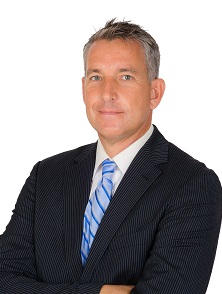
Robert Mack
rmack@hsmoffice.com
Tel: +1 345 815 7356
On March 8 2019, the Legislative Assembly approved a broad series of enhancements to the Trusts Law of the Cayman Islands as described in the Trusts (Amendment) Bill, 2019. Our Head of Private Client and Trusts, Robert Mack, shares that while some of the enhancements are highly technical in nature, there are four key changes to be aware of.
Statutory “Hastings-Bass”
The Courts of the Cayman Islands now have statutory powers to rectify mistakes in relation to the exercise of fiduciary powers where:
- The person who exercised the power (typically a trustee) failed to take into account one or more considerations that were relevant to the exercise of the power; or
- Where such person took into account one or more considerations that were irrelevant to the exercise of the power; and
- But for acting the way they did in the light of these relevant considerations the power holder would not have exercised the relevant power at all, or would have exercised it on a different occasion or in a different way.
Such a procedure is typically deployed by trustees where an unforeseen onshore tax consequence has arisen as a direct result of the exercise, or rather mis-exercise, of a fiduciary power. It is useful where the effect of the exercise of the power is not what was expected. It can be viewed as a ‘get out of jail free card’ as it allows trustees and other power holders to reverse what might otherwise be very negative and unintended outcomes. Although the Cayman Islands Courts have applied Hastings-Bass principles in the past, the fact that the principle is now codified should provide an extra layer of comfort to every holder of a fiduciary power.
Variation of Trusts by the Cayman Court
The Cayman Islands Courts have long held statutory powers to vary the terms of Cayman Islands trusts provided the circumstances were right, however, for such applications to be successful it had to be shown that such variation(s) would be for the ‘benefit’ of the beneficiaries who were unable to speak up for themselves – typically minor beneficiaries and beneficiaries who have yet to be born. To put this into context, many trust instruments are drafted in such a way to benefit a large group of family members over long periods of time. As such, it is possible, and very common, for some of the beneficiaries to be under the age of majority, in the womb, or not yet born. In such circumstances where a trust variation is ongoing, separate legal counsel will usually be appointed to represent this group. Since many trust variations are necessary to create family harmony, settle some dispute, or achieve some form of onshore tax advantage(s) these would often be viewed as a ‘benefit’ to the minor and unborn beneficiaries, but in some cases it may be difficult to locate a ‘benefit’ at all as some trust variations are neutral in effect, and as a result lawyers had to get creative in order to make their applications successful. The term ‘benefit’ in this context is not limited to financial benefits, but may also include wider social benefits, such as achieving family harmony.
The recent change now only requires that such variation(s) are not to the ‘detriment’ of such persons.
Compromise of Trust Litigation
As with the variation of trusts, the endorsement by the Cayman Islands Courts to compromise or settle trust litigation no longer requires the presence of any ‘benefit’ but rather the ‘no detriment’ test is also to be applied in relation to beneficiaries even in circumstances where there is clearly no ‘benefit’ present. This is certainty helpful in a litigation context as the settlement of litigation inevitably requires some ‘give and take’ and it is often the case that the only benefit to be had is the extinction of protracted and expensive litigation.
Firewall ‘Beefed Up’
The so-called ‘firewall’ provisions of the Trusts Law of the Cayman Islands, which are the provisions which seek to repel claims which attack the validity of a Cayman Islands trust (and Foundation Companies) on the basis that its creation did not conform to or offended some provision of foreign law, have been enhanced by expanding the class of persons offered protection from such claims. Previously this group included persons who have a “personal relationship with the settlor” (whether by way of blood or marriage) but now includes “any beneficiary (whether discretionary or not)”. The end result is that the revised Trusts Law now provides enhanced protection from such attacks.
Conclusion
Whilst there are some other minor amendments not discussed, such as the inclusion of controlled subsidiaries and private trust companies in the definition of “trust corporations” these points are really left for the trust nerds amongst us to ponder. Otherwise, all of the refinements should be welcomed by practitioners, fiduciaries, and beneficiaries alike and will certainty keep the Cayman Islands on the cutting edge of progressive trust jurisdictions worldwide.
This article can also be seen in The Journal – May 2019 issue.
Through the International Tax-Co-operation (Economic Substance) Law, 2018, the concept of an Economic Substance Test has been introduced and certain businesses must satisfy new requirements. The test applies to any “in scope” businesses and requires that any “relevant entity” carrying on a “relevant activity” must pass a 3 pronged test. Download our client guide to determine if your business is within scope or continue reading below.

Economic Substance Test
Certain categories of business operating from within the Cayman Islands must be in a position to demonstrate that, relative to the size and nature of their operations, they have sufficient “economic substance”. Such substance is measured in terms of a demonstrable physical presence, including of the mind, management and control of a relevant organisation.
If you are a relevant entity carrying on a relevant activity – you must:
(a) conduct Cayman Islands core income generating activities in relation to that relevant activity
(b) be directed and managed in an appropriate manner in the Islands in relation to that relevant activity; and
(c) having regard to the level of relevant income derived from the relevant activity carried out in the islands –
a. have an adequate amount of operating expenditure incurred in the islands;
b. have an adequate physical presence (including maintaining a place of business or plant, property and equipment) in the Islands; and
c. have an adequate number of full time employees or other personnel with appropriate qualifications in the Islands.
Definitions
A relevant entity is:
1. A company (other than a domestic company) that is-
a) incorporated under the Companies Law (as Revised) or
b) an LLC registered under the Limited Liability Companies Law (as Revised).
2. A Limited Liability Partnership that is registered under in accordance with the Limited Liability Partnership Law (as Revised)
3. A foreign company registered in the Cayman Islands under part IX of the Companies Law (as Revised)
Investment Funds or entities which are tax resident outside of the Islands are not considered relevant entities.
An “Investment Fund” is defined as an entity whose principal business is the issuing of investment interests to raise funds or pool investor funds with the aim of enabling a holder of such an investment interest to benefit from the profits or gains from the entity’s acquisition, holding, management or disposal of investments and includes any entity through which an investment fund directly or indirectly invests or operates.
A domestic company is a company that is not part of an MNE Group that is:
1. Carrying on business in the islands and which complies with s.4(1) of the Local Companies Control Law (as Revised) i.e. is Caymanian owned and controlled (at least 60% of the board of directors is comprised of Caymanians and at least 60% of the issues shares are held in the names of Caymanians) or holds a valid Trade and Business Licence under the Trade and Business Licensing Law (as Revised), is licensed under the Banks & Trust Companies Law (as Revised) or is otherwise operating under a franchise granted by the Cayman Islands Government.
2. A Company Limited by Guarantee or an “Association not for Profit” under s.80 of the Companies Law (as Revised).
Or a subsidiary of such company.
An MNE Group is a Group with annual revenues of at least US$850m total consolidated group revenue.
“Group” means a collective of two or more enterprises that are tax resident in different jurisdictions and are related through ownership or control such that it is (or would be traded on a public securities exchange) required to prepare Consolidated Financial Statements for financial reporting purposes.
A relevant entity is in scope if it is carrying on one or more of the below relevant activities:
a) Banking business;
i.e. the business of receiving (other than from a bank or trust company) and holding on current, savings, deposit or other similar account money which is repayable by cheque or order and may be invested by way of advances to customers or otherwise.
b) Distribution and service centre business;
i.e. the business of either or both of the following –
a) purchasing from an entity in the same Group
i) component parts or materials for goods; or
ii) goods ready for sale, and reselling such component parts, materials or goods outside the islands
b) providing services to an entity in the same Group in connection with the business outside of the Islands
but does not include any activity included in any other relevant activity except holding company business. For the avoidance of doubt, b) above only falls within the definition in the specific circumstances where the relevant entity is operating as a service centre for entities in the same Group.
c) Financing and leasing business;
i.e. the business of providing credit facilities for any kind of consideration to another person but does not include financial leasing of land or an interest in land, banking business, fund management business or insurance business.
d) Fund management business;
i.e. the business of managing securities as set out in paragraph 3 of Schedule 2 to the Securities Investment Business law (2019 Revision) carried on by a relevant entity licensed or otherwise authorised to conduct business under that Law for an investment fund.
e) Headquarters business;
i.e. the business of providing any of the following services to an entity in the same Group –
a) the provision of senior management;
b) the assumption or control of material risk for activities carried out by any of those entities in the same Group; or
c) the provision of substantive advice in connection with the assumption or control of risk referred to in paragraph b)
but does not include banking business, financing and leasing business, fund management business, intellectual property business, holding company business or insurance business.
f) Holding company business;
i.e. the business of a ‘pure equity holding company’, which itself is defined to mean ‘a company that only holds equity participations in other entities and only earns dividends and capital gains’.
g) Insurance business;
i.e. the business of accepting risks by effecting or carrying out contracts of insurance, whether directly or indirectly, and includes running-off business including the settlement of claims.
h) Intellectual property business; or
i.e. the business of holding, exploiting or receiving income from intellectual property assets and ‘intellectual property asset’ means an intellectual property right including a copyright, design right, patent and trade mark.
i) Shipping business
Means any of the following activities involving the operation of a ship anywhere in the world other that in the territorial waters of the Islands or between the Islands –
a) the business of transporting, by sea passengers or animals, goods or mail for a charge;
b) the renting or chartering of ships for the purpose describe in paragraph a);
c) the sale of travel tickets and ancillary ticket related services connected with the operation of a ship;
d) the use, maintenance or rental of containers, including trailers and other vehicles or equipment for the transport of containers, used for the transport of anything by sea; or
e) the functioning as a private seafarer recruitment and placement service
but does not include a holding company business or the owning, operating or chartering of a pleasure yacht.
Given the above, the test can be substantially satisfied through the employment of persons within the Islands to carry out the relevant activity or activities. The Cayman Islands may already have persons with the requisite skills and expertise already resident, but where such skills are unavailable, or if available, are not available in sufficient number, then any required persons can be brought into the Islands from overseas. Such persons can bring with their spouses and children (amongst others) following a well-established immigration regime overseen by a Cayman Islands Government Department, “Workforce Opportunity and Residence Cayman” (WORC).
Compliance, Filings and Penalties
Relevant Entities in existence prior to 1 January 2019 must satisfy the economic substance test in relation to a Relevant Activity from 1 July 2019. Relevant Entities formed on or after 1 January 2019 must satisfy the economic substance test in relation to a Relevant Activity from the date on which the Relevant Entity commences the Relevant Activity.
Starting in 2020 all Relevant Entities carrying Relevant Activities are required to satisfy the economic substance test and submit details to the Cayman Islands Tax Information Authority (the “TIA”). Failure to comply can result in an initial fine of CI$10,000 which can increase to CI$100,000 with continued failure to comply and being struck from the Registrar of Companies.
Next Steps
If you are affected by this Law or if you are unsure, contact our team for tailored advice. We can help determine whether a client is “in scope” or “out of scope” in relation to the economic substance test and if affected, provide administrative support as well as provide immigration advice to issues that may arise.
Suneeta Lee has successfully completed her articles at HSM and is now a qualified lawyer in the Cayman Islands having been called to the Cayman Islands Bar on Wednesday 1 May.
Suneeta’s admission was moved by HSM Senior Associate and Principal, Sarah-Jane Allison, who summarised her qualifications for Justice Cheryll Richards.
Suneeta joined the firm in June 2016 as a Legal Intern and started her clerkship in October 2017. HSM is a full-service law firm in the Cayman Islands and as a result, she was able to learn a wide-range of practice areas including intellectual property, debt collection, litigation, corporate services, property, immigration and employment.
Suneeta graduated from the Truman Bodden Law School in 2017, attaining a Distinction in the Professional Practice Course. She was awarded the OL Panton Memorial Prize for best overall performance on the Professional Practice Course 2016/2017 and the Attorney General’s Trophy for outstanding performance in the Qualifying Examination. She also attended the Truman Bodden Law School from 2013-2016 and attained an LLB (Hons) degree from the University of Liverpool.
Addressing the Court, Suneeta shares, “I recognise and accept the responsibility that comes with being an officer of the Court. I would like to thank Huw Moses and the Partners and management of HSM for giving me the opportunity to work for such an incredible firm.”
Since HSM opened their doors in 2012, this is the second articled clerk to be called to the Cayman Islands Bar. Majdi Beji was the first and remains at the firm.
Suneeta will be joining HSM as an Associate in their property division, assisting with development transactions, acquisitions and disposals as well as landlord/tenant matters across residential and commercial properties.
Managing Partner, Huw Moses, OBE notes, “Our firm continues to grow with a qualified local attorney and we couldn’t be more proud of Suneeta. I look forward to working with her in serving our valued clients.”
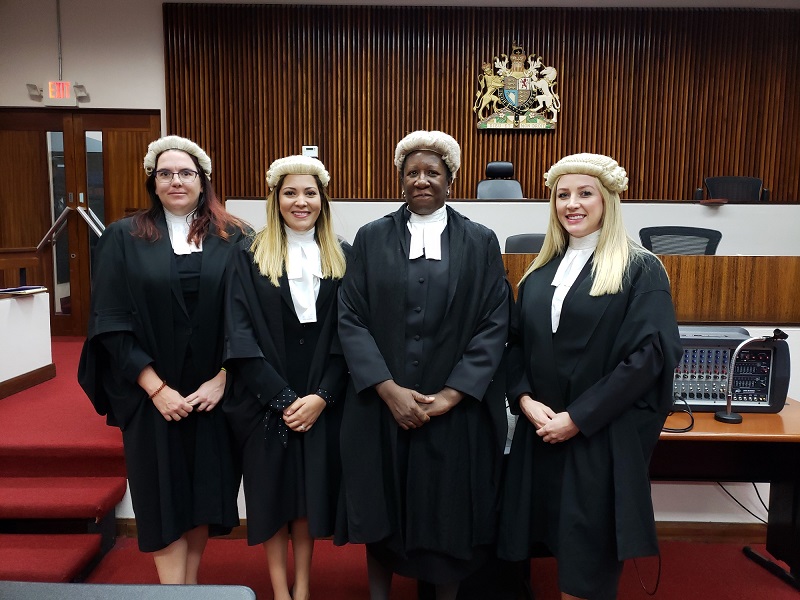
L-R: HSM Associate, Hilary Brooks; HSM Associate, Suneeta Lee; Justice Cheryll Richards and HSM Senior Associate, Sarah-Jane Allison
Our Senior Associate, Adam Crane, will be attending and speaking at the American Bankruptcy Institute (ABI) Annual Spring Meeting on April 11-14, 2019 at the Marriott Marquis in Washington, D.C.
Adam will be speaking in a panel discussion on April 13 from 8:30am to 9:30am. The topic is: ‘how to find hidden foreign assets here and there’ – hosted by the Commercial Fraud and International Committees.
The panel will explore the challenges with foreign asset discovery in chapter 15 proceedings. Most foreign discovery is obtained either pursuant to Federal Rule of Bankruptcy Procedure 2004 or through the application of the Hague Convention. But how effective are these methods given the cumbersome and often complicated process of obtaining discovery? Are there more effective and efficient methods toward obtaining these results? Do other foreign jurisdictions have less cumbersome and more expedited processes to propound this type of discovery?
The discussion will include: commonly faced issues in obtaining discovery when locating and seizing assets, how to obtain records to determine the financial condition of the parties, and how foreign law may work to limit discovery.
Joining Adam on the panel will be Patricia A. Redmond of Stearns Weaver Miller Weissler Allhadeff & Sitterson (Miami), Ryan W. Blackney of Freeborn & Peters LLP (Chicago) and Ian De Witt of Tanner De Witt (Hong Kong).
We look forward to connecting with you at this conference.
Key Contact:
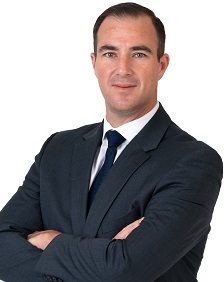
Adam Crane – Senior Associate
acrane@hsmoffice.com
Tel: +1 345 815 7364
The HSM Group congratulates Partner William (Bill) Helfrecht for his recognition by Chambers and Partners. For the second consecutive year, William is featured in the Band 3 ranking in the 2019 Chambers Global Guide for dispute resolution: trusts in the Cayman Islands.
William’s practice primarily focuses on advising and acting for liquidators, professional trustees, trust protectors and high net-worth individuals in relation to non-contentious and contentious trust matters, professional negligence and other tort actions, Company Law matters (including directors’ liability and shareholders’ rights) and all forms of disputes concerning the ownership and occupation of land.
A peer who was contacted by Chambers and Partners says: “Bill Helfrecht of HSM Chambers is a highly appreciated practitioner whose practice has a particular focus on trust disputes. He garners respect in the market for his wealth of experience in this field.”
Chambers and Partners is a prestigious hub for lawyer recommendations. They diligently research and feature the world’s best lawyers and have done so since 1990, covering over 185 jurisdictions.
Key Contact:

William Helfrecht – Partner
whelfrecht@hsmoffice.com
Tel: +1 345 815 7418
The HSM Group is thrilled to welcome Associate Shula Sbarro. Shula will be assisting HSM’s Debt Solutions practice, acting for banks, strata corporations and other leading businesses.
Shula joins HSM with over eight years of experience in the legal field with a background in commercial and civil litigation. These matters included mortgage possessions, orders for sale, warrant applications, charging orders, redeterminations, third party debt orders, orders for questioning, return of goods and money claims, summary judgment applications and more.
“Shula’s wide-range of litigation experience will undoubtedly be an asset to our clients, who are seeking solutions in respect of debt recovery. We are proud to have her be part of the team,” shares Huw Moses, Managing Partner at HSM.
Shula is a qualified lawyer in the Cayman Islands and was admitted to the Cayman Islands Bar on March 5, 2019.

The HSM Group is proud to sponsor the 2nd Annual Society of Trust and Estate Practitioners (STEP) Cayman Conference, taking place at Kimpton Seafire Resort + Spa in Grand Cayman from January 31 – February 1.
Visit our booth during the conference to learn more about our legal and corporate services, and be entered to win one of our 5-in-1 BBQ tools – a useful memento to remind you of our law firm in the Cayman Islands.
Robert Mack, HSM’s Head of Private Client and Trusts, will be speaking during one of the breakout panel sessions on February 1 at 12pm and will be exploring wealth structuring for PEPs (politically exposed persons) – the impact of politics, conflict and sanctions on PEPs.
Since 2010, Robert has been a council member of the local branch of STEP, where he currently holds the position of Vice Secretary.
Robert also sits on the STEP legislative review sub-committee and the Global Transparency sub-committee, which works in partnership with the Cayman Islands Government to implement and improve legislation connected to the trusts and private client industry. Robert is also the Cayman Islands representative of the STEP Mental Capacity Special Interest Group.
We look forward to connecting with you at this conference.

(L-R): Samantha Bartley and Robert Mack
Fatal error: Uncaught Error: Call to undefined function twentythirteen_paging_nav() in /home/clients/d17af2243e6f179e393695ba6e9ce04e/hsmnew/wp-content/themes/hsm/tag.php:33 Stack trace: #0 /home/clients/d17af2243e6f179e393695ba6e9ce04e/hsmnew/wp-includes/template-loader.php(86): include() #1 /home/clients/d17af2243e6f179e393695ba6e9ce04e/hsmnew/wp-blog-header.php(19): require_once('/home/clients/d...') #2 /home/clients/d17af2243e6f179e393695ba6e9ce04e/hsmnew/index.php(17): require('/home/clients/d...') #3 {main} thrown in /home/clients/d17af2243e6f179e393695ba6e9ce04e/hsmnew/wp-content/themes/hsm/tag.php on line 33