Tag Archives: Cayman Trade Mark
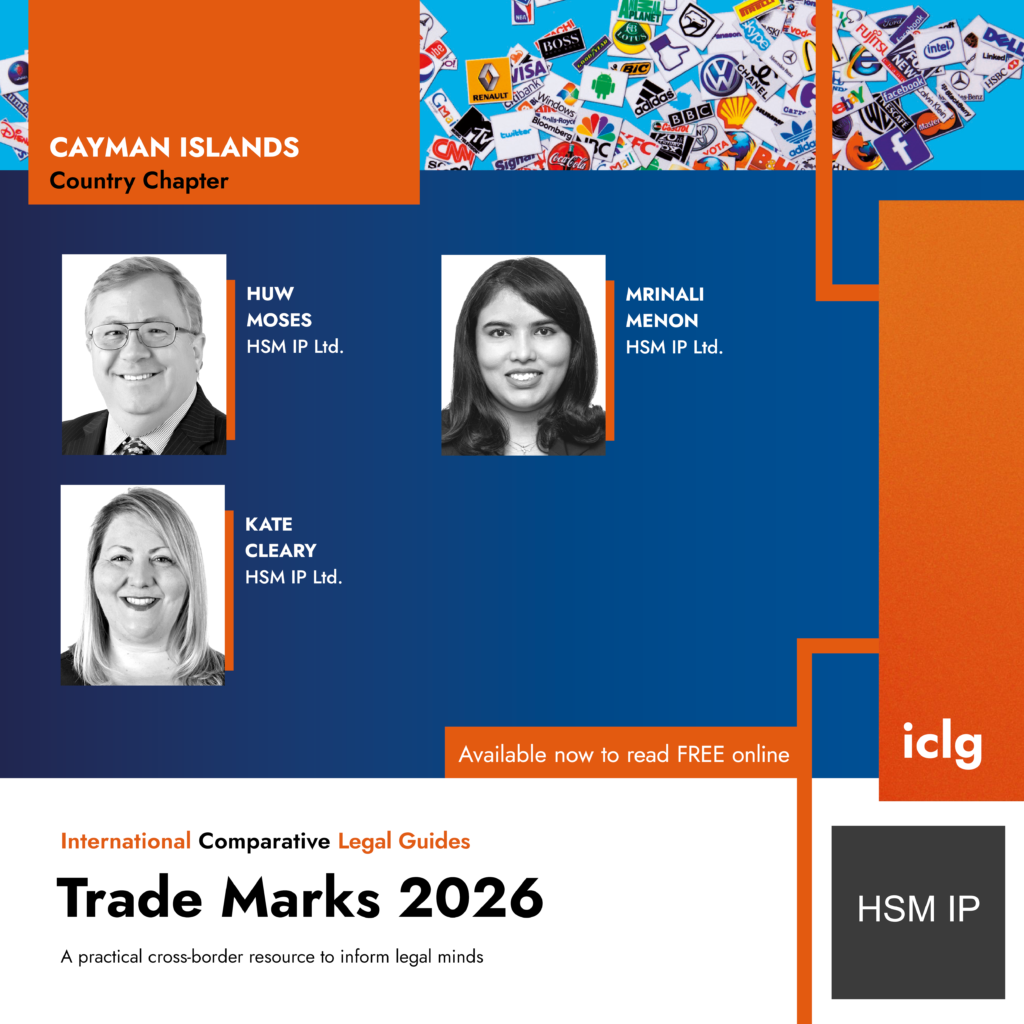
HSM IP is pleased to have contributed once again to the International Comparative Legal Guide (ICLG) to Trade Marks. Click here to read our Cayman Islands chapter in the 15th edition of the guide, authored by Huw Moses, Mrinali Menon and Kate Cleary.
Produced by Global Legal Group, the ICLG to Trade Marks provides practical, cross-border insight into trade mark law and practice. Now in its 15th edition, the guide addresses key legal and regulatory issues across more than 30 jurisdictions worldwide.
Kate Cleary, an Intellectual Property Manager at HSM IP, reached out to The Security Centre to get its feedback on registering their trade mark in the Cayman Islands. Kate spoke with Natasha Whitelocke (Director – Admin, Compliance & Regulatory Affairs) and Bernice Theron (PA/Project Coordinator).
HSM IP is a specialist intellectual property law practice based in the Cayman Islands and protects creative works (trade marks, patents, copyright, designs and domain names) throughout the Caribbean and Latin America.
The Security Centre Limited, established in 2000, is a full-service private security firm in the Cayman Islands. It offers top-of-the-line digital security products and has a team of highly trained security officers.
HSM IP: Why is registering your trade mark important to you?
The Security Centre: “Registering our trade mark was about protecting more than just a logo—it’s about protecting our identity and the trust we’ve built in the Cayman community. As a full-service security provider, we are in the business of protecting others, so it made sense to take the same approach with our own brand.”
The Security Centre’s trade mark is crucial to its brand identity and ensures that its services are distinguishable in the market. As the largest and most trusted full-service security company in the Cayman Islands, having a registered trade mark reinforces its commitment to quality and professionalism. It also provides legal protection against unauthorized use by third parties.
HSM IP: How did you find the process of registering your trade mark?
The Security Centre: “The process was very smooth and straightforward, thanks to the guidance of our legal team at HSM IP and support from the Cayman Islands Intellectual Property Office (CIIPO).”
HSM IP conducted thorough searches to ensure the uniqueness of The Security Centre’s mark and followed the necessary steps to secure its registered rights, which included providing advice and assistance in overcoming some issues the CIIPO raised during the application process, and making the experience as straightforward and as seamless as possible.
HSM IP: What would you say to other businesses who are thinking about registering their trade mark?
The Security Centre: “We highly recommend registering your trade mark, as it provides legal protection and helps distinguish your brand in an often-crowded marketplace. It demonstrates professionalism and commitment to your business, and can be an invaluable tool in addressing any potential legal issues related to brand identity. Taking necessary steps to register your trade mark is an investment in the long-term success and safety of your business. We would tell any business owner: if you believe in the brand you are building, protect it.”
HSM IP: Can you describe the significance or meaning behind the trade mark?
The Security Centre: “In the security industry, having a registered trade mark represents trust, reliability, and professionalism. Such a registration not only legally protects the brand, but also serves to reassure our clients that they are dealing with a credible and established provider. A well-designed trade mark can symbolize vigilance, safety, and strength, while helping the company stand out in a market where trust is of paramount importance.”
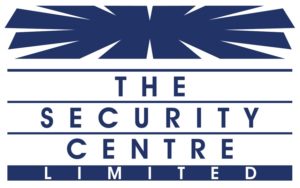
From a design perspective, The Security Centre trade mark features a geometric abstract graphic, resembling a shield. The company name is boldly presented in all caps, showcasing its strong and authoritative presence.
HSM IP understands the importance of a logo or name as an asset in building consumer loyalty and maintaining a competitive advantage. We are committed to safeguarding intellectual property for our clients, to ensure that their ideas and creations are secure, protected and free to flourish.
HSM IP is a specialist intellectual property law practice based in the Cayman Islands and protects creative works (trade marks, patents, copyright, designs and domain names) throughout the Caribbean and Latin America.
Kate Cleary, an Intellectual Property Manager at HSM IP, reached out to Joel Chadha (Senior Legal Counsel) and Ian Whan Tong (Group Legal Counsel) at Cayman National Corporation Ltd. (“Cayman National”) to discuss their experience of registering their trade marks in the Cayman Islands.
Cayman National was established in 1974 and is a leading financial services company based in the Cayman Islands.
Why is registering your trade mark(s) important to you as a financial institution?
Cayman National: Registering our trade marks is crucial as it protects our brand identity, ensuring exclusive rights to use our name, logo, and other branding elements. For example, if an attempt is made to spoof our website or misuse our identity, a registered trade mark allows us to take swift legal action and makes it easier to request takedowns (from search engines, web hosting providers and social media platforms etc.) of counterfeit sites, which safeguards our reputation and, ultimately, our customers. This helps in building trust with our clients, maintaining our good reputation, and safeguards against unauthorized use that could confuse customers or damage our brand.
Can you describe the significance or meaning behind the trade mark(s)?
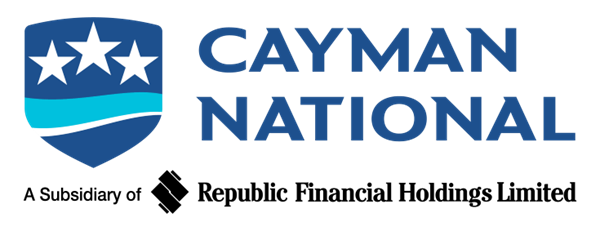
Cayman National: The Cayman National Brandmark represents our unified organisation. The Brandmark consists of three elements: shield icon, signature and the subsidiary subline. The Shield is a graphical representation of Cayman National. It contains references to island life and specifically the three Cayman Islands. It also embodies stability and progress. The signature comprises the two words Cayman National. The subsidiary subline shows that we are part of the Republic Financial Holdings Limited family,
HSM IP: From a design perspective, Cayman National pays homage in its logo to the three Cayman Islands: Grand Cayman, Cayman Brac and Little Cayman. This helps to create a unique distinction.
How did you find the process of registering your trade mark(s)?
Cayman National: The process was straightforward but required careful attention to detail. Working with legal experts in the intellectual property field such as HSM helps us navigate the formalities efficiently, ensuring that our trade marks are registered correctly and thereby providing comprehensive protection for our brand.
HSM IP: We are proud to have worked with Cayman National for over 10 years. Before 2017, Cayman’s Trade Marks legislation required applications to be processed through the United Kingdom or European Union before being extended to the Cayman Islands and we have assisted Cayman National with its registrations not only directly in Cayman Islands (post-2017), but also at the UK Intellectual Property Office.
What would you say to other businesses who are thinking about registering their trade mark(s)?
Cayman National: Registering a trade mark is essential for protecting a brand’s identity and reputation. It not only secures exclusive rights but also adds value to a business. Acting early, consulting with legal professionals, and ensuring brand protection are critical steps for businesses as they grow.
HSM IP proudly assists local Cayman Islands businesses in securing their intellectual property assets, which can be vital to driving loyalty and maintaining a competitive advantage in an often-crowded marketplace. We are committed to securing intellectual property registrations for our clients, to ensure their unique ideas and creations are suitably protected.
HSM IP has once again contributed to the International Comparative Legal Guide (ICLG) to Trade Marks. Click here to read our Cayman Islands 2024 Trade Mark chapter by Huw Moses, Mrinali Menon and Kate Cleary.
This guide is now in its 13th edition and provides a practical cross-border insight into trade mark work. First produced by Global Legal Group, this guide covers common issues in trade mark law and regulation across 30+ jurisdictions.


HSM IP has once again contributed to the International Comparative Legal Guide (ICLG) to Trade Marks. Click here to read our Cayman Islands 2023 Trade Mark chapter by Huw Moses and Kate Cleary.
This guide is now in its 12th edition and provides a practical cross-border insight into trade mark work. First produced by Global Legal Group, this guide covers common issues in trade mark law and regulation across 30+ jurisdictions.


Many local businesses ask “Why should I file a trade mark in the Cayman Islands?” especially where there has been longstanding use of a mark in the Islands. Whilst unregistered rights acquired through use may be protectable under the common law of passing off, there are several reasons why trade mark protection is always a good idea.
- Passing off requires evidence of use and evidence preparation can be expensive
Relying on unregistered rights is likely to be more expensive if litigation becomes necessary in order to protect your brand. This is because the owner of the unregistered rights (e.g. an unregistered trade name, logo or get-up) must demonstrate that they own the requisite goodwill through use and demonstrate this through evidence. Evidence preparation can be time consuming and therefore expensive.
On the other hand, the proprietor of a registered trade mark can simply rely on its trade mark registration certificate to prove ownership and the trade mark registration will be presumed valid unless and until the infringer can successfully demonstrate otherwise through arguments.
- Exclusive rights in the trade mark
Proprietors of registered Cayman Islands trade marks have the exclusive right to use the mark and registered rights are infringed by third party use of the trade mark in the Islands without the proprietor’s consent. There are some exceptions, but this is the general principle.
- Trade mark registrations are valid from the date of filing
For those with a new brand idea, but not yet ready to start using the brand, filing a trade mark application prior to first use not only puts a flag in the sand, but it can also be a good way to alert third parties to your rights as trade mark applications are published in the Cayman Islands Gazette, Intellectual Property Edition.
Also, if any third party believes they own earlier rights to an identical/similar mark they may oppose your application based on earlier registered and/or unregistered rights. If such events occur this can be a good point to consider whether you wish to continue to pursue your chosen trade mark or rebrand. On the other hand, if no oppositions are filed, the trade mark will proceed to registration and the exclusive rights to use the trade mark will belong to you.
- Disincentive to potential infringers
It is possible to search for registered trade marks before the Cayman Islands Intellectual Property Office (CIIPO) for a small fee via a registered agent. It is always best to conduct a trade mark search before committing to a brand to ensure that a similar/identical trade mark is not already owned by a third party in respect of identical/similar goods and/or services. In-use searches are also recommended to check for any conflicting common law rights. It is common practice for businesses to conduct full trade mark clearance searches before filing a trade mark application and should their searches reveal a conflicting earlier registration this will act as a disincentive to move forward with the chosen brand.
- Defence to an infringement action
Once your trade mark is registered, it cannot be infringed by the use of another registered trade mark in relation to goods or services which the latter trade mark is registered. In order to successfully bring infringement proceedings, the owner of the later trade mark registration would first have to invalidate your earlier trade mark registration through invalidity proceedings brought before the CIIPO or the Court.
- Monetization of your brand
Your registered trade mark has an economic value. It can be sold or licensed to a third party in exchange for payment or royalties. It may also act as security before a bank or other financial institution in exchange for a loan. Third party buyers, licensees and banks are much more likely to invest in a registered trade mark than an unregistered trade mark. The basic details of their investment should also be recorded on the public register through the filing of the relevant recordal applications at CIIPO.
- Protection against trade mark trolls and cybersquatters
As you build up a reputation in your brand you may encounter trade mark trolls and cybersquatters seeking to register your brand as a trade mark or domain name with no intention to use it. Securing your registered trade mark early on will help avoid such characters. In the context of domain name dispute resolution proceedings, ownership of a registered trade mark is a stronger right to rely on than an unregistered trade mark.
The bottom line is that trade mark registration in the Cayman Islands is a good investment and that the long term protection gained is worth the initial investment.
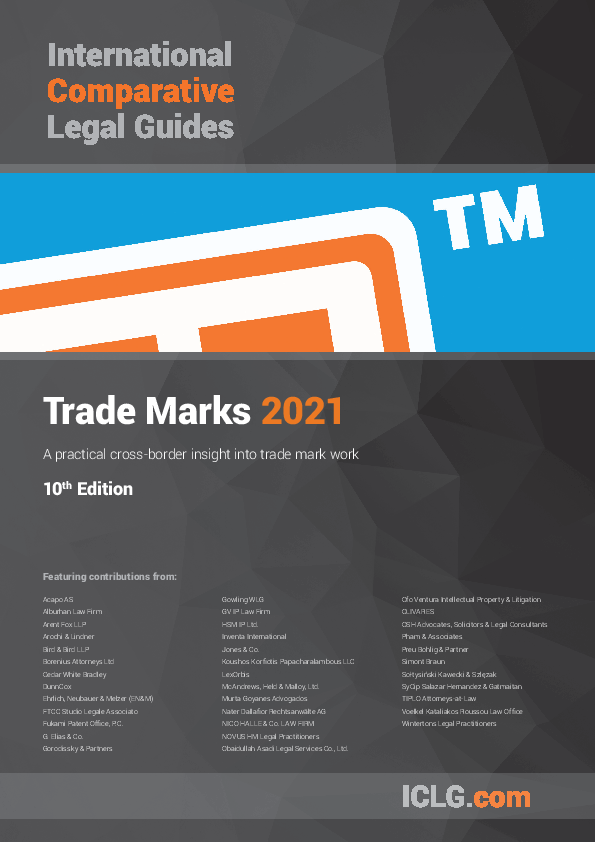
HSM IP has once again contributed to the International Comparative Legal Guide (ICLG) to Trade Marks. Click here to read our Cayman Islands 2021 Trade Mark chapter.
The International Legal Comparative Guide (ICLG) to Trade Marks is now in its 10th edition and provides a practical cross-border insight into trade mark work. Produced by Global Legal Group, this guide covers common issues in Trade Mark law and regulation across 36 jurisdictions.
Sophie Peat (Partner at HSM IP) has contributed to Mondaq’s Comparative Guides for Trade Marks in the Cayman Islands.
Mondaq’s comparative guides provide an overview of the key points of law by carefully selected and internationally recognised experts. This tool also allows the ability for users to compare regulatory environments and laws across multiple jurisdictions.
Sophie covers trade mark classifications, registration procedure, appeals, oppositions, rights, protection, enforcement and more.
Beyond trade marks in the Cayman Islands, HSM IP are intellectual property specialists across the Caribbean and their offices are based in Grand Cayman.

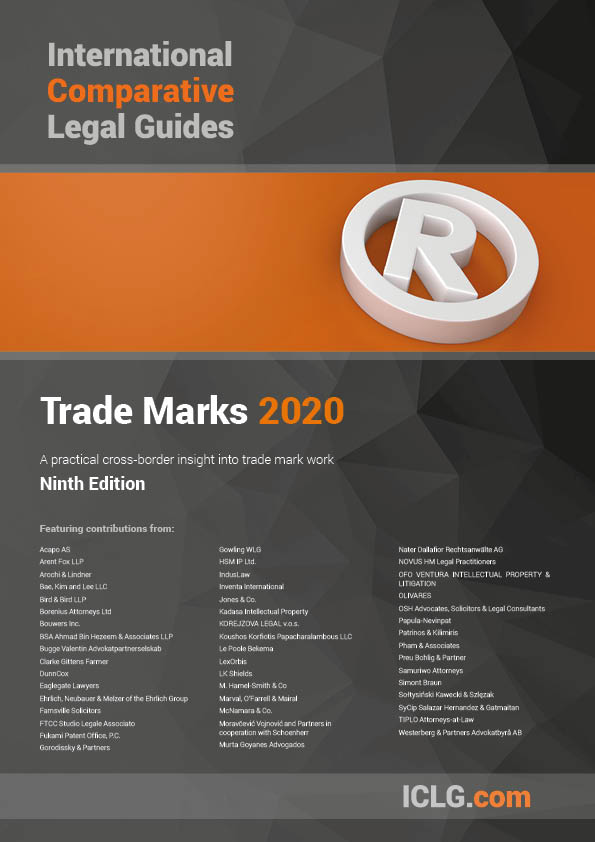
HSM IP has once again contributed to the International Comparative Legal Guide (ICLG) to Trade Marks. Click here to read our Cayman Islands 2020 Trade Mark chapter.
The International Legal Comparative Guide (ICLG) to Trade Marks is now in its ninth edition and provides a practical cross-border insight into trade mark work.
Fatal error: Uncaught Error: Call to undefined function twentythirteen_paging_nav() in /home/clients/d17af2243e6f179e393695ba6e9ce04e/hsmnew/wp-content/themes/hsm/tag.php:33 Stack trace: #0 /home/clients/d17af2243e6f179e393695ba6e9ce04e/hsmnew/wp-includes/template-loader.php(86): include() #1 /home/clients/d17af2243e6f179e393695ba6e9ce04e/hsmnew/wp-blog-header.php(19): require_once('/home/clients/d...') #2 /home/clients/d17af2243e6f179e393695ba6e9ce04e/hsmnew/index.php(17): require('/home/clients/d...') #3 {main} thrown in /home/clients/d17af2243e6f179e393695ba6e9ce04e/hsmnew/wp-content/themes/hsm/tag.php on line 33