Tag Archives: hsm
In order for a Cayman Islands Will to be valid it must be both ‘essentially’ valid and ‘formally’ valid. HSM’s Head of Private Client and Trusts, Robert Mack, explores this structure and what’s new for 2019.
Essential Validity
For a Cayman Islands Will to be ‘essentially’ valid, the person creating it must possess the fundamental power derived from the law of their domicile1 to dispose of their property by Will. Persons who are suffering from a loss or a diminishment of mental capacity for example would typically, under most legal systems, be incapable of disposing of the property by Will or otherwise until such time (if any) as they regain a sufficient degree of their mental faculties.
Legal systems themselves can sometimes impose restrictions on its citizens concerning the disposal of property on death. This typically occurs in ‘civil’ law jurisdictions in Europe and Latin America, Islamic law-influenced jurisdictions, and in some common law jurisdictions,2 where such legal systems prescribe that a deceased person’s property or a portion a deceased person’s property must pass to certain people in certain prescribed shares. Typically those people are comprised of spouses3, children, and other close blood relations of the deceased.
In relation to real/immovable property, it is usual that the legal system of the country where the real/immovable property is situated will be the legal system which governs how such real property will pass on the death4. Therefore, any attempts to use a Cayman Islands Will to control the devolution of foreign5 real property may fail if the succession regime of the foreign country differs from that of the Cayman Islands. In such circumstances it is usually preferable to have a separate Will (if possible/permissible) governed by the law of the country in which the real property is located and to take advice from local attorney in that country regarding the local laws and procedures governing the devolution of real property on death.
The Cayman Islands, in contrast to many other legal systems in the world, offers complete freedom of testamentary disposition, meaning that so long as the Will is ‘essentially’ valid and ‘formally’ valid (see more below), a testator or testatrix may dispose of his or her own property6 as they see fit, and it is extremely difficult for disappointed heirs to challenge an otherwise valid Cayman Islands Will.
Formal Validity
Formal validity refers to the legal formalities which must be observed in order to perfect an ‘essentially’ valid Will. For a Will to be formally valid in the Cayman Islands, it must be (1) in writing, (2) signed at the foot of the Will by the testator or testatrix and (3) be witnessed by two witnesses who must be present at the moment the Will is signed by the testator or testatrix and must attest as such by way of signature on the Will.
If any one of the above three elements are missing, the Will cannot be formally valid as a matter of Cayman Islands law, even if the Will is essentially valid.
So what’s new?
On 1st February 2019, The Formal Validity of Wills (Persons Dying Abroad) Law, 2018 (the “Law”)7 came into force. The Law seeks to simplify the formal validity process by allowing Cayman Islands governed Wills, which are executed by foreign domiciled individuals, from being declared invalid on the grounds that they fail to satisfy the formal validity procedures prescribed by the testators or testatrix’s place of domicile.
The Law states that so long as the Cayman Islands requirements for formal validity are satisfied, the Will should not be declared invalid simply because the testator or testatrix failed to observe the formal validity requirements imposed by the legal system of their place of domicile8.
So for example, if a testator is domiciled in a jurisdiction which requires that Wills must be executed in the presence of a Notary Public and that does not in fact happen, so long as the Will is expressed to be governed by Cayman Islands law and it conforms to the Cayman Islands formal validity requirements, it will be considered valid as a matter of Cayman Islands law.
It’s important to note that the Law doesn’t attempt to modify the requirements for the ‘essential’ validity of a Will.
Why is this important?
Given the Cayman Islands is a magnet for international investment and asset structuring, many people from around the world routinely own valuable assets in the Cayman Islands and often utilise Cayman Islands holding companies to hold such valuable assets. As such, the well-advised client is usually encouraged to put a Cayman Islands Will in place to govern how their Cayman Islands property, including shares in a Cayman Islands company, should devolve upon death. Before the Law came into force, simply adhering to the Cayman Islands test for formal validity might not be sufficient to guarantee the validity of a Cayman Islands Will where a foreign domiciled testator or testatrix was involved — a critical point which is sometimes overlooked.
In a nutshell, the Law provides a safety net in such circumstances to make an otherwise formally invalid Will valid, so long as the Cayman Islands requirements regarding formal validity are observed.
Helpfully, the Law is drafted such that it covers Wills made prior to the introduction of the Law, so it appears to have retrospective effect. This is great news for all of the Cayman Islands Wills floating around the four corners of the Earth, as the Law increases the chances of Wills made prior to the 1st of February 2019 being considered formally valid as a matter of Cayman Islands law even if prior to the 1st of February 2019 they may have been formally invalid.
Conclusion
The Law has improved the odds that Cayman Islands Wills for international clients whether past, present or future will be found to be formally valid as a matter of Cayman Islands law, regardless of any contradictory laws, policies, or procedures which may exist in other parts of the world. This will certainly provide an extra layer of comfort and protection for international clients who utilise or have utilised the Cayman Islands as a planning and structuring base.
This article can also be seen on Mondaq – March 2019.
Footnotes
1 The method of establishing a persons’ domicile is outside of the scope of this article, however, it can be quite complex and requires a careful examination of the personal history of the testator or testatrix.
2 England, for example, has in place The Inheritance (Provision for Family and Dependants) Act 1975, which allows persons closely connected with a deceased testator or testatrix, such as a child or spouse/civil partner, or other dependants to make a claim for financial provision against an estate even where the Will is otherwise valid if such aggrieved individual believes they are entitled to a share or a greater share of the estate by reason of a close relationship with the deceased.
3 Often civil or common law partners are included in this definition.
4 Section 5(1)(b) of the Law specifically states that in relation to foreign real property, the execution formalities regarding the devolution of such real property must conform with the laws of such foreign territory rather than those of the Cayman Islands.
5 Meaning outside of the Cayman Islands.
6 Assuming the property is unencumbered, and is not jointly owned for example.
7 Despite the name of the Law, the Law is meant to cover persons who are not domiciled in the Cayman Islands at the time of their death. A person may be domiciled in the Cayman Islands and yet die abroad, but the Law is not intended to address that situation.
8 Section 4(1)(a) of the Law.
Both the same, right? Under the Immigration Law of the Cayman Islands, seemingly not. Unexpected twists and pitfalls await the unwary.
Through decades of tweaking we now find ourselves in a position whereby there are (by our estimation) eight types of Permanent Residence in these Islands (not including The Right to be Caymanian which carries with it many of the fundamental attributes of Permanent Residence, or the various persons granted permission to remain by the Cabinet).
First is that which has been headline-grabbing in recent years, Permanent Residence on the basis of the now (in)famous points system.
Then there is that available to the spouses of such persons (as a Dependant).
Then there is that available to the spouses of Permanent Residents who have applied, on the basis of marriage, for their own Residency and Employment Rights Certificate on the basis of Marriage.
Then there is that available to the children of Permanent Residents following their reaching the age of 18.
Then there is that available to wealthy investors.
Then there is that available to their spouses.
Then (since 13 August 2018) there is that available to the spouses of Caymanians.
The above are all available in consequence of applications made to Workforce, Opportunities and Residence Cayman (“WORC”) under the Immigration (Transition) Law. Each has differing attributes and requirements. Some require annual fees and Annual Declarations, others do not. Some require investment in real estate (and for it to be maintained), others do not. Some restrict the right to work, others prohibit it, and others do not.
Notwithstanding complications and occasional confusion arising from the sheer variety available, the system fundamentally works. Those holding the various types of Permanent Residence outlined above do have one thing in common. They are all able to present their passports to the Immigration Authorities and to receive within it a stamp confirming that the holder of the passport is a Permanent Resident of the Cayman Islands (with or without the Right to Work).
Lastly, there is Permanent Residence available to persons who are Registered as BOTC’s by Registration by Entitlement under the British Nationality Act. Registration by Entitlement is in consequence an application made to the Deputy Governor’s Office that can be made by (or on behalf of) any child who was born in the Cayman Islands and remains a resident until their 10th birthday. These applications do not arise under Cayman Islands domestic legislation. There is no basis to deny such an application, if made by a qualified applicant. There is no need for either parent of the child to be Caymanian, a Permanent Resident, or a BOTC. Simple birth and residence here for the first 10 years of an applicant’s life (together with completing a form, supplying supporting documents, and paying relatively nominal fees) is all that is required.
Our Immigration (Transition) Law (like the Immigration Law before it) clearly confirms that these children have “the Right to remain Permanently in the Islands.” Nevertheless, any attempt by them to obtain a stamp in their passport confirming their right to remain has in our experience been refused. The Authorities contend that the Right to Remain and the Right to Reside are different things. This has been the case for some years and no solution seems imminent. Meanwhile the number of children eligible for confirmation of their “Right to Remain” immigration status in their passports continues to grow.
Those studying our laws governing residence and immigration will note that (appropriately, if they are to have its desired effect of allowing the People of the Cayman Islands to manage the growth of the Permanent Population of these Islands) Term Limits are set at 9 years. Nevertheless, due to numerous loopholes and delays there is no shortage of children who were born here and are still here on their 10th birthday. Their right to Permanent Residence (however described) is appropriate and enshrined within our own Law.
If only they could be given a stamp in their passport, then they could confirm their status in these Islands and freely demonstrate it.
This article can also be seen in The Journal – March 2019 issue.
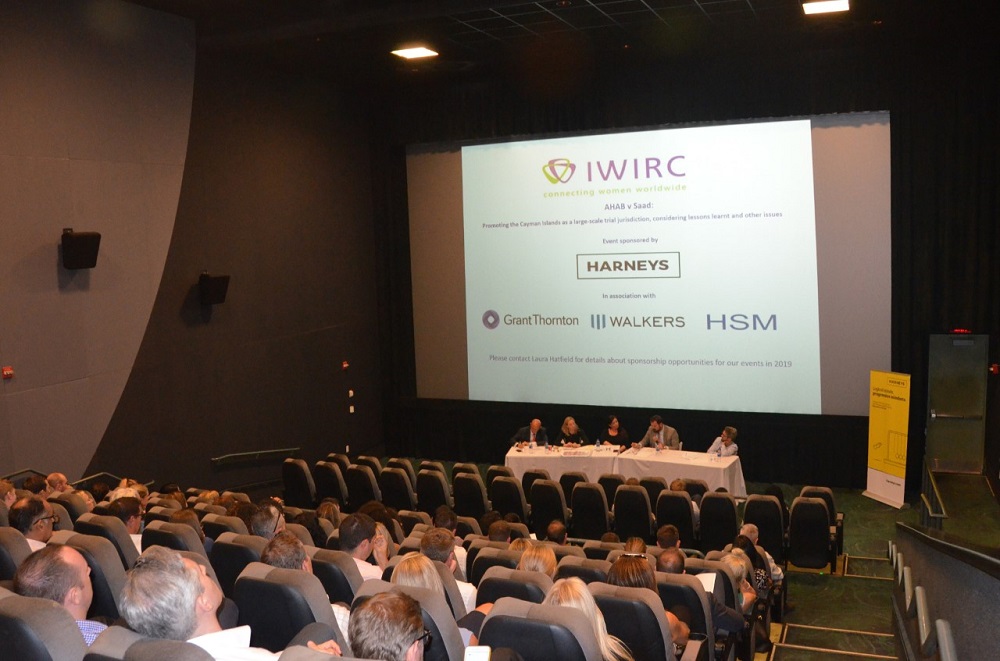
HSM Partner Ian Lambert promotes the Cayman Islands as a large-scale trial jurisdiction with International Women’s Insolvency & Restructuring Confederation (IWIRC) Cayman.
On November 26, Ian participated in a panel discussion on lessons learned and other issues for Cayman’s longest and most expensive case, AHAB v Saad.
Panelists also included Shelley White (Walkers), Hugh Dickson (Grant Thornton), Grainne King (Harneys) and William Peake (Harneys).
Their lively discussion and recount of this case showcased how the Cayman Islands’ legal framework is able to handle complex litigation and insolvency matters.
HSM’s newest Senior Associate Adam Crane has been called to the Cayman Islands Bar on November 6, 2018.
Adam’s admission was moved by HSM Partner Ian Lambert, who summarised his qualifications for Justice Richard Williams. Adam hails from Nova Scotia, Canada and has substantive experience in commercial litigation, insolvency, restructuring and financial recovery matters.
Adam will focus on a wide range of civil litigation, acting for insolvency practitioners, banks, strata corporations and leading businesses based both in the Cayman Islands and overseas.
Managing Partner, Huw Moses, OBE notes: “Adam’s international experience is a real asset to our firm and we look forward to extending his services to our valued clients.”

L-R: HSM Partner, Ian Lambert; HSM Senior Associate, Adam Crane and Justice Richard Williams.
HSM’s Immigration team explores The Immigration (Amendment) Law, 2018 (“the Amendment Law”) that came into effect on 13 August 2018, and following this passage, new opportunities present themselves for persons who are married to a Caymanian and hold (or are seeking) Residency and Employment Rights Certificates as the spouse of a Caymanian.
According to documentation recently received from the Department of Immigration there are approximately 350 expatriates holding Residency and Employment Rights Certificates (RERC’s) as the spouse of a Caymanian. We expect this number will increase.
Unlike the RERC’s awarded to Permanent Residents, the RERC’s awarded to the spouse of a Caymanian were not previously permanent in nature. They only lasted for 7 years and the holder either had to seek the Right to be Caymanian (on the basis of 7 years’ marriage to a Caymanian) or seek to renew their RERC prior to its expiry.
Until the spouse of a Caymanian became Caymanian, they could not be said to be free from any immigration restriction on the period they are permitted to remain in the Islands given the 7 year period of validity of their RERC. This meant that they were unable to be naturalised or obtain a Cayman Islands passport during that 7 year period.
Cayman Islands Passports are only available to persons who hold British Overseas Territories Citizenship (“BOTC”) by virtue of a connection with the Cayman Islands. The process for being, or becoming, a BOTC of the Cayman Islands is set out in and governed by the British Nationality Act. That Act has at all relevant times required applicants for Naturalisation to have been resident in the Territory for a minimum of twelve months’ “free from Immigration Restriction for the period for which they may remain” prior to becoming eligible to apply for Naturalisation.
In contrast, the spouse of a Permanent Resident was able to seek Naturalisation a year after marrying a PR holding expatriate, and thereafter obtain a Cayman Passport. The result was that a spouse of a Caymanian was until very recently with the passing of the Amendment Law treated far less favourably. They would have to be married to a Caymanian for 7 years’, apply for Caymanian status on the grounds of 7 years’ marriage, obtain that status, and hold it for 12 months’ before being eligible to apply for naturalisation and thereafter, a Cayman Passport.
The Government has acted to ensure that a spouse of a Caymanian is subject to the same rules when seeking naturalisation and a Cayman Passport as the expatriate spouse of an expatriate PR holder. This change is welcomed and the authorities should be congratulated for making it.
The relevant amendment which came into effect on 13 August, has removed the 7 year expiry date on every RERC issued to a spouse of a Caymanian, in effect making their RERC Certificate indefinite in nature.
With no expiry date to their Certificate, a spouse of a Caymanian holding an RERC may now, provided they have held an RERC for no less than 12 months’ and have been legally and ordinarily resident in Cayman for no less than 5 years’, apply for Naturalisation on the Grounds of Residence. If they are married to a Caymanian, who is also a BOTC by virtue of a connection to the Cayman Islands and have been married and resident for 3 years’, an application for Naturalisation on the Grounds of Marriage to a BOTC can now be made.
This will greatly expedite the ability of a spouse of a Caymanian to seek and obtain Cayman Islands Passports and further, for them to thereafter seek registration as full British Citizens which, if granted, would enable them to hold full British Citizenship in addition to being British Overseas Territories Citizens.
Once the spouse of a Caymanian has been naturalised as a BOTC, they will be eligible to seek to become Caymanian on the basis of Residence some 5 years’ later or 15 years’ after first becoming Resident in the Cayman Islands, whichever is less. This is the mechanism by which most long term residents may become
Caymanian and is entirely consistent with the original intention of what started as the Caymanian Protection Law, that in order to be eligible to become Caymanian, applicants must first be British Subjects.
The ability of a spouse of a Caymanian to seek to become Caymanian relying on 7 years’ of marriage to a Caymanian (rather than on the basis of Naturalisation/Residence set out above) continues; although not least given issues that may arise following any breakdown of the marriage, prospective applicants for Caymanian Status may prefer (all other considerations being equal) to follow the Naturalisation/Residence route to becoming Caymanian rather than seeking status based on marriage.
Holders of RERC’s as a spouse of a Caymanian continue to enjoy unfettered access to the labour market and to be free to engage in any category of gainful occupation without having to pay annual fees.
The Government has elected to not require a spouse of a Caymanian to undertake any annual reporting requirements but given perceptions as to marriages of convenience and the potential for such spouses to be living apart, such provisions may need to be introduced in the future.
This article can also be seen in The Journal – November 2018 issue.
The Immigration (Amendment) Law, 2018 (“the Amendment Law”) came into effect on 13 August 2018, and with it, new opportunities potentially present themselves for various categories of people in the Cayman Islands to obtain the Right to be Caymanian. This article explores two such changes.
- Non-Caymanians who were born in the Cayman Islands between 27 March, 1977 and 1 January, 1983; who a British Overseas territories Citizens (“BOTC”) by virtue of their birth in the Islands; and have resided here since birth.
A frequently held misconception is that if you hold a Cayman Islands passport you are Caymanian. Many Caymanians have Cayman Islands Passports, however, many do not. Those who do not hold a Cayman Islands passport are no less Caymanian than those who do hold one. Equally, many holders of Cayman Islands Passports are not Caymanian and are only in the Cayman Islands as a result of having a different type of permission to remain, i.e. Permanent Residence. There are however those people who have Cayman Islands passports (and have been British Overseas Citizens of the Cayman Islands since birth) but have no right to be in the Cayman Islands. It is for some of these people that the Law is intended to provide remedy.
Since these individuals have held Cayman Islands passports since birth and have often lived nowhere else, they often considered themselves to be Caymanian and the wider society has often treated them as Caymanian even though they are not. Prior to the recent change in the Law, the Law had provided that in order for these individuals to become Caymanian on the basis of their birth in the Islands to non-Caymanian parents in the period between 27 March, 1977 and 1 January, 1983, they had to make an application to the Chief Immigration Officer prior to 21 December 2007 for the grant of Caymanian status.
As the development of the Islands has continued, it has become apparent that a number of persons in this category had failed to make application within the prescribed timeframe and had accordingly “fallen through the cracks.” Short of a Cabinet status grant or becoming Caymanian through marriage to a Caymanian, there was no mechanism available for these individuals to acquire status. The immigration authorities in particular, in exercising their border control function, did not seem to take note of these non-Caymanians as they have been travelling on Cayman Islands Passports. The issue seems to have largely become apparent when private sector employers, exercising the required diligence to ensure they were not employing non-Caymanians without appropriate permissions, determined certain persons were not in fact Caymanian. Both employment and being employed without immigration permission are strict liability offences under the Immigration Law. It is no defence to say “I thought they were Caymanian” or indeed for a non-Caymanian in employment without immigration permission to say “I thought I was Caymanian.”
Accordingly, these individuals are one category (there are several, including another referenced below) of what have become referred to as “Ghost Caymanians” (persons who think they are Caymanian, and/or otherwise are treated as being Caymanian, but in fact and in law, are not).
The Cayman Islands Government should be congratulated for providing a mechanism for such persons who may have previously missed the window to apply to become Caymanian, to do so now, by removing the deadline, previously written into the law, by which they had to have applied.
In order to now satisfy the requirements of the law the individual must satisfy the Chief Immigration Officer that they were born in the Islands between the relevant dates, are a BOTC on the basis of their birth in the Islands (whether or not they actually hold (or have ever held) a Cayman passport is not relevant, although most will), and have resided here since birth (absences for education and medical care are excused).
Absent “exceptional circumstances” the Chief Immigration Officer is required to grant the applications.
No form appears to have yet been generated for the making of these applications, and no fees appear to be prescribed by the regulations.
There is no known guidance or directions as to what may constitute “exceptional circumstances.” It however appears clear that the nature of the residence in the Islands since birth need not have been “lawful” in order for the requirement to be satisfied. Breaches of the Immigration Law would therefore seem not to be enough for the Chief Immigration Officer to deny an application.
It should be noted that the youngest of such prospective applicants is now approaching 35 years’ old. Many will have established families, businesses, and have worked in the Islands (unlawfully, and without a work permit) for many years. Making the required application will necessarily result in an admission to the very authority charged with enforcing the law, that the applicant is not presently (and never has been) a Caymanian. Serious consequences could potentially therefore follow for themselves and their family members. For example, if they are currently employed without a work permit, the employer (if they become aware) could terminate the employment of that individual, and the individual themselves and/or their employer may be liable to the Department of Immigration for significant unpaid work permit fees. If the persons have been erroneously allowed to register to vote during a period while they were not Caymanian, consequences would seem inevitably to have to follow vis-a-vis the Elections Office, and should the persons hold Trade and Business Licences (particularly with no Caymanian participation) the Department of Commerce and Industry would seem compelled to take note.
It is unclear what mechanisms the Government and Department of Immigration have or propose to implement to deal with these potential “fall out” issues and unfortunately they were not addressed in the Amendment Law. It is hoped that a pragmatic approach will be taken and all consequential issues arising from a successful application are addressed (without any adverse effects) at the same time Caymanian Status is granted to the applicant. That being said, the relevant authorities do not appear to have been given the required statutory authority they need to take such an approach. If they act without power there is a risk that the steps taken are illegal and void or voidable, despite their intent to act fairly and reasonably when tackling the “fall out” issues.
It is also unclear as to what the Government proposes to do should persons not make the available application and accordingly “choose” to continue as “Ghosts.” Requiring persons to regularise themselves or face serious consequence (“Ghostbusting”) does not seem to be an imminent prospect and therefore the current situation could conceivably continue.
- Persons who were Caymanian by Entitlement as children but who have failed to apply for continuation following its automatic loss on their 18th birthday prior to reaching the age of 24;
Persons who are Caymanian by Entitlement, contrary to popular misconception, are not “born Caymanians”. Rather persons who are Caymanian by Entitlement fall into a distinct category in that they are persons who, in the Determination of the Chief Immigration Officer, are the (non-Caymanian) child of a Caymanian, are under the age of 18, and who have been legally and ordinarily resident in the Islands for a minimum period of 12 months’. There are fees payable and prescribed forms for the making of such applications.
Generally speaking, persons who are “born Caymanian” will be born (whether in or outside of Cayman presently makes no difference) on a date when a parent is Caymanian and settled in the Islands. The Immigration Law defines them as persons who are Caymanian as of Right and no application need be made in order for them to become Caymanian (although acknowledgement applications are strongly recommended so that such persons can for all purposes freely demonstrate that they are Caymanian).
Caymanians by Entitlement will therefore (generally, although not exclusively) be children whose parents became Caymanian after they were born. The right to be Caymanian held by such children can be revoked
at any time prior to their reaching the age of 18 if they cease to be legally and ordinarily resident in the Islands at any time after reaching the age of 11. In any event, all persons who are Caymanian by Entitlement lose that status (and cease to be Caymanian) automatically on their 18th birthday.
Section 22(9) of the Immigration Law however has always provided a mechanism for them to continue to be Caymanian. That section always provided that anyone who is Caymanian by Entitlement can, after their 17th birthday, apply for “continuation.” They must simply demonstrate that they are (or if over 18, were) Caymanian by Entitlement, and to have been legally and ordinarily resident for at least five of the seven years’ immediately preceding the date of application.
The section goes on to provide that absent compelling reasons the Board shall grant any application made by a qualified applicant and that the grant would take effect on the applicant’s 18th birthday (if they applied when they were 17+) or upon the date of grant if the application was made after the age of 18 (and therefore on a day when the person was already not Caymanian).
In any event, before 13 August 2018, any application had to be made prior to the applicant turning 24. The Amendment Law simply removed that restriction. The applications can now be made at any time after a person who is (or was having lost it at 18) Caymanian by Entitlement and over the age of 17.
An application form exists for the purpose of making applications of this nature. The application fee is CI$250; with an additional CI$1,000 due on grant.
Many persons appear to have failed to apply for any continuation of their status. They were no longer Caymanian but did not necessarily know or understand this to be the case. Accordingly they formed a new category of Ghost Caymanian, and appear to exist in substantial number. This change in the Immigration Law allows this category of Ghost Caymanians to seek to once again become Caymanian.
They have most often been treated as being Caymanian with their true immigration status only identified by scrupulous HR Departments, the Department of Immigration processing applications for their children or spouses to be Caymanian on the basis of their relationship to them, or (for example) a relevant Government Department processing a request by them to be excused stamp duty as a first time Caymanian buyer of qualifying real estate.
When the issue was first brought to the attention of such persons, they were not able to rectify their position if they were already 24. The removal of that restriction in principle removes the barrier to application but without any additional amendments to the legislation, the writer doubts that many, if any, will be eligible to become Caymanian again on this basis, without them first obtaining and holding (for an extended period) lawful permission to be in the Cayman Islands.
The fundamental issue is that these Ghost Caymanians must be able to demonstrate that they have been legally and ordinarily resident in the Cayman Islands for five out of the seven years’ prior to making the application. Unlike the other amendment described above, mere residence is not enough. For the Residence to have been “Legal and Ordinary” as required, any individual seeking to take advantage of this section will need to have held a formal immigration permission for at least 5 years’ of the 7 years’ before their application.
If they are over 24 (and have remained resident since childhood) then in most instances their residence will have been unlawful since they ceased to be Caymanian at 18. It may not be possible to qualify in the near term, and the persons who this change purports to seek to assist may have to seek and hold alternative immigration permissions (work permits (notwithstanding apparent term limit barriers), student visas, or Governor/Cabinet permissions under sections 40 or 63 of the Immigration Law), for at least 5 years’.
These issues exist as barriers quite aside from the effects of the breaches of the Immigration Law (and potentially other Laws) that necessarily arise when a Ghost Caymanian raises their head above any proverbial parapet, in making an application.
Even then there will continue to be issues for other categories of Ghost Caymanian including most numerously those who seem never to have been the subject of formal applications to become Caymanian by Entitlement (impossible after reaching the age of 18) and yet have lived here since early childhood, have Caymanian parents, and know no other home.
Conclusion
Unless and until the authorities provide clarity on these issues (and potentially necessary but straightforward further legislative amendment is forthcoming) caution may need to be exercised by persons seeking to take advantage of these changes. A clear statement of amnesty for past and present transgressions by persons qualified to make these applications would be particularly welcomed, as would a direction from Cabinet (exercising its power under s. 63 of the Immigration Law) that any person who has resided in the Cayman Islands since any automatic loss of their status on their 18th birthday be deemed to have been Legally and Ordinarily resident in the intervening period prior to making an application for continuation under s. 22(9). Further legislative intervention in any event appears necessary to provide solutions for other categories of “Ghost”.
This article can also be seen in The Journal – October 2018 issue.
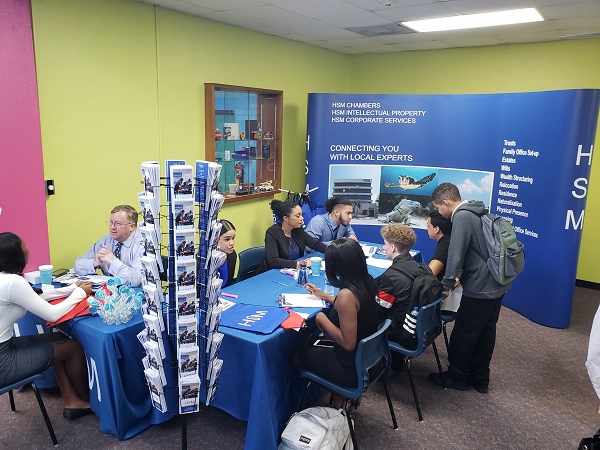
HSM is thrilled to have once again participated in the annual Cayman Islands Further Education Centre (CIFEC) Career Fair, which took place on 21 September 2018.
The fair allows the opportunity for students to present their résumé and learn more about the different industries in the Cayman Islands. Over 200 students attended this year’s fair.
HSM set up a booth at the CIFEC Library to introduce themselves as Cayman’s fastest growing law firm and seeks to recruit at least 13 students to their 2018/19 internship programme.
Managing Partner, Huw Moses and IP Head Paralegal, Natasha Whitelocke were on hand to speak with students about a career in the legal profession, especially in the fields of Intellectual Property, Immigration, Debt Collection and Corporate Services.
Gabriel Morla and Shantel Ritch, two HSM IP staff members and prior CIFEC students were also there to speak with the potential student recruits. They shared their experiences in the programme and what it is like to be employed full-time.
HSM has worked with the CIFEC progamme since 2012. The firm’s continued involvement in the CIFEC internship showcases their unwavering commitment to the local community by providing work experience opportunities to ambitious young professionals.
The HSM Group is now promoting the addition of Family Law to its suite of legal services. Led by Senior Associate Kerrie Cox, the matrimonial team will cover all aspects of divorce and finance, in addition to private/public child law.
The move is regarded as a complementary service to HSM’s established private client practice, in which the firm is a leading provider for family trusts, wills and estate administration, and property transactions.
Kerrie practiced as a Barrister and family mediator in the UK for 12 years before being first admitted as an attorney in the Cayman Islands in 2010. He was appointed in-house Counsel to a niche firm of family solicitors in Gibraltar in 2013, where he undertook a variety of family related disputes, including cross border litigation, before returning to Grand Cayman in 2015.
In his role at HSM, Kerrie also undertakes a wide spectrum of general dispute work in commercial and civil litigation, employment, and personal injury. Whether you are looking for a divorce lawyer in the Cayman Islands or need assistance in separation agreements – HSM has got you covered.

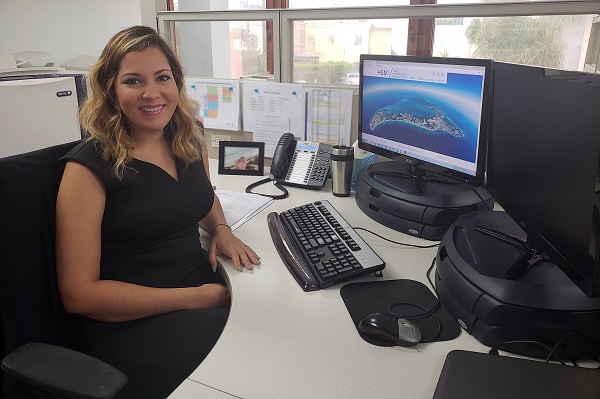
Suneeta Lee is well on her way to become a qualified attorney in the Cayman Islands and has been employed by the HSM Group for one year now.
As part of her articles, Suneeta has been undergoing a rigorous training rotation through the firm’s key practice areas. To date she has supported intellectual property, debt collection, litigation, property and has recently moved over to corporate services. The next areas for her on-the-job work experience include immigration and employment.
Here’s what she has been up to:
Day-to-Day
You’re likely to catch Suneeta with a coffee in hand every morning and whizzing through her inbox. She also meets briefly with her supervisor to get the rundown of activities and it also gives her the opportunity to ask any questions. Each day brings a new set of challenges and experiences due to the nature of the role, but Suneeta notes that the year has gone by quickly because of this.
Practice Areas
HSM is a full-service law firm that provides a wealth of opportunities for those looking for a career in law. “All areas have been interesting,” says Suneeta. “In particular, litigation involves a lot of research and requires you to be industrious. On the other hand, property law is very personal and I like the customer service aspect of this practice.”
Frequent Feedback
One of the reasons Suneeta chose HSM for her clerkship was due to its size. With just under 60 employees, Suneeta shares, “I am able to have more personal interactions, which makes it conducive to learning and I appreciate how approachable everyone is, including the partners.” Regular meetings are scheduled to review and discuss work happenings. “My colleagues take this programme very seriously and for that, I am grateful and validated.”
Advice to Upcoming Articled Clerks
Suneeta was surprised to learn that the subject she thought would be most interesting at the outset of her articles is no longer her favourite and encourages people to “keep an open mind, practical experience will help make that decision for you.” Also, don’t be afraid to ask questions – you’re there to learn. “Take advantage of the qualified people around you and make connections.”
HSM Clerkship Programme
Since HSM opened their doors in 2012, Suneeta is the second person to participate in their clerkship programme and will complete her stint in April 2019. Majdi Beji was the first, having been called to the Cayman Islands Bar in 2017 and is employed with HSM in their property law division.
If you are interested in being part of this programme, contact hsmhr@hsmoffice.com.
Deere & Company has successfully affirmed its ownership of the John Deere trade mark in a judgment handed down in May 2018 by Cuba’s Oficina Cubana de la Propiedad Industrial (‘OCPI’). Deere was represented by the HSM Intellectual Property team.
Deere is a world leading manufacturer of equipment for agriculture, construction, forestry and turf care. The company opposed a Cuban trade mark application by Gustavo Alejandro Fuentes Ledo that was made in 2014. The judgment determined Mr. Ledo’s application infringed on Deere’s ownership of the well-known John Deere trade mark.
OCPI stated Mr. Ledo filed 66 applications between June 2014 and January 2015 for trade marks that were already registered or used outside of Cuba for a broad range of products and services. The John Deere application was among 39 that were challenged.
Deere rigorously protects use of its trade marks around the world to ensure that customers can trust the quality and commitment that it represents.
Fatal error: Uncaught Error: Call to undefined function twentythirteen_paging_nav() in /home/clients/d17af2243e6f179e393695ba6e9ce04e/hsmnew/wp-content/themes/hsm/tag.php:33 Stack trace: #0 /home/clients/d17af2243e6f179e393695ba6e9ce04e/hsmnew/wp-includes/template-loader.php(86): include() #1 /home/clients/d17af2243e6f179e393695ba6e9ce04e/hsmnew/wp-blog-header.php(19): require_once('/home/clients/d...') #2 /home/clients/d17af2243e6f179e393695ba6e9ce04e/hsmnew/index.php(17): require('/home/clients/d...') #3 {main} thrown in /home/clients/d17af2243e6f179e393695ba6e9ce04e/hsmnew/wp-content/themes/hsm/tag.php on line 33