All posts by hsmoffice
Good news for brand owners seeking to protect their service marks in Bahamas, as the Registrar General’s Department in the Ministry of Foreign Affairs has begun to allow applications to register marks for services.
In 2025, the Bahamas Government took a significant step in modernising its intellectual property framework with the introduction of Trade Marks Act 2024, which came into effect on 1 February 2025. This new legislative regime replaces outdated provisions and brings Bahamian trade mark law into closer alignment with international standards, including provisions of the Paris Convention and the TRIPS Agreement.
Subsequent to its recent implementation of the Trade Mark Regulations 2025, the Registry is (finally) accepting applications under the provisions of the new law. Brand owners now have the option to register service marks, moving beyond the previous framework which limited protection to the registration of goods only; and the adoption of the NICE Classification system represent a major shift in broadening brand protection options within the jurisdiction.
The option to protect marks for services opens up to brand owners worldwide the possibility to seek registered protection of its marks covering, for example, hospitality, finance, real estate, insurance, technological and creative, administrative and legal services. It will be a relief to intellectual property proprietors to no longer have to resort to registering their marks specifying goods, often only vaguely related to their actual service offerings.
Brand owners considering extending the scope of their IP coverage in Bahamas should note the following key takeaways:
- Under the NICE Classification system, Classes 35 to 45 specifically for services, are now open for registration, in addition to the existing Classes 1 to 34 for goods.
- Trade Mark applications can also be filed in multiple classes, a departure from the former single class registration system operated under the previous law.
In addition, the new law introduces administrative updates, including:
- Expanded definition of what may qualify as a “sign” capable of trade mark protection, including 3-D shapes, moving images, holograms, sounds, scents and tastes.
- The term of registration being reduced from 14 years to 10 years, with renewals now granted for further 10-year periods.
- The option to seek registration of collective and certification marks.
- Requirement for trade mark applicants to declare at the time of filing either (i) a bona fide intention to use its mark, or (ii) actual use of its mark in Bahamas.
These developments present brand owners with a timely opportunity to reevaluate and strengthen their existing trade mark portfolios. HSM IP is pleased to offer its support to IP proprietors, both in carrying out portfolio audits to identify gaps in protection, and in providing recommendations and / or advice. HSM IP’s brief client guide identifies the timelines and requirements involved in navigating various trade mark services in Bahamas.
It is understood that at this time the Bahamas IP Registry is also actively taking steps to address and reduce its heavy backlog of matters, which will surely be appreciated by brand owners who have often historically experienced delays.
HSM IP welcomes all of these developments, representing as they do a significant leap forward in the protection of IP in the region. We encourage our existing clients, brand holders and businesses to consider expanding their IP protection in the Bahamas, to encompass services, in addition to goods.
Our IP practice group would be glad to render advice and strategy towards filing trade marks for brand owners in Bahamas in addition to the other Caribbean, Central and South America jurisdictions. Should you need any assistance or require further information in expanding your IP protection or restructuring your existing IP portfolio, please reach out to us at info@hsmoffice.com.
Over the past decade, the demographic composition of the Cayman Islands’ expatriate workforce has undergone a notable transformation. These changes have important implications not only for labour market planning but also for the operation and perceived fairness of the Permanent Residence points system administered by Workforce Opportunities & Residency Cayman (WORC). HSM Partner Alastair David highlights points of interest in this article.
The Position in 2015
In September 2015, there were 22,148 expatriates employed in the Cayman Islands. The composition of that workforce reflected long-standing migration patterns within the region and from key labour-sending countries:
- Jamaican nationals: 9,149 (41%)
- Filipino nationals: 2,849 (13%)
- British nationals: 1,846 (8%)
- United States nationals: 1,332 (6%)
- Canadian nationals: 1,117 (5%)
- Indian nationals: 893 (4%)
- Honduran nationals: 840 (4%)
At that time, the Permanent Residence framework incorporated a nationality-based component—commonly referred to as Factor 8—which awarded points according to the relative size of a nationality within the expatriate workforce.
In practical terms, this meant:
- Nationals of the largest expatriate groups, including Jamaicans and Filipinos, were awarded 0 points on the basis of nationality.
- British, United States, and Canadian nationals were typically awarded 5 points.
- All other nationalities were awarded 10 points.
This structure was intended to encourage demographic diversity within the expatriate population. However, it also created significant disparities in outcomes, particularly for applicants from countries that historically supplied large numbers of workers to Cayman’s service, construction, and domestic sectors.
The Emergence of New Nationalities
In 2015, Nepalese nationals did not rank among the top fifteen nationalities holding work permits in the Cayman Islands. By 2016, there were 122 Nepalese expatriates, marking the first time that nationality appeared within the top fifteen.
Over the subsequent decade, the growth of the Nepalese workforce has been striking, reflecting both employer demand and evolving migration networks.
The Position in 2026
As of January 2026, the distribution of work permits has shifted:
- Jamaica: 37.20%
- Philippines: 18.71%
- India: 5.99%
- United Kingdom: 5.69%
- Nepal: 5.02%
There are approximately 1,806 Nepalese work permit holders in the Cayman Islands. When government employment is included, however, the figures change slightly. Only two Nepalese individuals are employed directly by government, and when government workers are combined with work permit holders in calculating overall percentages, the Nepalese share reportedly falls to approximately 4.81%, placing it just below the 5% threshold that has historically influenced nationality-based scoring.
One of the most significant demographic shifts in the Cayman Islands’ expatriate workforce over the past decade has been the growing presence of workers from Asia, particularly from the Philippines, India, and Nepal. While Filipino nationals have long formed a substantial part of the labour force for a long period of time, their numbers have increased steadily, rising both in absolute terms and as a percentage of total work permit holders.
At the same time, Indian nationals have consolidated their position among the largest expatriate groups, and the growth of the Nepalese workforce has been especially striking, expanding from a negligible presence a decade ago to one of the top nationalities by 2026. This trend reflects broader changes in global labour migration and recruitment patterns, as employers increasingly look beyond traditional regional sources of labour. The result is a workforce that is becoming more geographically diverse, which could therefore lead to a change in the social and cultural landscape of the Cayman Islands.
Uncertainty in the Application of Factor 8
This situation highlights a significant issue: it is not clear how WORC calculates nationality percentages for the purposes of Factor 8. Specifically, there has been limited public guidance on whether:
- The calculation is based solely on work permit holders, or
- The calculation includes all expatriate workers, including those employed directly by government or statutory authorities.
This distinction is not merely technical. It may determine whether a nationality crosses a threshold that changes the number of points awarded under the Permanent Residence system.
In the case of Nepalese applicants, the question is straightforward but consequential:
- If Nepalese nationals are treated as representing more than 5% of the expatriate workforce, they may fall into a lower scoring band and receive 5 points.
- If they are treated as representing less than 5%, they may receive 10 points.
For individual applicants, a difference of five points can materially affect the likelihood of obtaining Permanent Residence.
Broader Implications
The changing composition of Cayman’s workforce illustrates a broader reality: immigration policy mechanisms designed around historic migration patterns may struggle to keep pace with demographic change. Nationality-based criteria, in particular, require transparent and regularly updated methodologies if they are to maintain public confidence.
Greater clarity from policymakers on how workforce percentages are calculated—and how often they are reviewed—would assist applicants, employers, and practitioners alike. Transparency would also help ensure that the points system operates in a manner consistent with its stated objectives.
Conclusion
The rise of new nationalities within the Cayman Islands’ labour force, including the rapid growth of the Nepalese community, underscores the dynamic nature of migration to the jurisdiction. As the face of Cayman continues to evolve, immigration policy and its administration must adapt in ways that are clear, consistent, and equitable.
The unresolved question surrounding the calculation of Factor 8 is therefore more than a technical issue; it is emblematic of the need for ongoing review and modernization of the immigration framework to reflect the realities of a changing Cayman.
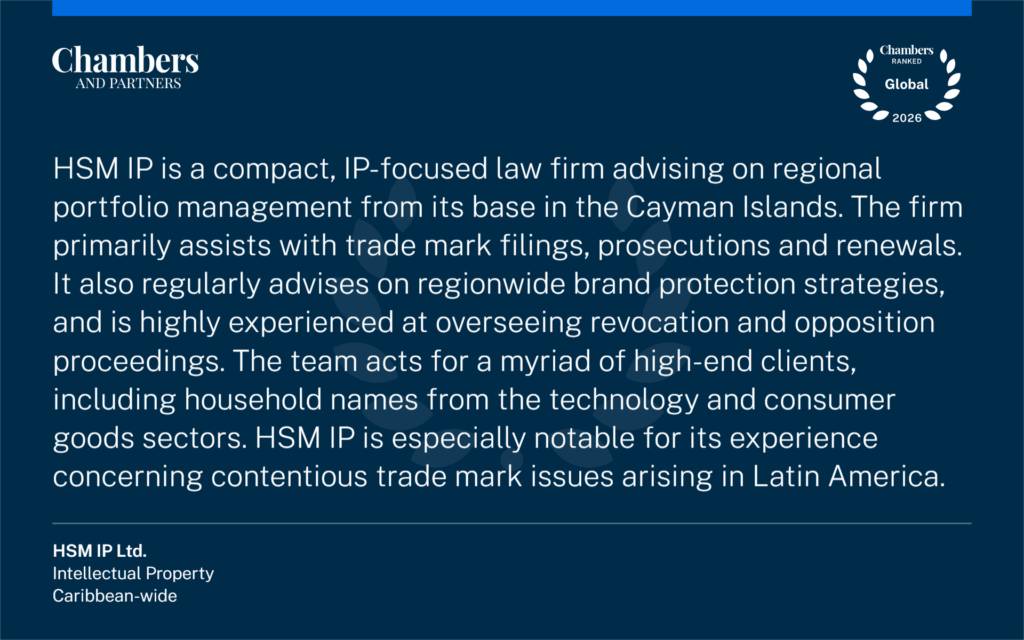
The HSM Group is pleased to be featured by Chambers & Partners in their 2026 Global Legal Guide.
Our Intellectual property practice, HSM IP, has once again been ranked as a top tier law firm in their Global (Caribbean-Wide) Intellectual Property 2026 Guide. This marks the seventh year in a row being ranked and highlights our ability to successfully handle Intellectual Property (IP) registrations, filings and infringement matters across the Caribbean.
Citing Chambers and Partners, a commenter shared that “The team at HSM IP is distinguished by its responsiveness, approachability and prompt, thorough service,” and “has very mature experience and deep knowledge.”
HSM Chambers has also been ranked for Real Estate (Cayman Islands) with HSM Partner Linda DaCosta. Our team is praised for handling contract negotiations, conveyancing, acting for banking institutions and ensuring timely completions. Linda DaCosta leads the property team at HSM Chambers. She advises on all facets of real estate transactions, including with regard to the financing considerations, and in connection with leasing documentation. “She’s pleasant to deal with,” shares a Chamber’s commentator.
Chambers and Partners is a prestigious hub for lawyer and law firm recommendations. They diligently research and feature the world’s best lawyers and have done so since 1990, covering over 200 jurisdictions.
Section 64 of the Immigration (Transition) Act (2022 Revision) (“the Act”) and its earlier iterations has long governed the circumstances in which a work permit holder may change employment in the Cayman Islands. Historically, the provision operated as a relatively flexible mechanism, allowing movement between employers where special circumstances existed. With the enactment of section 29 of the Immigration (Transition) (Amendment and Validation) Act, 2025 (“the Amendment Act”) Section 64 has been repealed and replaced with a markedly different framework.
At the current time, it is understood that the Amendment Act is to commence on 1 March 2026.
HSM Partner, Alastair David, explores how Cayman’s new section 64 redefines work permit mobility.
Past Issues
In the past, the laws governing the ability of expatriates to change their employers has been slightly “hit and miss”. At HSM Chambers we have heard of employees “self releasing” and been granted a new work permit much to the chagrin of their former employer. Equally, the Immigration Authorities have gone through periods where it rigorously enforces the law in regard to changing employers thus causing employees serious issues.
It is understood that one of the reasons for the change in the Law was to stop the misuse of the Immigration system. Anecdotally, it is understood that unscrupulous employers have applied for and been granted work permits for positions that do not exist. This has resulted in expatriates coming to the Cayman Islands and finding that there is no job awaiting them and they then must search for alternative employment. These expatriates are provided with a “release letter” and are then free to obtain alternative employment.
This article compares the former Section 64 of the Act with the newly enacted Section 64, and considers in particular the likely scope and effect of the “prescribed circumstances” referenced in subsection (5) of the new provision.
Section 64 under the Immigration (Transition) Act (2022 Revision)
Under the Act, Section 64 was framed as a permissive provision. In general terms, a work permit holder could change employer during the currency of the permit where the Director of WORC or the Board was satisfied that special circumstances existed. The list of “special circumstances” was not exhaustive and therefore many different circumstances could qualify.
The emphasis of the former provision was therefore on discretion and flexibility. Although the default position was that a work permit was tied to a specific employer, the legislation contemplated that employment relationships might break down or that labour market realities might require movement, and it vested decision‑makers with broad discretion to authorise changes on a case‑by‑case basis.
Section 64 of the Act also applied to whole of the nine years that the expatriate was in the Cayman Islands working via a work permit.
The New Section 64 of the Amendment Act: Structure and Effect
The new Section 64 represents a clear policy shift. The starting point is now an express statutory prohibition on changing an employer within the first two years of the grant of a work permit.
General Prohibition
Subsection (1) provides that a work permit holder “shall not change the person’s employer within the first two years of the grant of the work permit.” This establishes a rigid baseline rule which at first blush is more generous than the former section which applied during the currency of the work permit, whether that was in the first year or the ninth year of residence.
Domestic Helper Exception
Subsection (2) carves out a limited exception for domestic helpers, who may change employer within the first two years provided they are seeking employment as a domestic helper with another employer. This exception appears to recognise the particular vulnerabilities and employment dynamics associated with domestic work but also limits future employment only to a domestic setting, so therefore an expatriate cannot come to the Cayman Islands as a domestic helper and then three months later become a Food and Beverage Server.
Mandatory Departure Requirement
Subsection (3) introduces a significant enforcement mechanism. Where a work permit holder ceases employment within the first two years (and the domestic helper exception does not apply), the person must leave the Islands for a period of not less than one year before another employer may apply for a work permit in respect of that person.
This requirement fundamentally alters the consequences of early termination of employment, converting what was previously a regulatory issue into a mandatory exclusionary outcome, subject only to limited exemptions.
Exemptions and the Role of Prescribed Circumstances
Subsection (4) introduces a narrow pathway for relief. A work permit holder who ceases employment within the first two years may apply to the Director of WORC to be exempted from the one‑year departure requirement.
What is not clear is whether this exemption will be as “generous” as the previous “special circumstances”. The exemption mechanism appears to be tightly structured and depends on the existence of “applicable prescribed circumstances” and also the grant, in advance of the submission of a Work Permit, by the Director of WORC.
Subsection (5) requires that any application for exemption be accompanied by:
- proof of the existence of the applicable prescribed circumstance; and
- any other particulars as may be prescribed.
This wording is significant. It signals that:
- Exemptions are not grounded in general notions of fairness or special circumstances;
- Relief is available only where circumstances have been formally defined in subsidiary legislation; and
- The burden rests squarely on the work permit holder to prove that those circumstances exist.
Likely Scope of “Prescribed Circumstances” under Subsection (5)
Although the Act itself does not define the prescribed circumstances, the structure and policy intent of the new Section 64 allow some reasonable inferences to be drawn.
Because Section 64 is going to be changed, we believe that the prescribed circumstances are likely to be narrow, specific and objectively verifiable. They may include, for example:
- termination of employment for reasons wholly outside the control of the employee, such as redundancy or business closure;
- serious breach of employment obligations by the employer, including non‑payment of wages;
- substantiated cases of abuse, exploitation or unsafe working conditions;
- circumstances where continued employment is impossible or unlawful;
- other humanitarian or exceptional grounds expressly set out in regulations.
What is notable is what is unlikely to qualify. General dissatisfaction with employment, better career opportunities, or voluntary resignation without compelling justification are unlikely to fall within prescribed circumstances, given the clear policy objective of limiting labour mobility in the early years of a work permit.
Procedural and Practical Consequences
Subsection (6) further tightens the regime by providing that an applicant for exemption may not work while awaiting determination of the application. This creates a period of enforced unemployment and financial vulnerability, even where an application is ultimately successful.
The combined effect of subsections (3) to (6) is therefore to strongly discourage early termination of employment, except in clearly defined and provable circumstances.
Subsection (7) preserves a discrete exemption for government employees affected by administrative rearrangements, reflecting the different policy considerations applicable to the public sector.
Comparative Assessment: From Discretion to Prescription
The contrast between the 2022 and 2025 versions of Section 64 is stark.
- The former regime relied on administrative discretion and flexible assessment of individual circumstances.
- The new regime appears to rely on statutory prohibition, mandatory consequences, and what we believe will be narrowly defined prescribed exceptions.
The indications are that the shift from “special circumstances” to “prescribed circumstances” is more than semantic. It represents a deliberate move away from case‑by‑case judgment toward a rule‑based system designed to reduce mobility, increase certainty, and advance broader labour market policy objectives.
Benefits to employees
While employees may be concerned about this change, all is not lost for them. Provided the employee has been employed for more than two years, they are free to change employer, absent any enforceable contractual provisions. This is certainly an advantage under the Amendment Act which will more than likely require employers to review their post termination restrictive covenants to ensure that they are enforceable and offer sufficient protection.
Equally, it appears that the drafters of the Amendment Act have potentially left a rather large gap in the Act which employees could take advantage of but it would require them to leave their employment before the commencement date of the Amendment Act and ensure that their work permit is cancelled before then.
This gap arises where a work permit holder ceases employment before the commencement date of the Amendment Act, but applies for a new work permit after the repeal of the former Section 64 has taken effect. In such circumstances, the former Section 64 no longer exists in law and cannot apply, having been repealed in its entirety. At the same time, the new Section 64 does not apply retrospectively and is triggered only where a person “ceases to be employed”, i.e. post commencement date and while the new provision is in force.
The result is a narrow intertemporal gap: the old law has been extinguished, and the new law does not reach backwards to regulate past cessations of employment. In the absence of an express saving or transitional provision, there is no statutory basis upon which either version of Section 64 can properly apply.
While this outcome may appear anomalous from an administrative perspective, it is entirely consistent with orthodox principles of statutory interpretation. Repealed provisions do not survive unless expressly preserved, and new provisions do not operate retrospectively unless clearly stated. Administrative inconvenience cannot justify reading words into the legislation, which are not there.
In practical terms, individuals falling within this category would be subject only to the general work permit application framework and prevailing policy considerations, rather than any specific restriction under Section 64. Whether this was an intended consequence of the legislative drafting, or an unintended lacuna, remains to be seen.
Attempts have been made to reach out to the authorities to seek clarity on this issue have not been addressed.
Conclusion
The new Section 64 fundamentally reshapes the legal position of work permit holders in the Cayman Islands. By imposing a two‑year lock‑in period, mandatory departure requirements, and a tightly controlled exemption process dependent on prescribed circumstances, the legislature has signaled a clear intent to prioritise employment stability over labour mobility.
Much will ultimately depend on how the prescribed circumstances are defined in the regulations and how strictly they are applied in practice. Until then, subsection (5) stands as the critical gateway provision: the narrow hinge on which any relief from the new regime will turn.
World Trademark Review (WTR) has recognised HSM IP, and two individuals Huw Moses and Kate Cleary, in their latest guide: WTR 1000 2026 (Pan-Caribbean).
This is the ninth year in a row that HSM IP has been recommended by WTR 1000. HSM IP is honoured to receive this recognition as it highlights our practice as a world-class, go-to resource for trade mark services across the Caribbean.
Thank you to our clients for their feedback and support as well as WTR for recognising our work.
Cited from WTR 1000’s website, commentators said:
“HSM IP is a full-service law firm known for its ability to simplify complex regional processes while maintaining the precision, responsiveness, and commercial awareness expected of top-tier legal counsel. Clients regularly commend HSM IP’s clarity and reliability, claiming they “couldn’t be happier working with HSM IP”. This reputation is built on a foundation of deep regional knowledge and a commitment to practical, business-focused advice. Leading the firm is Huw Moses, a respected figure in Caribbean IP law. He founded the Intellectual Property Caribbean Association and was instrumental in modernising the Cayman Islands Trade Marks Law in 2016; efforts that have shaped the region’s IP landscape. Joining the WTR 1000 this year is Kate Cleary, whose decade of experience managing prestigious global trademark portfolios adds further depth to the firm’s international capabilities.”
The WTR 1000 identifies the leading trade mark practitioners and firms from around the globe, offering the definitive ‘go-to’ guide for those seeking legal trade mark expertise.


As the government prepares for a commencement date of 1 March 2026 for the Immigration (Transition) (Amendment and Validation) Act 2025 (“the Amendment Act”), it is becoming increasingly obvious that there will be a large number of individuals adversely affected by the changes.
Perhaps most surprisingly, either by design or implication the Government has introduced a two-tier Permanent Residence system, in which a number of individuals including children will be adversely affected.
The recent Amendment Act introduces new transitional provisions under what is to become Section 83A of the Caymanian Protection Act, designed to address the status of permanent residents (PRs) under the revised immigration framework. The Transitional Provisions protect a limited group of Permanent Residents. This group will be able to apply for the Right to be Caymanian after 15 years of residence (provided they are Naturalised / Registered as a BOTC) or 5 years after Registration / Naturalisation (“Tier 1”). A close review indicates that they may inadvertently exclude several longstanding categories of lawful permanent residents, which will mean that they are not protected (“Tier 2”).
What is not clear is why the Government has decided to include some groups of Permanent Residents and not include other Permanent Residents, hence what appears to be a two tier system.
Which Permanent Residents are Protected – Tier 1
Section 83A(4) and (5) of the Amendment Act provides that the new timeline to apply for the Right to be Caymanian (RTBC) will not apply to the following categories of individuals provided they hold the relevant permission on the day of grant:
- Individuals granted permanent residence after at least eight years’ lawful and ordinary residence;
- Spouses or civil partners of Caymanians or PR holders holding a Residency and Employment Rights Certificate (RERC) by virtue of marriage or civil partnership;
- Holders of a Certificate of Permanent Residence for Persons of Independent Means (PIM); and
- Spouses, civil partners, and dependents of PIM certificate holders. Provided they are British Overseas Territories Citizens
These categories form a closed list, leaving a gap for long-term residents who do not fall neatly within the above categories.
Which Permanent Residents are not protected – Tier 2
The provisions exclude several long-term lawful permanent residents, including:
- RERC holders granted under section 39 of the current Immigration Act;
- Children registered as BOTCs under sections 15(1) or 15(4) of the British Nationality Act, who are BOTCs by entitlement and have independent permanent residence under section 36(4);
- Adult dependent relatives listed on another person’s RERC (e.g., parents);
- Spouses of PR holders who are listed as dependents but do not hold an RERC of their own; and
- Refugees granted indefinite leave to remain under the Customs and Border Control Act.
Perhaps the strangest categories to exclude are the children of Permanent Residents who have either been registered by entitlement or hold an RERC in their own right pursuant to Section 39 of the current Act. These children’s immigration permissions are arguably stronger than the children of Certificate holders as a Person of Independent Means but their ability to apply for Caymanian Status after 15 years is not preserved. These individuals with the strongest ties to the Cayman Islands and most integrated are being excluded from the protections of the transitional provisions for a reason which is not clear.
It should be noted that these changes to the Transitional Provisions have changed since they were first made public on the publication of the proposed Bill in October 2025. The original relevant section stated:
(4) Section 10(a) and (b) of the principal Act as amended by the Immigration (Transition) (Amendment and Validation) Act, 2025 shall not apply to a person in respect of whom a certificate, permission or exemption —
(a) is issued under —
(i) the principal Act;
(ii) the repealed Immigration Act (2015 Revision); or
(iii) any prior immigration law saved by the repealed Immigration Act (2015 Revision); and (b) is in force at the date of the commencement of the Immigration (Transition) (Amendment and Validation) Act, 2025,
and such a person may apply in accordance with the relevant Act under which the person’s certificate, permission or exemption is issued for the grant of the right to be Caymanian under section 28(3) or (4) of the principal Act or under any other earlier analogous provision.
This section as originally drafted “grandfathered” in a wide group of people. On 8 December 2025, the Government published amendments to the Bill, and the new law (coming into effect on 1 March 2026) states:
(4) Section 28(3) and (4) of the principal Act as amended by section 10(a) and (b) of the Immigration (Transition) (Amendment and Validation) Act, 2025 shall not apply to a person referred to in subsection (5) —
(a) who has been granted the right to reside permanently in the Islands, or whose Certificate has been issued, under —
(i) the principal Act;
(ii) the repealed Immigration Act (2015 Revision); or (iii) any prior immigration law saved by the repealed Immigration Act (2015 Revision); and
(b) whose right to reside permanently in the Islands or whose Certificate is in force at the date of the commencement of section 10(a) and (b) of the Immigration (Transition) (Amendment and Validation) Act, 2025.
(5) For the purposes of subsection (4), the persons are as follows —
(a) a person who has been granted the right to reside permanently in the Islands after having been legally and ordinarily resident in the Islands for a period of at least eight years other than a person referred to in section 37(1)(a), (b), (c), or (d) of the principal Act;
(b) a spouse or civil partner of a Caymanian or permanent resident who is the holder of a Residency and Employment Rights Certificate by virtue of marriage to, or civil partnership with, the Caymanian or permanent resident;
(c) a person who is the holder of a Certificate of Permanent Residence for Persons of Independent Means; and
(d) a spouse or civil partner, and any dependants, of the holder of a Certificate of Permanent Residence for Persons of Independent Means who is the holder of a Certificate of Permanent Residence for Dependants of Persons of Independent Means.
The above section is far more restrictive than the proposed provisions of October 2025. What is most concerning is that from the most recent Cayman Compass Article on this point, dated 16 January 2026, the effect of the transitional provisions was potentially not fully understood by the Ministry.
In an attempt to seek further guidance on the issues, HSM Chambers have recently written to the Director of WORC and the Ministry requesting clarity as to what is to happen to those Permanent Residents who fall within the “second tier” of the Permanent Residence system.
In our view, the commencement of this new legislation should be delayed until the Government can give due consideration to the “Tier 2” issues if the possibility of litigation is to be avoided.
HSM IP is a specialist intellectual property law practice based in the Cayman Islands and protects creative works (trade marks, patents, copyright, designs and domain names) throughout the Caribbean and Latin America.
Kate Cleary, Intellectual Property Manager at HSM IP, reached out to Foster’s to discuss their brand identity. Kate spoke with Managing Director, Woody Foster.
Foster’s was established in the year 1980. It is a supermarket and grocery retail company based in the Cayman Islands. In 2019 the company rebranded from Foster’s Food Fair IGA to simply, Foster’s, and with this name change came a new logo.
HSM IP has supported Foster’s in the protection of its trade marks for almost 15 years and assisted with the registration of their rebranded logo.
HSM IP: Why is registering your trade mark important to you?
Foster’s: The Foster’s brand is supported by 45 years of culture, promise, and trust. Registering our trade marks was a crucial step in protecting that ideal. For our brand’s longevity, it became essential to ensure the Foster’s name, logo, and our slogan, “Better Because We Care”, would remain secure against misuse.
HSM IP: Can you describe the significance or meaning behind the trademark?
Foster’s: Our logo and slogan reflect a simple promise: to care for our customers, our team, and our community. It’s a commitment towards reliability, and the welcoming experience people know when they walk into a Foster’s store. We’re a Caymanian business; we won’t offer anything less.
Our current logo was designed to remain true to those values. The emphasis on the word Better speaks to better quality, better prices, better value, and better choice. The green leaf highlights freshness and healthy living to reflect our present ideals.
HSM IP: How did you find the process of registering the trade mark?
Foster’s: Throughout, everything was clear and well guided. HSM IP gave us dedicated support and feedback which made the process feel incredibly intuitive. Our authenticity is what makes us so impactful, and knowing our intellectual property is now locally protected gives us peace of mind.
HSM IP: What would you say to other businesses who are thinking about registering trade mark(s)?
Foster’s: To any company, entrepreneur or entity looking to brand-build, we highly encourage it. Your trade mark is as unique and integral to you as your DNA. Registering helps you protect what you’ve built, but it also reinforces your credibility as a business. Securing your brand helps you maintain control over your identity, especially against the unexpected. You should never give that up.
HSM IP understands the importance of a logo or name as an asset in building consumer loyalty and maintaining a competitive advantage. We are committed to safeguarding intellectual property for our clients, to ensure that their ideas and creations are secure, protected and free to flourish.

An Overview of Attorney General of the Cayman Islands and another (Respondents) v. Shelliann Bush (Appellant) [2025] UKPC 39. The Judicial Committee of the Privy Council has confirmed that employees of charitable organisations in the Cayman Islands have no statutory right to protection against unfair dismissal, and that this exclusion does not breach the Cayman Islands’ Bill of Rights.
Background
The appellant, Ms Shelliann Bush, had been employed at The Pines Retirement Home (a charitable organisation) until November 2021, when she was dismissed for failing to comply with a newly introduced vaccination requirement, in response to the COVID-19 pandemic.
Seeking compensation under the Labour Act (2021 Revision) (Act), she was informed by the Department of Labour and Pensions that the Act does not apply to charitable organisations, by virtue of section 3(b).
The appellant brought constitutional proceedings, arguing that this exclusion denied her rights under section 7 (fair trial), section 9 (private and family life), and section 16 (non-discrimination) of the Bill of Rights.
Proceedings Below
At first instance (Grand Court), the Honourable Justice Walters (Actg) held that section 3(b) imposed a procedural bar which violated section 7 and gave rise to discriminatory treatment. However, the Cayman Islands Court of Appeal reversed that decision. It held that by virtue of section 3(b), employees of charities have no substantive civil rights to claim unfair dismissal. Without such a right, section 7 was not engaged.
The Privy Council’s Reasoning
Lord Lloyd-Jones, giving the advice of the Board, upheld the Court of Appeal’s approach.
Section 7: No substantive right to unfair dismissal
Section 7 of the Bill of Rights, like Article 6 of the European Convention on Human Rights, is a procedural guarantee. It does not create substantive rights where none exist in domestic law.
The Board drew on R (Kehoe) v Secretary of State for Work and Pensions [2006] 1 AC 42; and Matthews v Ministry of Defence [2003] 1 AC 1163, both of which emphasised that Article 6 is concerned with access to courts for determination of existing rights, not the creation of new rights.
Whilst the Labour Act does confer a statutory right not to be unfairly dismissed, section 3(b) expressly excludes charitable organisations. This exclusion prevents such rights from arising at all, rather than imposing a procedural bar on their enforcement.
International law arguments rejected
The appellant sought to rely on international labour standards and on dicta from R (Wright) v Secretary of State for Health [2009] 1 AC 739, and the concurring opinion of Judge Pinto de Albuquerque in K.M.C. v Hungary (App No 19554/11), 19 November 2012 (ECHR), to argue that there exists a universal civil right not to be unfairly dismissed. The Board, however, rejected this submission, noting that unfair dismissal is a statutory construct which varies across jurisdictions and is not mandated by international law.
Section 16 read with section 7 or 9
The appellant further argued that section 16 prohibited discriminatory exclusion from the statutory scheme. The Board held that since section 7 was not engaged, section 16 could not be read with it.
As to section 9, the Board accepted that employment-related disputes may in some circumstances fall within the notion of ‘private life’ for example, Denisov v Ukraine (App No 76639/11), 25 September 2018, ECHR Grand Chamber and Novakovic v Croatia [2021] ELR 169), which illustrate that Article 8 can apply where dismissal has severe consequences for private life or professional reputation.
However, the Board followed its own recent guidance in Royal Cayman Islands Police Association v Commissioner of Police [2022] ICR 117, holding that the unfair dismissal regime was designed to regulate employment relations, not to safeguard private life. The link to section 9 was therefore ‘too tenuous’ to engage section 16.
Conclusions
- The decision of the Privy Council reaffirms a sharp doctrinal distinction: Wrongful dismissal remains available under the common law where the contract of employment is breached, but its remedies are limited (usually to notice pay).
- Unfair dismissal is purely statutory. If Parliament has withheld it from a category of employees, courts cannot supply it through constitutional interpretation. More broadly, the case illustrates the limits of the Bill of Rights in expanding employment protections.
- Section 7 cannot create substantive rights, and section 16 discrimination claims require a sufficiently close connection with the core values of the relevant right.
The ruling is therefore significant both for employment law (leaving employees of charities reliant solely on contractual remedies) and for constitutional law, in affirming a restrained approach to the ambit of rights under the Cayman Islands Constitution.
In the UK and around the world, a large amount of case law has developed around how to assess whether an individual is an employee or not. Companies such as Uber and Pimlico Plumbers have fought lengthy court battles to avoid declarations that their staff are employees or workers due to tax issues and other statutory benefits that employees and workers are entitled to.
In the Cayman Islands, it is equally important to know whether a business or even an individual has entered into a contract for service or a contract of service. A contract of service would indicate an employee / employer relationship, a contract for service would indicate something else.
The determination of what is and what is not a contract of/for service is very fact specific and the authorities can look behind any written document to see how the services were performed.
Generally, in the Cayman Islands, the Immigration Act requires that an expatriate has an immigration permission to work in the Cayman Islands, i.e. be an employee, of a business or of an individual. If that expatriate has no immigration permission to work as an employee for the individual or the business, then the employer and the employee are breaking the law and can be prosecuted.
In the event that Workforce Opportunities & Residency Cayman (WORC) have a suspicion that an individual or business is in breach of the law, an investigation can take place.
The Department of WORC have the power, if they so wish, to issue an administrative fine to the individual and the business if they believe that a breach of the Immigration Act has occurred. These fines can be up to five times the cost of an annual work permit fee and as a result these fines can be very punitive.
If a business accepts that they have broken the law and accept an administrative fine they will be placed on the “WORC Offenders Register”, although this Register is not publicly available. The Department has published a policy in regards to the effect of this and it appears that if you find yourself on this Register your applications will be subject to additional scrutiny, may be delayed and administrative fines will be increased in the event of repeated breaches.
An individual who has been working without an immigration permission who accepts an administrative fine, could experience trouble obtaining future work permits or a future Permanent Residence application might be put in jeopardy.
If the offer of a fine is declined, WORC submit the file to the office of the Director of Public Prosecution (“DPP”) to determine whether or not a prosecution should take place.
Recently a business in the Cayman Islands found themselves under investigation for employing a “social media influencer”. This is not the first time that social media influencers have caused issues for businesses in the Cayman Islands. Businesses and influencers have been fined in the past for operating in the Cayman Islands without the appropriate immigration permissions.
What was different in the most recent investigation was that the business had been wise enough to enter into a formal written agreement with the influencer which was far more consistent with a “contract for service” as opposed to a “employment contract”. Equally, the way in which the business and the social media influencer operated was far more consistent with a contract for service than an employment contract.
As part of the investigation, the business was permitted to provide the contract to WORC and also make submissions as to why they had not broken the law. Despite this and the acceptance from WORC that the social media influencer was not “under a contract of employment” an administrative fine was proposed by WORC because they considered that the influencer “should not have been providing services to (your) client nor receiving compensation in any form without the appropriate work authorization”.
The business found themselves in a very difficult position. On the one hand they could accept the administrative fine, which while fairly punitive could be absorbed or on the other hand they could maintain that they had done nothing wrong and risk a prosecution. Not only did the business risk a higher fine, but they also, if the prosecution took place would face the risk of much higher legal fees.
In this case, the business “stuck to their guns”. They maintained they had done nothing wrong and asked for the matter to be transferred to the DPP for a legal ruling. That ruling has come back and there is to be no prosecution.
What can people learn from this?
If there is any doubt as to whether or not the contractual relationship is one which could lead to a finding of a contract of employment, the parties should take immediate legal advice.
It is primarily the responsibility of the business and the expatriates who are entering into a contractual relationship to ensure that the appropriate permissions have been obtained. A business or an individual should never find themselves in a position that they cannot point to a contractual document of some nature which sets out the nature of the relationship between them and the expatriate.
The contractual document should clearly set out the provisions which enable the reader to conclude that the document is not an employment contract if that is the real intent i.e. no reference to a “salary” or benefits, which would be consistent with an employment relationship.
In the recent matter, the evidence was very strong that the contractual relationship was not one of a contract of service and equally the concession by WORC that the influencer was not working under a “contract of employment” helped strengthen the business’ position. Due to the fact that the business had “protected” themselves by having a written agreement, which accurately described the relationship between the parties, the business could take the “gamble” and ask for the matter to be referred to the DPP with a degree of certainty that no prosecution would take place.
But in the absence of a written document which accurately reflects the position of the parties, the business might not have wished to take the gamble and paid the fine.
While it was disappointing that WORC took the position that an offence pursuant to Section 68(5) of the Immigration (Transition) Act (2022 Revision) (“the Act”) had been made out, it is hoped that they will now have received clarity in regards to the law.
Section 68(5) of the Act is clear and it states:
(5) A person who employs another in contravention of this Act or in contravention of any condition or limitation contained in a permit commits an offence and is liable on summary conviction in respect of a first offence to a fine of twenty thousand dollars and to imprisonment for one year and in respect of a second or subsequent offence to a fine of thirty thousand dollars and to imprisonment for two years.
An employment relationship has to exist between the parties for the offence to be established. In normal circumstances, a contract for service will not fall foul of Section 68(5) of the Act. Care must be taken when drafting a contract for service to ensure it is clear that no employment relationship is created. Merely saying in the document, “this is not a contract of employment” is not enough. Legal advice may well be worth obtaining to avoid the risk of an administrative fine or worse.
In October 2025, the Government proposed a change to the Immigration (Transition) Act (2022 Revision) (“the Current Law”) by publishing the Immigration (Transition) (Amendment and Validation) Bill 2025 (“the Bill”). In a 58-page document the Government set out the numerous changes they wished to bring into the Current Law, which has now been renamed the Caymanian Protection Act (“CPA”) and requested views on these changes.
HSM Chambers submitted a detailed response to the changes in which we set out:
- What we thought was good about the Bill.
- What we thought should be amended in the Bill.
- What we thought should be included in the Bill.
On 8 December 2025, the Minister for Caymanian Employment and Immigration tabled a number of changes to the Bill and these changes have been incorporated into the recently passed Bill, known as the CPA. It is now far more restrictive than previously drafted and will form (and we understand do form) part of the CPA. A commencement date has not yet been officially announced but it is expected that the CPA will become law in the New Year.
HSM Chambers’ position remains that there are issues with the CPA which have not yet been addressed. These issues are varied and detailed and include whether or not a proper consultation can be said to have taken place in the absence of the Regulations that will accompany the CPA when it becomes effective.
In the absence of the Regulations, for example, the following matters remain unclear:
- What prescribed financial standing will be required to satisfy the Board that an applicant for the Right to be Caymanian (“RTBC”) can support their dependents. It is presumed that this figure will be an income of at least $5,000 per month, with an additional $1,000 income required for each additional dependent, if the same threshold proposed for work permit holders is adopted.
- Whether the prescribed financial standing will take into account child dependents who are Caymanian or have their own immigration permission. Currently, it appears that where an expatriate applies for an immigration permission and they have a Caymanian child, by way of example, that child is not considered a “dependent” when a review of the individuals salary takes place to see if they have sufficient income to support other non-Caymanian children. It is not clear whether this situation will change.
- What the prescribed circumstances will be to permit an individual to change their employer within the first two years of the grant of the work permit.
- Whether there are to be any changes to the thresholds for Certificates of Permanent Residence as a Person of Independent Means, or Residency Certificate as a Person of Independent means.
Likewise, there remain issues with a number of the changes, perhaps most notably for those spouses who are “stay at home parents” who are married to a RERC holder but do not hold a RERC in their own right and are instead listed as dependents on their spouse’s RERC.
For reasons that are unclear, the Government appears to intend that these individuals would, in circumstances where their marriage breaks down or their RERC-holding spouse dies, be unable to apply for an RERC in their own right and therefore would potentially be required to leave the Cayman Islands.
Another issue which remains, post the changes proposed on 8 December 2025 is the punitive elements of the CPA, which seeks to penalize individuals who marry a person with a different term limit from themselves. Those individuals will now acquire the term limit of the party with the least time left in the Cayman Islands.
At present under the current legislation, those individuals can either retain their own term limit or elect to acquire the term limit of the spouse with the most time left. This will now change. It is not clear why approximately 1,000 individuals who currently hold work permits linked to their spouse, or whose spouse is linked to their permit, are to be treated in such a harsh manner.
The proposed changes could operate to penalize those who choose to marry, rather than those who remain unmarried.
Noticeable changes
Reduction in those Protected by the Transitional Provisions
In the Bill as originally published, it was clear that those people who had applied for Permanent Residence (PR) and were awaiting the decision of their application would be protected by the Transitional Provisions relating to eligibility to apply for the Right to be Caymanian. Specifically, such individuals would have been entitled to apply after 15 years of residence (provided they were naturalised), rather than after 20 years as now set out in the CPA.
The Cayman Islands Government amended the Bill, now the CPA, to ensure that it is only those individuals who are actually granted PR at the time the CPA comes into force will be entitled to apply for the Right to be Caymanian after 15 years of residence (and being naturalised).
This amendment will adversely affect at least 600 people who are currently working pursuant to a Permission to Continue Working with pending PR applications if decisions are not given before the CPA comes into effect.
Identity Cards
The Bill published in October 2025, was wholly silent as to Identity Cards. While it is correct that Section 71 of the Current Law allows for the issuance of an Identification Card, the Amendments proposed on 8 December 2025, appeared to make it more likely that an Identification Card, at least for Work Permit holders, will be required, and the associated costs will have to be paid in advance of the grant of the Work Permit.
The proposed Amendments (and which we believe form part of the CPA), make reference to Identification Cards in two separate provisions. Since 2022, there have been rumours of a National Identification Card, and it appears that we are moving one step closer to them being introduced, if the proposed amendments do form part of the CPA.
If it is the case that Identification Cards are introduced for work permit holders, then those Work Permit holders can expect to be arrested and fined if they do not produce upon request an Identification Card or within 48 hours of the request made by a Police Officer, an Officer of WORC (but not Customs and Border Control) and an Officer of the Department of Labour and Pensions. It should be noted that it appears that a request to produce the ID Card can be made without a reasonable suspicion that a violation of the Immigration law, or any law has occurred, and can be made without cause by the relevant officer. This appears a little draconian.
Whether the CPA will result in a wide rollout of the Identification Cards is not known. However, it does appear that the Identification Card and the associated costs, will be a further cost to employers or expatriates wishing to live in the Cayman Islands. This is in addition to the anticipated increase of almost 700% in the driver license fees for expatriates due to take effect in the New Year.
It is also notable that where a business applies for a work permit and pays the costs of the Identification Card in advance, but the Work Permit is ultimately not granted, there appears to be no provision for the recovery of the Identification Card fees in the CPA.
Conclusion
HSM Chambers reiterates its concerns raised during the consultation period. There are still fundamental flaws in the CPA which have not been corrected and will create uncertainty and difficulties. A meaningful consultation process should still take place, allowing stakeholders the opportunity to comment on the changes alongside the yet unseen regulations with the benefit of full and complete information.
Fatal error: Uncaught Error: Call to undefined function twentythirteen_paging_nav() in /home/clients/d17af2243e6f179e393695ba6e9ce04e/hsmnew/wp-content/themes/hsm/author.php:52 Stack trace: #0 /home/clients/d17af2243e6f179e393695ba6e9ce04e/hsmnew/wp-includes/template-loader.php(86): include() #1 /home/clients/d17af2243e6f179e393695ba6e9ce04e/hsmnew/wp-blog-header.php(19): require_once('/home/clients/d...') #2 /home/clients/d17af2243e6f179e393695ba6e9ce04e/hsmnew/index.php(17): require('/home/clients/d...') #3 {main} thrown in /home/clients/d17af2243e6f179e393695ba6e9ce04e/hsmnew/wp-content/themes/hsm/author.php on line 52