All posts by hsmoffice
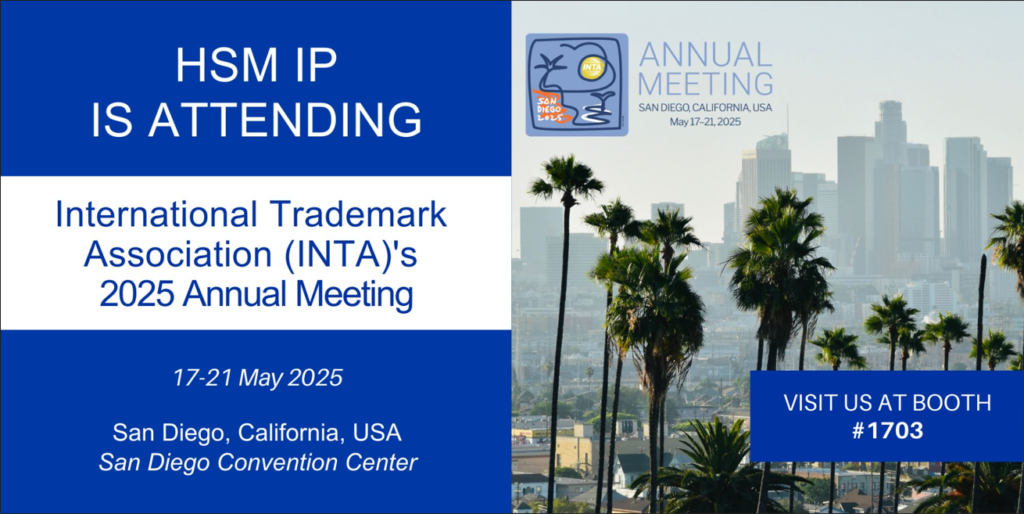
Our HSM IP team is gearing up to attend the 2025 International Trade Mark Association’s (INTA) Annual General Meeting in California at the San Diego Convention Center from 17 to 21 May 2025.
Meet Huw St.J. Moses OBE (Managing Partner), Mrinali Menon (Senior IP Manager), Shirly Ramirez (IP Administrative Assistant) and Courtney Ramgeet (IP Administrative Assistant).
You can visit the team at Booth 1073 or if you would like to arrange a meeting, email us at ip@hsmoffice.com.
We look forward to seeing you there!
The HSM Group is pleased to announce that Kerrie Cox has rejoined HSM Chambers as a Partner to lead the firm’s Litigation and Insolvency practice.
Kerrie practiced as a Barrister in the UK for over 12 years, before being admitted as an attorney in the Cayman Islands in 2010. Recognised for his pragmatic approach in providing strategic legal counsel to his clients, Kerrie has acted for banks, high profile companies and individuals on a wide range of legal matters, including liquidations, complex contract negotiations, and dispute resolution. He has appeared as Lead Counsel in the courts of England & Wales, Gibraltar, British Virgin Islands as well as the Cayman Islands.
Additionally, Kerrie has acted as a Mediator in over 30 mediations (qualifying in 2003) in both family and commercial disputes. Acknowledged for his strong communication skills, attention to detail and proven ability to mitigate legal risk, he is adept at taking the lead in negotiating and resolving multilayered legal issues.
HSM Managing Partner, Huw Moses, OBE shares: “It is great to welcome back Kerrie to the HSM partnership. His expertise, both within our firm and beyond, brings tremendous value to our clients and team.”

HSM is proud to be recognised again as a Chamber Champion Advocate at the Cayman Islands Chamber of Commerce Annual General Meeting on 12 March 2025 at Hotel Indigo Grand Cayman.
For the fifth year in a row, HSM’s recognition highlights the firm’s significant and meaningful commitment to supporting the business community and financial sector of the Cayman Islands. As a full-service law firm based in the Cayman Islands, HSM is proud to offer their expertise to help support the growth and development of the Chamber’s professional network. Members in the top category of Chamber Advocate invested staff hours and contributed more than $10,000 in kind or in sponsorship over the past year.
Throughout 2024, HSM presented many courses across the legal field such as employment, immigration and work permits, debt collection, landlord and tenant relationship and wills and estate planning. HSM also sponsored and participated in the annual Chamber Golf Classic, which provides an engaging networking event while raising money for a charitable organization. In addition, HSM is a trusted resource to provide guidance to Chamber’s leadership team regarding the latest legislative changes in the Cayman Islands.
HSM has been an active member of the Cayman Chamber since opening its doors in 2012.
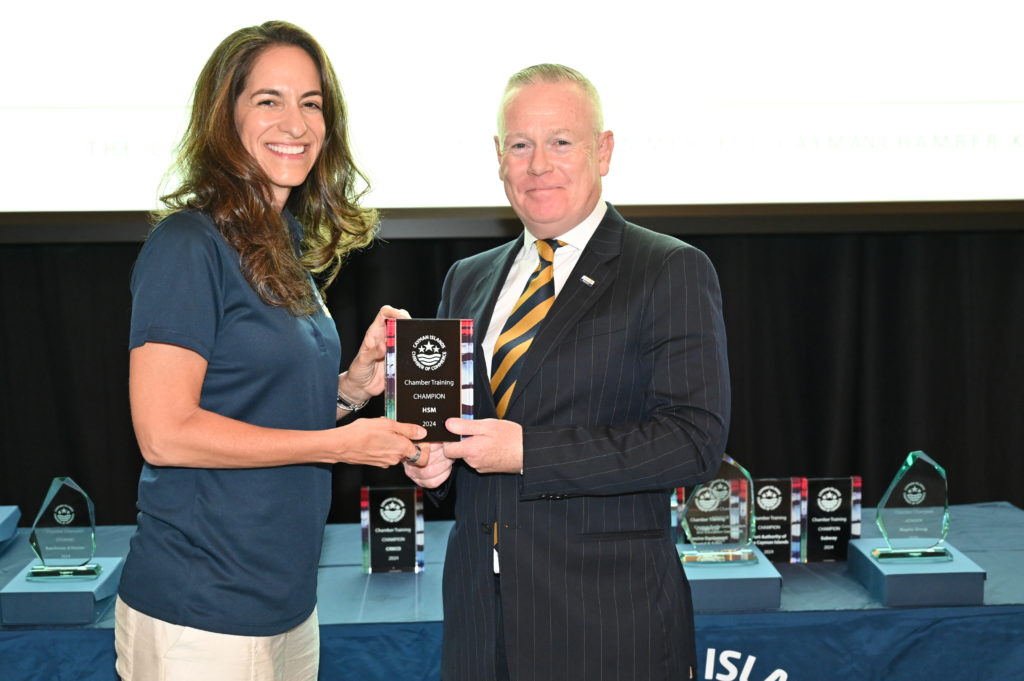
HSM Partner Christian Victory accepted HSM’s awards from Chamber President Joanne Lawson.

On 25 February 2025 the Bahamas Intellectual Property Office (BahaIPO) officially announced significant updates to its IP laws, including changes to the legislation governing copyrights, patents, and trade marks.
The following Laws have been introduced:
- The Trade Marks Act 2024: Repealing the Trade Marks Act (Ch. 322) and Trade Marks Act, 2015 (No. 39 of 2015)
- The Patents Act 2024: Repealing the Industrial Property Act (Ch. 324) and Patents Act, 2015 (No. 40 of 2015)
- The Copyright Act 2024: Repealing the Copyright Act (Ch. 323)
These new laws became retroactively effective as of 1 February 2025. However, the related rules, regulations, and official fees are still pending final approval.
It has also come to our attention that the BahaIPO has currently paused processing new applications until these regulations are finalised. Applications are still being accepted and can be filed to preserve relevant dates. Once the regulations are passed, applications will proceed.
The BahaIPO is expected to send an announcement to all local IP practitioners concerning the relevant updates in the coming days. HSM IP continues to monitor the situation for any progress. If you need assistance navigating these changes in the Bahamas IP landscape, please do not hesitate to reach out.
On 3 February 2025, the Privy Council in London considered a Declaration of Incompatibility made by the Cayman Islands Court of Appeal in respect to Section 37 (3) of the Immigration (Transition) Act (2021 Revision).
This section of the Act is the one that grants or rejects an individual’s application for Permanent Residence in the Cayman Islands.
The Court of Appeal declared Section 37 (3) of the Immigration (Transition) Act (2021 Revision) incompatible with Section 9 of the Bill of Rights on the basis that there was no ability to consider an applicant’s constitutional rights and carry out a proportionality exercise in the award of Permanent Residence. It is this decision that is being appealed by the Attorney General of the Cayman Islands.
HSM Partner, Mr. Alastair David, originally highlighted the issue that the aforementioned Act is incompatible with the constitution namely Section 9 of the Bill of Rights, which provides rights to family life and/or private life to residents in the Cayman Islands.
This is as far as we are aware, the first time, the Privy Council have been asked to review a decision of the Cayman Islands Court of Appeal which relates solely to an Immigration matter arising in the Cayman Islands.
The Cayman Islands Permanent Residence system is a points based system, which awards Permanent Residence to those individuals who obtain 110 points or more upon a consideration of their application. There is not a separate human rights consideration or a proportionality consideration and in the event that an individual’s application is rejected and they have no other way of remaining in the Cayman Islands, they are expected to leave for at least a year.
The Privy Council were asked to consider various aspects of the Immigration system and the Permanent Residence system and in particular Section 53 (1)(b) of the Immigration (Transition) Act (2021 Revision) which the Cayman Islands Government says provides an alternative means to reside in the Cayman Islands. This alternative permits the Cabinet of the Cayman Islands to grant permissions to individuals to remain outside of the Work Permit regime, but there are very few policies or guidance in regards to this system, and in HSM’s experience an application of this nature can take up to a year to be considered.
Both the original Claimant’s, Mr. Buray and Mr. D’Souza, did not take part in the matter before the Privy Council, however HSM Chambers represented Miss Jones-Hunter who had been granted permission to act as an intervenor. Miss Jones-Hunter’s case was presented by Mr. Manjit Singh Gill KC of No 5 Chambers, who was instructed by HSM’s Mr. Alastair David.
The Attorney General of the Cayman Islands was represented by Tom Hickman KC and he led Will Bordell, both of whom are from Blackstone Chambers.
The judgment is expected in the next few months.
The HSM Group is pleased to be featured by Chambers & Partners in their 2025 Global Legal Guide.
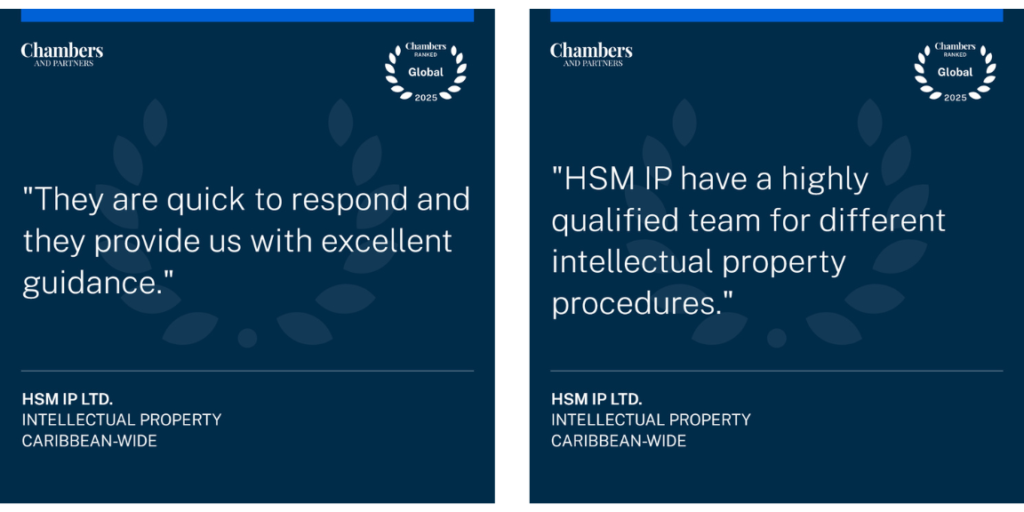
Our Intellectual property practice, HSM IP, has once again been ranked as a top tier law firm in their Global (Caribbean-Wide) Intellectual Property 2025 Guide. This marks the sixth year in a row being ranked and highlights our ability to successfully handle Intellectual Property (IP) registrations, filings and infringement matters across the Caribbean.
Citing Chambers and Partners, a commenter shared that “HSM IP are quick to respond and they provide us with excellent guidance,” and “HSM IP have a highly qualified team for different intellectual property procedures.”
HSM Chambers has also been ranked for Real Estate (Cayman Islands) with HSM Partner Linda DaCosta. Our team is praised for handling contract negotiations, conveyancing, acting for banking institutions and ensuring timely completions.
Chambers and Partners is a prestigious hub for lawyer and law firm recommendations. They diligently research and feature the world’s best lawyers and have done so since 1990, covering over 200 jurisdictions.
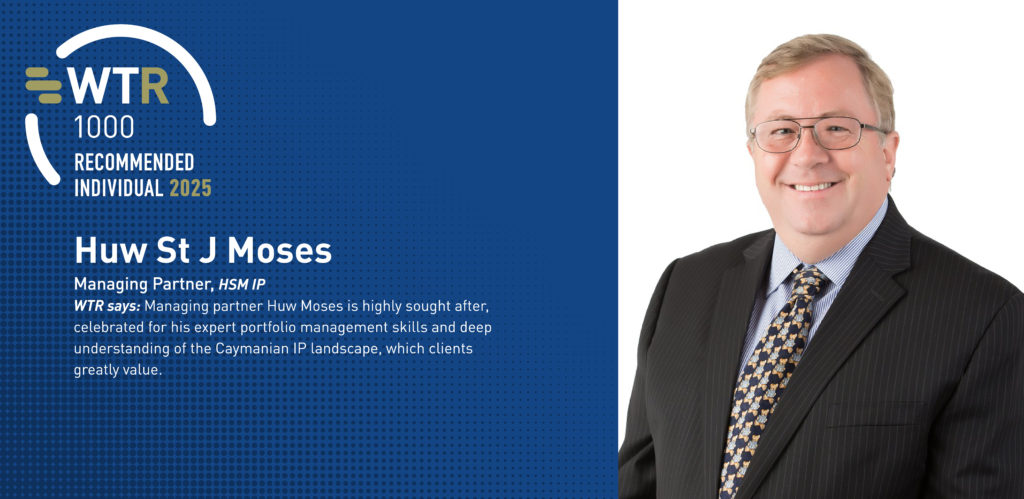
World Trade Mark Review (WTR) has recognised HSM IP and Huw Moses in their latest guide: WTR 1000 2025 (Pan-Caribbean).
This is the eighth year in a row that HSM IP has been recommended by WTR 1000. HSM IP is honoured to receive this recognition as it highlights our practice as a world-class, go-to resource for trade mark services across the Caribbean.
Cited from WTR 1000’s website, commentators said:
“HSM IP is a specialist firm based in the Cayman Islands, representing clients across Central America. The firm boasts a team of 13 practitioners who serve a diverse clientele. Their multilingual capabilities provide significant leverage, allowing them to cater to clients’ needs effectively. Managing partner Huw St J Moses played a pivotal role in drafting the Trademarks Law 2016, the Design Rights Registration Law 2016, and the Patents and Trademarks (Amendment) Law 2016. His profound understanding of the Caymanian IP landscape is highly valued by clients.”
The WTR 1000 identifies the leading trade mark practitioners and firms from around the globe, offering the definitive ‘go-to’ guide for those seeking legal trade mark expertise.
HSM IP is a specialist intellectual property law practice based in the Cayman Islands and protects creative works (trade marks, patents, copyright, designs and domain names) throughout the Caribbean and Latin America.
Kate Cleary, an Intellectual Property Manager at HSM IP, reached out to Joel Chadha (Senior Legal Counsel) and Ian Whan Tong (Group Legal Counsel) at Cayman National Corporation Ltd. (“Cayman National”) to discuss their experience of registering their trade marks in the Cayman Islands.
Cayman National was established in 1974 and is a leading financial services company based in the Cayman Islands.
Why is registering your trade mark(s) important to you as a financial institution?
Cayman National: Registering our trade marks is crucial as it protects our brand identity, ensuring exclusive rights to use our name, logo, and other branding elements. For example, if an attempt is made to spoof our website or misuse our identity, a registered trade mark allows us to take swift legal action and makes it easier to request takedowns (from search engines, web hosting providers and social media platforms etc.) of counterfeit sites, which safeguards our reputation and, ultimately, our customers. This helps in building trust with our clients, maintaining our good reputation, and safeguards against unauthorized use that could confuse customers or damage our brand.
Can you describe the significance or meaning behind the trade mark(s)?
Cayman National: The Cayman National Brandmark represents our unified organisation. The Brandmark consists of three elements: shield icon, signature and the subsidiary subline. The Shield is a graphical representation of Cayman National. It contains references to island life and specifically the three Cayman Islands. It also embodies stability and progress. The signature comprises the two words Cayman National. The subsidiary subline shows that we are part of the Republic Financial Holdings Limited family,
HSM IP: From a design perspective, Cayman National pays homage in its logo to the three Cayman Islands: Grand Cayman, Cayman Brac and Little Cayman. This helps to create a unique distinction.
How did you find the process of registering your trade mark(s)?
Cayman National: The process was straightforward but required careful attention to detail. Working with legal experts in the intellectual property field such as HSM helps us navigate the formalities efficiently, ensuring that our trade marks are registered correctly and thereby providing comprehensive protection for our brand.
HSM IP: We are proud to have worked with Cayman National for over 10 years. Before 2017, Cayman’s Trade Marks legislation required applications to be processed through the United Kingdom or European Union before being extended to the Cayman Islands and we have assisted Cayman National with its registrations not only directly in Cayman Islands (post-2017), but also at the UK Intellectual Property Office.
What would you say to other businesses who are thinking about registering their trade mark(s)?
Cayman National: Registering a trade mark is essential for protecting a brand’s identity and reputation. It not only secures exclusive rights but also adds value to a business. Acting early, consulting with legal professionals, and ensuring brand protection are critical steps for businesses as they grow.
HSM IP proudly assists local Cayman Islands businesses in securing their intellectual property assets, which can be vital to driving loyalty and maintaining a competitive advantage in an often-crowded marketplace. We are committed to securing intellectual property registrations for our clients, to ensure their unique ideas and creations are suitably protected.
On 14 November 2024, the Judicial Committee of the Privy Council handed down a landmark decision in Tianrui (International) Holding Company Ltd v China Shanshui Cement Group Ltd (Cayman Islands) [2024] UKPC 36. This ruling overruled the Grand Court of the Cayman Islands’ decision in Gao v China Biologic Products Holdings, Inc 2018 (2) CILR 591, in which the court had struck out an action filed by a minority shareholder. The action challenged the board of directors’ exercise of their power to allot and issue shares, with the plaintiff claiming a breach of fiduciary duty. However, the Grand Court had held that the fiduciary duty in question was owed to the company, not to individual shareholders, meaning the shareholder lacked standing to pursue the claim.
The Privy Council’s decision set a precedent in the Cayman Islands, allowing shareholders whose holdings are diluted by an improper allotment of shares to bring a personal claim against the company. This development represents a significant shift in the legal landscape for minority shareholders and clarifies their rights in such circumstances. HSM Associate, Alex Davies, explores this case.
Background to the Appeal
The Respondent was a cement production company based in China but registered in the Cayman Islands. The Appellant was one of four major shareholders in the company, alongside Asia Cement Corporation (ACC), China National Building Materials (CNBM), and China Investment Company Limited.
There had been an ongoing dispute over control of the Respondent. The Appellant claims that bonds and shares were issued to parties connected to ACC and CNBM, with the improper aim of diluting the Appellant’s shareholding and gaining control of the company.
When the Appellant sought a court declaration that the issuance of shares was improper, the Respondent attempted to have the case dismissed. The Grand Court of the Cayman Islands ruled in favour of the Appellant, but the Cayman Islands Court of Appeal overturned this decision, striking out the case. The Appellant then appealed to the Judicial Committee of the Privy Council (the “Board”) to reinstate the case.
Judgment and Reasons
The Board allowed the appeal, ruling that a shareholder can bring a personal claim against a company if the company’s directors issue shares for an improper purpose that negatively impacts the shareholder. Therefore, the writ filed by the Appellant should not have been struck out and should be reinstated. Lord Hodge and Lord Briggs delivered the judgment.
A company’s relationship with its shareholders is governed by the company’s articles of association. However, these terms can be changed by a special resolution passed by a 75% majority of shareholders. [paragraph 31]
The courts have long recognized that shareholders can enforce certain rights directly against the company, such as the right to vote at a general meeting, through a personal claim, rather than through a derivative action on behalf of the company. [40]
While not all shareholder rights are explicitly outlined in the company’s articles, directors are fiduciaries with special duties, including the duty to use their powers only for proper purposes. Directors may, however, act in a way that appears to be within their powers under the articles but is done for an improper purpose, making the action invalid. Shareholders adversely affected by such actions may then have grounds for a claim against the company. [41]
In this case, the Cayman Islands Court of Appeal mistakenly ruled that no such claim existed. The Board corrected this, ruling that a shareholder whose stake has been diluted by an improper issuance of shares can bring a personal claim against the company. However, in some cases (not applicable here), such claims may be blocked if a majority of shareholders ratify the improper allotment at a general meeting, excluding the newly issued shares. [66]
When a person becomes a shareholder, they acquire a bundle of rights, including the right for directors to issue shares. This power is a fiduciary one and must be exercised for a proper purpose. [67]
It is an implied term of the contract between the company and its shareholders that when directors issue new shares, they must do so in accordance with their fiduciary duties, in good faith, and for the benefit of the company as a whole. If the issuance is aimed at benefiting one group of shareholders at the expense of others, the issuance is invalid. [69-71]
Although directors owe their duties to the company and not directly to individual shareholders, an improper exercise of power (acting as the company’s agents) breaches the corporate contract between the company and its shareholders, providing a basis for the shareholder’s claim. [72-75]
Finally, while a majority of shareholders could theoretically ratify an invalid allotment of shares, such ratification must actually occur and cannot override protections against the oppression of minority shareholders. [80-81, 84]
Fiduciary Duty and the Power to Allot Shares
In its judgment, the Privy Council emphasised that the power to allot and issue shares is conferred upon directors by the company’s articles of association, and that this power must be exercised as a fiduciary duty. The decision underscores the directors’ obligation to act in the best interests of the company when making such decisions. The Privy Council explicitly stated that the power to allot shares must not be used for improper purposes, such as altering the balance of power between shareholders.
While it is common for an allotment of shares to affect the relative power of shareholders, the ruling clarified that this should only occur where the allotment is made in good faith and for a legitimate business purpose, such as raising capital.
Improper Purpose
The Privy Council’s judgment further considered the nebulous issue of improper purpose, including whether directors’ decisions are tainted by improper motives. This question has been the subject of some debate in previous cases, including the landmark Eclairs Group Ltd and Glengary Overseas Ltd v JKX Oil & Gas Plc. [2015] UKSC 71 in which the Supreme Court was divided on the issue. In that case, the Court considered whether a decision with both legitimate and illegitimate reasons should be set aside. The Supreme Court found on the facts of that case they should, and that in that case the proper purpose rule was pervasive, an obligation to consider the purpose in addition to acting in the best interests of the company. Lord Sumption and Lord Hodge stated that courts should focus on the improper purpose and whether the decision would have been made without it. If the decision would not have been made without the improper motive, it would be considered improper. Conversely, if the legitimate reasons for the decision were sufficient to warrant the action, even without the improper motive, the action may stand.
In Stobart Group Ltd v Tinkler [2019] EWHC 258 (Comm), the court suggested test should be whether the improper purpose was the “substantial or primary purpose” behind the decision.
Remedies
If an allotment of shares is successfully challenged on the grounds of improper purpose, shareholders have several potential remedies. The primary remedies are:
- Damages: Shareholders may be entitled to compensation if they can demonstrate that they suffered financial loss as a result of the improper allotment.
- Rescission (Unwinding): Shareholders may seek to have the decision rescinded, effectively undoing the allotment and returning the company to its previous shareholding structure. This remedy may redress inequality if a share allotment was made to alter shareholder control for improper purposes, but must be promptly sought or such remedy is unlikely to be endorsed by the court.
Conclusion
The Tianrui decision marks a significant shift in Cayman Islands law regarding the rights of minority shareholders and the fiduciary duties of directors. Shareholders who face dilution of their holdings due to an improper allotment of shares now have a clearer path to seek redress. However, the legal questions surrounding improper purpose and the appropriate remedies remain complex and nuanced, and future cases will likely continue to refine the application of these principles.
The HSM Group is proud to once again offer a legal internship for the 2024/25 academic year in partnership with the Cayman Islands Further Education Centre (CIFEC).
The team at HSM has welcomed 10 interns: Ahmoya Morrison, Nashla Evans McCoy, Shannell Pinnace Stewart, Alrick Peddie Jr, Rhynnia Rattary, Malachi Green, Samiya Wood, Jayden Nembhard, Azaria Ruiz-Bodden and Claudia Garcia Guerrero.
HSM is a full-service law firm and corporate services provider, which offers students the ability to gain experiences across a wide-range of practices including immigration, debt collection, intellectual property, corporate services and even areas outside of law, such as finance and marketing.
These students were interviewed at the CIFEC Careers Fair on 4 October 2024. HSM participated at this fair with a booth, which gave students an opportunity to learn about HSM as well as make a formal application.
As part of the CIFEC curriculum, the internship runs from October 2024 until April 2025 and each student attends work twice a week during school hours. When the programme ends, there may be opportunities for some students to attain a summer work placement or full-time employment at HSM.
HSM Managing Partner, Huw Moses OBE shares: “Our internship programme has been enjoyable and incredibly successful over the years, offering young professionals the chance to learn, contribute and set the foundation for their careers.”
HSM has supported the CIFEC Internship Programme since 2012 and also offers sponsorship opportunities for further education. HSM employs several CIFEC graduates full-time.

Photo: Huw Moses (HSM Managing Partner) seated in front of HSM interns. (L-R): Ahmoya Morrison, Nashla Evans McCoy, Shannell Pinnace Stewart, Alrick Peddie Jr, Rhynnia Rattary, Malachi Green, Samiya Wood, Jayden Nembhard, Azaria Ruiz-Bodden and Claudia Garcia Guerrero
Fatal error: Uncaught Error: Call to undefined function twentythirteen_paging_nav() in /home/clients/d17af2243e6f179e393695ba6e9ce04e/hsmnew/wp-content/themes/hsm/author.php:52 Stack trace: #0 /home/clients/d17af2243e6f179e393695ba6e9ce04e/hsmnew/wp-includes/template-loader.php(86): include() #1 /home/clients/d17af2243e6f179e393695ba6e9ce04e/hsmnew/wp-blog-header.php(19): require_once('/home/clients/d...') #2 /home/clients/d17af2243e6f179e393695ba6e9ce04e/hsmnew/index.php(17): require('/home/clients/d...') #3 {main} thrown in /home/clients/d17af2243e6f179e393695ba6e9ce04e/hsmnew/wp-content/themes/hsm/author.php on line 52