Category Archives: HSM LAW
In a press release dated 3 July 2025, Workforce Opportunities & Residency Cayman (WORC) reminded Residency and Employment Rights Certificate (RERC) holders who obtained their Permanent Residence on the basis of the Points system or being married to a Permanent Resident and those individuals who obtained residence on the basis of their independent means to submit annual declarations.
WORC reminded those groups that not only was it a criminal offence not to provide an annual declaration but also it could lead to the revocation of their Immigration permission.
As there are no policies in regard to the revocation of Immigration permissions it is therefore difficult to know in what context this would happen. It is however suspected that the Department would only seek to revoke an Immigration permission on failure to submit the appropriate paperwork if there was a connected offence, i.e. the individual had changed job titles (without permission) or a dependent had not declared at an earlier stage.
That being said, it is open to the Director or the Caymanian Status and Permanent Residency Board to revoke an immigration permission based solely upon the failure to provide an annual update.
Prior to revoking an immigration permission the Department or the relevant board would send a “Minded to Revoke” letter to the individual in question. In those circumstances, HSM Partner Alastair David recommends that the individual in question seeks immediate legal advice so that they can understand the situation that they find themselves in and what would be the appropriate next steps.
Shareholder disputes can arise from a variety of causes ranging from mismanagement and lack of transparency to personal fallouts among business partners. These issues are particularly acute in privately held companies, where relationships often blur the line between personal and professional. When such disputes escalate beyond informal repair, the Companies Act (2025 Revision) (the “Act”) offers a critical legal recourse: the ability to petition for the winding up of the company on “just and equitable” grounds.
In this article HSM Partner Kerrie Cox examines the legal framework governing “just and equitable” winding up petitions. Detailing the key principles that courts consider, the procedural steps involved, and the implications for shareholders seeking to exit a deadlocked or dysfunctional business. Understanding this remedy is vital for shareholders facing irreconcilable disputes, offering a clear, albeit final, path toward resolution.
What does ‘just and equitable’ mean?
Section 92(e) allows any contributory – typically a shareholder – to petition the court to wind up a company on the basis that “it is just and equitable that the company should be wound up.” But what does this standard actually entail?
The phrase “just and equitable” is not exhaustively defined in the Act, which gives the Grand Court wide discretion to determine whether it is fair and reasonable to wind up a company in a particular case. While each petition is assessed on its own merits, the courts have recognised several recurring grounds that may justify a winding up on a just and equitable basis:
- Loss of Substratum
This occurs where the company can no longer achieve the purpose for which it was originally formed. If the core business objective fails or becomes impossible to carry out, a shareholder may argue that continuing the company no longer serves any meaningful purpose.
- Deadlock
In companies with two or a few shareholders (particularly where each holds equal control), a deadlock may arise if the parties are unable to agree on essential business decisions. If there is no mechanism in the company’s constitution to resolve such disputes, and the impasse paralyses the business, this can justify a winding up.
- Lack of Probity or Mismanagement
If those in control of the company (typically directors or majority shareholders) act in a way that is oppressive, fraudulent, or in breach of their fiduciary duties, the court may intervene. Examples include diverting business opportunities, misusing company funds, or excluding minority shareholders from decision-making.
- Loss of Mutual Trust and Confidence
Especially relevant in quasi-partnerships or closely held companies, this ground applies when a breakdown in personal relationships makes it impossible to continue operating the business in the manner initially intended – particularly where mutual trust was a foundational element.
The Companies Winding Up Rules (2023 Consolidation) (“CWR”)
While section 92(e) of the Act sets out the substantive legal basis for winding up a company on “just and equitable” grounds, the CWR govern the procedural mechanics of how that remedy is accessed and adjudicated. In other words, the Act gives the right; the CWR governs how that right is exercised in practice. Without adherence to these Rules, even the most compelling substantive claim may falter and therefore the CWR act as the procedural “gateway” to relief.
The CWR are crafted to ensure that all parties – petitioners, respondents, the company, and other stakeholders – are afforded fair notice, a meaningful opportunity to be heard, and clearly defined timetables. Practitioners must treat the CWR not as a checklist, but as an integral strategic tool – one that shapes not only how a case is fought, but whether it is fought at all.
A Distinctive Procedural Question in Shareholder Petitions
A key procedural feature that distinguishes shareholder winding up petitions is found under Order 12(1)(b) CWR in the question of how the proceedings should be characterised: should it be treated as a proceeding against the company, or as an inter partes dispute between shareholders?
This issue frequently arises in petitions based on just and equitable grounds, where the substantive conflict lies not with the company as a corporate entity, but between competing shareholder factions – typically, one or more minority shareholders (as petitioners) and the majority (as respondents).
Where the Court makes a direction under Order 12(1)(b) that the proceeding is to be treated as an inter partes dispute, the effect is that the company is excluded from active participation in the litigation. As a result, for the purpose of any subsequent costs orders, the company is not treated as the losing party, and any costs awarded to the successful party will be borne not from company assets, but by the party against whom the costs order is made – subject to the Court’s overall discretion under Order 62 of the Grand Court Rules.
This approach is consistent with the decision in Freerider Limited [1], where the Grand Court held that, because the dispute was in substance between shareholders (Mr. Heinen and Mr. Le Comte), the company should not participate in the proceedings. The Court subsequently ordered that the company be wound up on just and equitable grounds, and that Mr. Le Comte, as the unsuccessful respondent, pay Mr. Heinen’s costs of the petition and related applications.[2]
Powers of the Court in Winding Up Petitions
Aside from determining whether, on the facts and/or the law, a winding up petition should be granted or dismissed,[3] the Court has additional jurisdiction that is unique to petitions brought by shareholders on just and equitable grounds.
In such cases, the Court may exercise its equitable discretion to make alternative orders in lieu of a winding up order. These may include, among other remedies, an order regulating the future conduct of the company’s affairs, or an order requiring that one or more members purchase the shares of another member.[4]
These powers reflect the underlying principle that winding up is a remedy of last resort, and where appropriate, the Court may instead impose a solution that preserves the company while resolving the underlying shareholder dispute.
Conclusion
A winding up petition on just and equitable grounds offers a vital remedy for shareholders facing irreconcilable disputes within a company. While it is a powerful tool, the process is complex and requires careful consideration of the facts and the legal implications. The court will typically view winding up as a last resort, making it essential for shareholders to have expert legal guidance to assess the viability of such a petition.
Through section 92(e) of the Act and the procedural architecture of the CWR, the Financial Services Division of the Grand Court is equipped with broad powers to assess each case on its merits and craft an outcome that is fair, proportionate, and responsive to the parties’ underlying commercial relationship.
Importantly, the Court’s discretion is not confined to granting or dismissing a petition; it may, where appropriate, fashion alternative relief to protect the interests of shareholders without dissolving the company. The procedural distinction under Order 12(1)(b) CWR – between proceedings against the company and inter partes shareholder disputes – further demonstrates the nuanced approach the Court takes in balancing justice, efficiency, and fairness.
For shareholders navigating serious disputes, understanding the substantive principles and procedural intricacies of just and equitable winding up is critical. Timely legal advice and strategic engagement with the framework set out in the Act and the CWR can often mean the difference between an orderly resolution and prolonged, value-destructive litigation.
[1] (2009 CILR 604)
[2] (2010 (1) CILR 486)
[3] The Powers of the court are contained in section 95 of the Act
[4] Section 95(3) of the Act
Highlighting a recent case in the Cayman Islands, [2025] CIGC (FSD) 44 – Re Rasmala Trade Finance Fund (2) (“Re: Rasmala Trade Finance Fund (2)”), HSM Partner and Head of Litigation Kerrie Cox covers an important and often overlooked distinction between court pleadings and affidavits.
Court pleadings are formal legal documents filed by each party to set out their claims, defences, and overall positions in the litigation. They define the issues in dispute and establish the framework within which the court will determine the case.
By contrast, affidavits are formal evidentiary documents intended to support each parties case as defined in the pleadings. Their primary function is to provide factual evidence relevant to the issues already pleaded. They should remain within the scope of the pleadings, adhere strictly to matters of fact, and are not the appropriate vehicle for introducing new claims or allegations that have not already been formally pleaded. Their role is to support the case – not to ambush the opposing party by raising new allegations for the first time.
Occasionally, affidavits stray beyond the scope of the pleaded issues, and in some cases may introduce serious, unpleaded allegations such as fraud or dishonesty. This is procedurally improper. Such conduct risks exceeding the permissible evidential boundaries of the case and may give rise to procedural unfairness, particularly where the opposing party has not been given adequate notice through the formal pleading process.
Exception
By virtue of Order 18, rule 12(2) of the Grand Court Rules (GCR), the court has discretion to order that an affidavit stand as a pleading. The rule provides:
“…the Court may order a party to serve on any other party particulars of any claim, defence, or other matter stated in that party’s pleading, or in any affidavit of that party ordered to stand as a pleading, or a statement of the nature of the case on which the party relies…” [emphasis added]
This means that an affidavit, in and of itself, does not constitute a pleading. However, if the court expressly orders it, an affidavit can be treated as such, effectively elevating its contents to the same procedural and legal status as a formal pleading.
This power is typically exercised in exceptional or procedural circumstances where, for example, the affidavit is being used to define a party’s case in lieu of (or in addition to) a formal pleading. Importantly, unless such an order is made, allegations raised in an affidavit that are not already pleaded carry no procedural weight and cannot expand the scope of the issues before the court. This principle helps to preserve fairness and clarity in litigation by ensuring that the parties are bound by the issues formally raised and notified in the pleadings.
Conventional remedy available
Absent of the exception above, a party who is the subject of new and unpleaded allegations introduced through an affidavit may seek relief by applying to the court to strike out the offending portions under Order 41, rule 6 of the GCR. This rule empowers the court to strike out from an affidavit:
“any matter which is scandalous, irrelevant or otherwise oppressive.”
This ensures that the evidential record remains confined to properly pleaded issues and protects the opposing party from procedural unfairness. Such an application should be brought promptly and ideally well in advance of trial to allow the court to address any potential prejudice or imbalance in the proceedings.
Re: Rasmala Trade Finance Fund (2)
The case concerned a winding-up petition brought on a just and equitable basis against the Rasmala Trade Finance Fund (Fund), for which the trial was scheduled to begin on 21 May 2025.
On 23 April 2025, the Fund filed a summons seeking to postpone the trial, citing new and serious allegations – some bordering on dishonesty – raised by the Petitioner in a late affidavit (4th affidavit of Mr. Trikha).
The Fund’s Position
The Fund argued that these allegations, which were not pleaded in a previously amended petition, would unfairly ambush it at trial without giving it adequate time to respond. The Fund sought to vacate the trial and applied that the Petitioner be directed to file a re-amended petition to formally plead all new allegations – particularly those involving fraud, negligence, misrepresentation, and willful default – citing O.18, r.12(2) (as set out above) and O.20, r.8(1), GCR:
“A party must in any pleading subsequent to a statement of claim plead specifically any matter, for example, performance, release, any relevant statute of limitation, fraud or any fact showing illegality –
(a) which the party alleges makes any claim or defence of the opposite party not maintainable; or
(b) which, if not specifically pleaded, must take the opposite party by surprise; or
(c) which raises issues of fact not arising out of the preceding pleading.
The Fund maintained that fairness demanded clarity and an opportunity to answer the new claims properly before trial.
The Petitioner’s Response
The Petitioner resisted the adjournment and challenged the court’s jurisdiction to make the type of order sought by the Fund. Principally, it was submitted that O.18, r.12(2) GCR was not applicable since the affidavit had not been ordered to stand as a pleading.
As for GCR O.20, r.8(1), the reported submissions of Counsel – whilst acknowledging the broad requirement for the content of pleadings – were grounded in a fundamental procedural principle: namely, that it is the role of the Judge to determine the issues identified and framed by the parties, not to compel a party to pursue a case they have chosen not to plead.
The Court’s findings
The Judge sided largely with the Petitioner on legal principle, concluding:
- The court lacks jurisdiction to compel a party to amend its case merely to reflect evidence that has not been previously pleaded.
- The proper route for the Fund would have been to apply to strike out irrelevant or scandalous parts of the 4th affidavit of Mr. Trikha under GCR O.41, r.6. No such application had been made.
- While the Fund’s desire for procedural clarity was understandable, the solution did not lie in a court-ordered adjournment or compelled amendment.
Importantly, the Judge clarified that any attempt to introduce new or unpleaded allegations – whether found in the 4th affidavit of Mr. Trikha or elsewhere – would not be permitted.
Conclusions
The ruling in Re: Rasmala Trade Finance Fund (2) reaffirms the foundational importance of pleadings in civil litigation. It warns litigants against attempting to raise serious and complex allegations (such as fraud or dishonesty) for the first time in late-stage affidavits, without appropriate amendments to their pleadings. Additionally, this decision reflects a firm stance by the Cayman Islands’ court on procedural integrity and the discipline of litigation.
Interestingly, although the Fund’s application was dismissed on procedural grounds, it ultimately achieved a more favourable outcome. Instead of simply obtaining an order requiring the Petitioner to re-amend its pleadings, the Petitioner was effectively prohibited from advancing the new allegations set out in Mr. Trikha’s fourth affidavit altogether.
We are proud to share that HSM has been nominated for the following Best of Cayman Islands categories: Immigration Law, Family Law, Divorce Law, Law Firm, Estate Law, and Immigration Services.
Thanks to your support we won Gold in 2023 and 2024 for Immigration Law. We truly appreciate your trust and the opportunity to work with you.
If you valued our services, help us win by casting your vote:
https://bestofcaymanislands.org/vote/hsmchambers/
You can vote once a day, every day until 20 June 2025.
On 22 May 2025, the Government of the Cayman Islands published their intention to introduce term limits for non-Caymanian civil servants in the Cayman Islands.
Civil servants have always been excluded from term limits. As such, these changes will require legislative change and as a result one can expect, in the near future, a number of Bills being put before Parliament seeking to enact the changes the Government wish.
It would appear that some of the changes that the Government are seeking to bring into force will be mirrored in the Private Sector, i.e. an extension of the rollover period from 1-2 years. A change of this nature will also require a change in the current Immigration Act.
It is proposed that from the date of commencement; term limits will apply to both existing and new non-Caymanian civil servants. Existing non-Caymanian civil service employees will have 1 January 2026 as the start date for their term limit.
HSM Partner Alastair David strongly recommends that any individual who is concerned about their status in the Cayman Islands to obtain legal advice about the potential ramifications for the changes proposed. It is also suggested that anyone who can either apply for Permanent Residence or the Right to be Caymanian or will be able to apply in the near future should strongly consider doing so. HSM Chambers stands ready to provide advice to those people who wish to understand their position here.
The HSM Group is pleased to announce that Kerrie Cox has rejoined HSM Chambers as a Partner to lead the firm’s Litigation and Insolvency practice.
Kerrie practiced as a Barrister in the UK for over 12 years, before being admitted as an attorney in the Cayman Islands in 2010. Recognised for his pragmatic approach in providing strategic legal counsel to his clients, Kerrie has acted for banks, high profile companies and individuals on a wide range of legal matters, including liquidations, complex contract negotiations, and dispute resolution. He has appeared as Lead Counsel in the courts of England & Wales, Gibraltar, British Virgin Islands as well as the Cayman Islands.
Additionally, Kerrie has acted as a Mediator in over 30 mediations (qualifying in 2003) in both family and commercial disputes. Acknowledged for his strong communication skills, attention to detail and proven ability to mitigate legal risk, he is adept at taking the lead in negotiating and resolving multilayered legal issues.
HSM Managing Partner, Huw Moses, OBE shares: “It is great to welcome back Kerrie to the HSM partnership. His expertise, both within our firm and beyond, brings tremendous value to our clients and team.”

HSM is proud to be recognised again as a Chamber Champion Advocate at the Cayman Islands Chamber of Commerce Annual General Meeting on 12 March 2025 at Hotel Indigo Grand Cayman.
For the fifth year in a row, HSM’s recognition highlights the firm’s significant and meaningful commitment to supporting the business community and financial sector of the Cayman Islands. As a full-service law firm based in the Cayman Islands, HSM is proud to offer their expertise to help support the growth and development of the Chamber’s professional network. Members in the top category of Chamber Advocate invested staff hours and contributed more than $10,000 in kind or in sponsorship over the past year.
Throughout 2024, HSM presented many courses across the legal field such as employment, immigration and work permits, debt collection, landlord and tenant relationship and wills and estate planning. HSM also sponsored and participated in the annual Chamber Golf Classic, which provides an engaging networking event while raising money for a charitable organization. In addition, HSM is a trusted resource to provide guidance to Chamber’s leadership team regarding the latest legislative changes in the Cayman Islands.
HSM has been an active member of the Cayman Chamber since opening its doors in 2012.

HSM Partner Christian Victory accepted HSM’s awards from Chamber President Joanne Lawson.

On 3 February 2025, the Privy Council in London considered a Declaration of Incompatibility made by the Cayman Islands Court of Appeal in respect to Section 37 (3) of the Immigration (Transition) Act (2021 Revision).
This section of the Act is the one that grants or rejects an individual’s application for Permanent Residence in the Cayman Islands.
The Court of Appeal declared Section 37 (3) of the Immigration (Transition) Act (2021 Revision) incompatible with Section 9 of the Bill of Rights on the basis that there was no ability to consider an applicant’s constitutional rights and carry out a proportionality exercise in the award of Permanent Residence. It is this decision that is being appealed by the Attorney General of the Cayman Islands.
HSM Partner, Mr. Alastair David, originally highlighted the issue that the aforementioned Act is incompatible with the constitution namely Section 9 of the Bill of Rights, which provides rights to family life and/or private life to residents in the Cayman Islands.
This is as far as we are aware, the first time, the Privy Council have been asked to review a decision of the Cayman Islands Court of Appeal which relates solely to an Immigration matter arising in the Cayman Islands.
The Cayman Islands Permanent Residence system is a points based system, which awards Permanent Residence to those individuals who obtain 110 points or more upon a consideration of their application. There is not a separate human rights consideration or a proportionality consideration and in the event that an individual’s application is rejected and they have no other way of remaining in the Cayman Islands, they are expected to leave for at least a year.
The Privy Council were asked to consider various aspects of the Immigration system and the Permanent Residence system and in particular Section 53 (1)(b) of the Immigration (Transition) Act (2021 Revision) which the Cayman Islands Government says provides an alternative means to reside in the Cayman Islands. This alternative permits the Cabinet of the Cayman Islands to grant permissions to individuals to remain outside of the Work Permit regime, but there are very few policies or guidance in regards to this system, and in HSM’s experience an application of this nature can take up to a year to be considered.
Both the original Claimant’s, Mr. Buray and Mr. D’Souza, did not take part in the matter before the Privy Council, however HSM Chambers represented Miss Jones-Hunter who had been granted permission to act as an intervenor. Miss Jones-Hunter’s case was presented by Mr. Manjit Singh Gill KC of No 5 Chambers, who was instructed by HSM’s Mr. Alastair David.
The Attorney General of the Cayman Islands was represented by Tom Hickman KC and he led Will Bordell, both of whom are from Blackstone Chambers.
The judgment is expected in the next few months.
The HSM Group is pleased to be featured by Chambers & Partners in their 2025 Global Legal Guide.
Our Intellectual property practice, HSM IP, has once again been ranked as a top tier law firm in their Global (Caribbean-Wide) Intellectual Property 2025 Guide. This marks the sixth year in a row being ranked and highlights our ability to successfully handle Intellectual Property (IP) registrations, filings and infringement matters across the Caribbean.
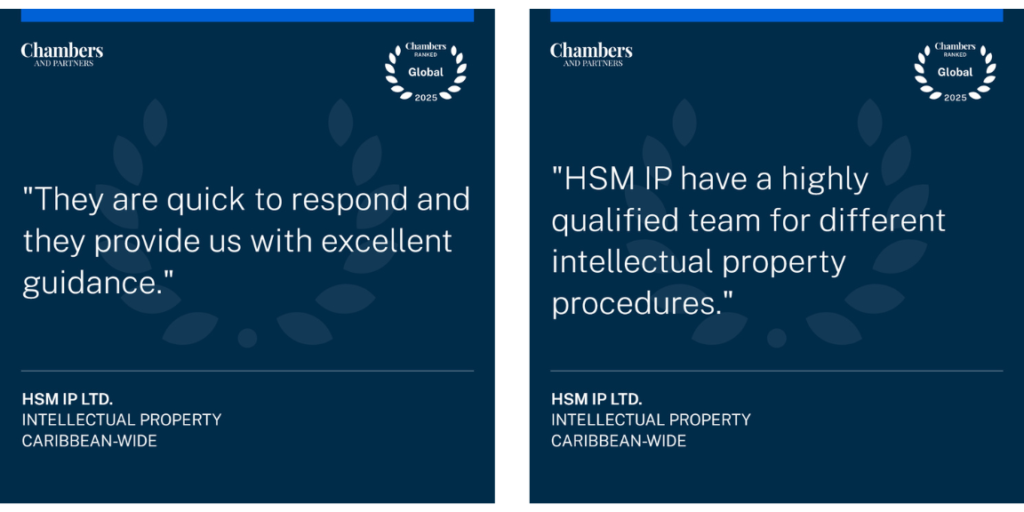
Citing Chambers and Partners, a commenter shared that “HSM IP are quick to respond and they provide us with excellent guidance,” and “HSM IP have a highly qualified team for different intellectual property procedures.”
HSM Chambers has also been ranked for Real Estate (Cayman Islands) with HSM Partner Linda DaCosta. Our team is praised for handling contract negotiations, conveyancing, acting for banking institutions and ensuring timely completions.
Chambers and Partners is a prestigious hub for lawyer and law firm recommendations. They diligently research and feature the world’s best lawyers and have done so since 1990, covering over 200 jurisdictions.
On 14 November 2024, the Judicial Committee of the Privy Council handed down a landmark decision in Tianrui (International) Holding Company Ltd v China Shanshui Cement Group Ltd (Cayman Islands) [2024] UKPC 36. This ruling overruled the Grand Court of the Cayman Islands’ decision in Gao v China Biologic Products Holdings, Inc 2018 (2) CILR 591, in which the court had struck out an action filed by a minority shareholder. The action challenged the board of directors’ exercise of their power to allot and issue shares, with the plaintiff claiming a breach of fiduciary duty. However, the Grand Court had held that the fiduciary duty in question was owed to the company, not to individual shareholders, meaning the shareholder lacked standing to pursue the claim.
The Privy Council’s decision set a precedent in the Cayman Islands, allowing shareholders whose holdings are diluted by an improper allotment of shares to bring a personal claim against the company. This development represents a significant shift in the legal landscape for minority shareholders and clarifies their rights in such circumstances. HSM Associate, Alex Davies, explores this case.
Background to the Appeal
The Respondent was a cement production company based in China but registered in the Cayman Islands. The Appellant was one of four major shareholders in the company, alongside Asia Cement Corporation (ACC), China National Building Materials (CNBM), and China Investment Company Limited.
There had been an ongoing dispute over control of the Respondent. The Appellant claims that bonds and shares were issued to parties connected to ACC and CNBM, with the improper aim of diluting the Appellant’s shareholding and gaining control of the company.
When the Appellant sought a court declaration that the issuance of shares was improper, the Respondent attempted to have the case dismissed. The Grand Court of the Cayman Islands ruled in favour of the Appellant, but the Cayman Islands Court of Appeal overturned this decision, striking out the case. The Appellant then appealed to the Judicial Committee of the Privy Council (the “Board”) to reinstate the case.
Judgment and Reasons
The Board allowed the appeal, ruling that a shareholder can bring a personal claim against a company if the company’s directors issue shares for an improper purpose that negatively impacts the shareholder. Therefore, the writ filed by the Appellant should not have been struck out and should be reinstated. Lord Hodge and Lord Briggs delivered the judgment.
A company’s relationship with its shareholders is governed by the company’s articles of association. However, these terms can be changed by a special resolution passed by a 75% majority of shareholders. [paragraph 31]
The courts have long recognized that shareholders can enforce certain rights directly against the company, such as the right to vote at a general meeting, through a personal claim, rather than through a derivative action on behalf of the company. [40]
While not all shareholder rights are explicitly outlined in the company’s articles, directors are fiduciaries with special duties, including the duty to use their powers only for proper purposes. Directors may, however, act in a way that appears to be within their powers under the articles but is done for an improper purpose, making the action invalid. Shareholders adversely affected by such actions may then have grounds for a claim against the company. [41]
In this case, the Cayman Islands Court of Appeal mistakenly ruled that no such claim existed. The Board corrected this, ruling that a shareholder whose stake has been diluted by an improper issuance of shares can bring a personal claim against the company. However, in some cases (not applicable here), such claims may be blocked if a majority of shareholders ratify the improper allotment at a general meeting, excluding the newly issued shares. [66]
When a person becomes a shareholder, they acquire a bundle of rights, including the right for directors to issue shares. This power is a fiduciary one and must be exercised for a proper purpose. [67]
It is an implied term of the contract between the company and its shareholders that when directors issue new shares, they must do so in accordance with their fiduciary duties, in good faith, and for the benefit of the company as a whole. If the issuance is aimed at benefiting one group of shareholders at the expense of others, the issuance is invalid. [69-71]
Although directors owe their duties to the company and not directly to individual shareholders, an improper exercise of power (acting as the company’s agents) breaches the corporate contract between the company and its shareholders, providing a basis for the shareholder’s claim. [72-75]
Finally, while a majority of shareholders could theoretically ratify an invalid allotment of shares, such ratification must actually occur and cannot override protections against the oppression of minority shareholders. [80-81, 84]
Fiduciary Duty and the Power to Allot Shares
In its judgment, the Privy Council emphasised that the power to allot and issue shares is conferred upon directors by the company’s articles of association, and that this power must be exercised as a fiduciary duty. The decision underscores the directors’ obligation to act in the best interests of the company when making such decisions. The Privy Council explicitly stated that the power to allot shares must not be used for improper purposes, such as altering the balance of power between shareholders.
While it is common for an allotment of shares to affect the relative power of shareholders, the ruling clarified that this should only occur where the allotment is made in good faith and for a legitimate business purpose, such as raising capital.
Improper Purpose
The Privy Council’s judgment further considered the nebulous issue of improper purpose, including whether directors’ decisions are tainted by improper motives. This question has been the subject of some debate in previous cases, including the landmark Eclairs Group Ltd and Glengary Overseas Ltd v JKX Oil & Gas Plc. [2015] UKSC 71 in which the Supreme Court was divided on the issue. In that case, the Court considered whether a decision with both legitimate and illegitimate reasons should be set aside. The Supreme Court found on the facts of that case they should, and that in that case the proper purpose rule was pervasive, an obligation to consider the purpose in addition to acting in the best interests of the company. Lord Sumption and Lord Hodge stated that courts should focus on the improper purpose and whether the decision would have been made without it. If the decision would not have been made without the improper motive, it would be considered improper. Conversely, if the legitimate reasons for the decision were sufficient to warrant the action, even without the improper motive, the action may stand.
In Stobart Group Ltd v Tinkler [2019] EWHC 258 (Comm), the court suggested test should be whether the improper purpose was the “substantial or primary purpose” behind the decision.
Remedies
If an allotment of shares is successfully challenged on the grounds of improper purpose, shareholders have several potential remedies. The primary remedies are:
- Damages: Shareholders may be entitled to compensation if they can demonstrate that they suffered financial loss as a result of the improper allotment.
- Rescission (Unwinding): Shareholders may seek to have the decision rescinded, effectively undoing the allotment and returning the company to its previous shareholding structure. This remedy may redress inequality if a share allotment was made to alter shareholder control for improper purposes, but must be promptly sought or such remedy is unlikely to be endorsed by the court.
Conclusion
The Tianrui decision marks a significant shift in Cayman Islands law regarding the rights of minority shareholders and the fiduciary duties of directors. Shareholders who face dilution of their holdings due to an improper allotment of shares now have a clearer path to seek redress. However, the legal questions surrounding improper purpose and the appropriate remedies remain complex and nuanced, and future cases will likely continue to refine the application of these principles.
Fatal error: Uncaught Error: Call to undefined function twentythirteen_paging_nav() in /home/clients/d17af2243e6f179e393695ba6e9ce04e/hsmnew/wp-content/themes/hsm/category.php:31 Stack trace: #0 /home/clients/d17af2243e6f179e393695ba6e9ce04e/hsmnew/wp-includes/template-loader.php(86): include() #1 /home/clients/d17af2243e6f179e393695ba6e9ce04e/hsmnew/wp-blog-header.php(19): require_once('/home/clients/d...') #2 /home/clients/d17af2243e6f179e393695ba6e9ce04e/hsmnew/index.php(17): require('/home/clients/d...') #3 {main} thrown in /home/clients/d17af2243e6f179e393695ba6e9ce04e/hsmnew/wp-content/themes/hsm/category.php on line 31